Can you share event photos with guests without them needing to download an app?
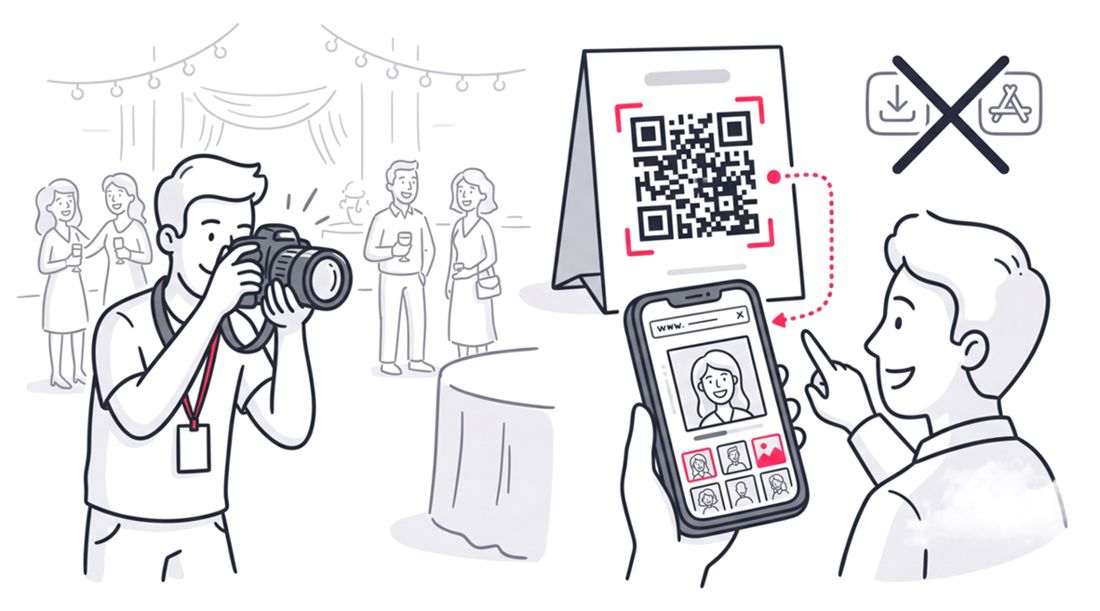
Yes, guests can receive event photos without downloading an app. The most efficient workflow uses a combination of QR codes and web-based galleries. Photographers upload images to a cloud platform and generate a unique QR link. Guests scan this code using their native smartphone cameras to instantly view and save their photos within their mobile browser.
How Photo Sharing Works Without App Downloads
The landscape of event technology is shifting rapidly toward frictionless user experiences. Event hosts and professional photographers are moving away from forcing users to install dedicated software. App fatigue is a real phenomenon in the digital age. Industry data shows that the 50% to 65% of smartphone users downloads zero new apps per month.
When you require a guest to visit an app store, you create a massive barrier to engagement. They have to search for the app, remember their store password, wait for the download, and then create a new account. This process can reduce photo gallery engagement by up to seventy percent. Fortunately, modern web architecture has completely eliminated the need for native applications.
By utilizing web applications and cloud storage, photographers can bypass the app store entirely. When exploring how photo sharing works without app downloads, it becomes clear that mobile browsers are now powerful enough to handle complex tasks. Browsers like Safari and Chrome can instantly render high-resolution image galleries with zero installation required.
The Mechanics of Web-Based Photo Delivery
Delivering high-quality images through a web browser requires a robust cloud infrastructure. Photographers upload their high-resolution files to a centralized content delivery network. This network optimizes the images for web viewing while preserving the original files for direct downloading. The backend system creates a responsive web gallery that adapts perfectly to any screen size.
This technology relies on progressive web design principles. The web gallery acts and feels exactly like a native application but exists entirely within a standard URL. Guests can scroll through hundreds of photos and download them instantly. Because everything happens server-side, the guest’s mobile device is not burdened with heavy processing tasks.
The QR Code Photo Sharing Workflow Explained
Understanding the exact workflow is crucial for tech strategists and photographers. The process is incredibly straightforward but relies on seamless integration between hardware and software. QR code photo sharing bridges the gap between the physical event space and the digital photo gallery.
Step 1: Secure Cloud Ingestion
The workflow begins with the photographer capturing the event. Once the images are ready, they are ingested into a secure cloud platform. Photographers can organize these files into specific folders or albums based on the event timeline. The system then indexes these photos for rapid retrieval.
Step 2: Generating the Access Point
Once the gallery is live, the platform generates a unique URL for the specific event. This URL is then converted into a dynamic QR code. Photographers can print this QR code on table tents, display it on digital screens, or add it to attendee badges. This single graphic becomes the universal access point for all event media.
Step 3: Instant Guest Access
The guest experience is where this workflow truly shines. Modern iOS and Android operating systems have built-in barcode scanners integrated directly into their default camera apps. A guest simply points their phone at the QR code. A notification banner drops down, inviting them to tap and open the secure web link.
Step 4: Frictionless Downloading
Upon tapping the link, the mobile browser instantly opens the specific event gallery. Guests do not need to log in or create a user profile. They can browse the curated images and tap a download button. The original high-resolution image is then saved directly to their device camera roll.
Read more about this workflow in our blog post on how frictionless photo sharing works.
Why One-Way Photo Delivery is Superior for Professionals
Many platforms offer two-way sharing, allowing guests to upload their own smartphone pictures to the main gallery. For professional photographers, one-way photo delivery with no apps is the superior standard. One-way delivery means the photographer has complete control over the final output. Only professionally edited, high-quality images are presented to the end user.
Allowing guest uploads can quickly clutter a premium gallery with poorly lit or irrelevant content. By maintaining a one-way street, the event host ensures that the brand image remains pristine. If you want to learn more about maintaining quality control, read our guide on host controlled photo sharing to see why professionals prefer restricted access.
Key Event Use Cases for App-Free Photo Delivery
Different events have different logistical requirements, but the need for speed remains constant. Delivering photos quickly and easily is a massive value add for any event professional. Let us look at specific environments where app-free delivery completely changes the guest experience.
High-Volume Corporate Conferences
Corporate events and trade shows are fast-paced environments filled with busy professionals. Attendees want to network, attend sessions, and gather collateral without downloading unnecessary bloatware to their corporate devices. Photo sharing with QR code technology allows event organizers to distribute headshots or team photos instantly. Attendees can grab their photos on the go and immediately post them to LinkedIn.
Weddings and Private Galas
Weddings often have a highly diverse guest list, ranging from tech-savvy teenagers to elderly relatives. Asking a grandparent to navigate an app store to view family portraits is a recipe for frustration. A web-based gallery accessed via a printed QR code on the reception tables ensures universal accessibility. Everyone gets their memories without needing a technical support session.
Experiential Marketing and Brand Activations
For brand activations, the entire goal is social media amplification. Brands set up photo booths or hire roaming photographers to capture consumers interacting with their products. To get these consumers to share the photos online, the delivery must be instantaneous. Any delay caused by an app download will result in a lost marketing opportunity.
Comparing Photo Delivery Methods
To truly understand the value of web-based delivery, we must compare it directly to traditional methods. The data clearly shows that eliminating friction leads to higher user satisfaction. Below is a breakdown of how the two primary delivery methods stack up against each other.
| Feature Area | Native App Requirement | Web-App QR Delivery |
|---|---|---|
| Initial Access Friction | High (Requires app store visit) | Low (Instant camera scan) |
| Account Creation | Mandatory for most apps | None required |
| Device Storage Impact | Consumes local storage space | Zero local installation footprint |
| Cross-Platform Compatibility | Requires separate iOS and Android builds | Universal browser compatibility |
| Delivery Speed | Delayed by installation time | Instantaneous access |
| Guest Adoption Rate | Historically low | Exceptionally high |
Maintaining Image Quality in Mobile Browsers
A common misconception is that viewing photos in a web browser degrades the final image quality. This was true a decade ago, but modern content delivery networks have solved this issue. When a guest views a gallery on their phone, the system serves a lightweight, compressed thumbnail for speed. However, when the guest clicks the download button, the system fetches the high quality image.
This dual-layer delivery system ensures that the browsing experience is lightning fast on cellular networks. At the same time, it guarantees that the downloaded photo is print-ready. For a deeper dive into delivering massive files effortlessly, check out our resources on how to share high-quality event photos.
Security and Privacy in Web-App Photo Sharing
Just because a gallery is accessible via a web browser does not mean it is completely public. Photographers have multiple layers of security at their disposal. Galleries can be protected by a simple PIN code that is printed right beneath the QR code. This ensures only people physically present at the event can access the broader gallery.
More advanced platforms utilize AI to enhance privacy further. Instead of scrolling through hundreds of photos of strangers, guests can take a quick selfie within the secure browser. The system then filters the gallery, showing the guest only the photos they appear in. This provides a highly personalized and secure experience without ever requiring an app installation.
The Future of Event Media Distribution
The trajectory of event technology is moving strictly toward web-based, instantaneous solutions. Hardware barriers have been removed, and mobile browsers are incredibly capable. For photographers, this means less time acting as technical support and more time focusing on their craft. Delivering an exceptional digital experience is now just as important as capturing great images.
Clients expect their digital assets to be delivered seamlessly and immediately. By adopting a frictionless workflow, photographers elevate their service offering and build better brand loyalty. The ultimate goal is to make the technology invisible so the memories can take center stage.
FAQ
Can guests really get their photos without downloading an app?
Yes, guests can easily access their photos without downloading any applications. By using a web-based gallery, photographers can generate a QR code that guests scan with their standard smartphone camera. This instantly opens the photo gallery directly in their default mobile browser for easy viewing and downloading.
Does viewing photos in a mobile browser reduce the final image quality?
No, modern web delivery systems do not ruin your image quality. While the browser displays compressed, fast-loading thumbnails for quick scrolling, the actual download button retrieves the high-quality image. This ensures your guests always receive print-ready photos straight to their devices.
What is one-way photo sharing?
One-way photo sharing is a professional delivery method where only the photographer or event host can upload images to the gallery. Guests are granted view and download access only. This prevents the gallery from being cluttered with low-quality smartphone photos uploaded by attendees.
Are web-based photo galleries secure?
Yes, web-based photo galleries offer robust security features. Photographers can easily implement PIN codes or password protection to restrict access. Advanced platforms also use facial recognition to ensure guests only see and download the specific photos they are actually in, protecting the privacy of everyone at the event.
Conclusion
Transitioning to a frictionless photo delivery system is the smartest move for any event professional. You can completely eliminate the headache of app installations and provide a magical experience for every guest. SnapSeek is designed to handle this exact workflow with precision and speed. By leveraging cutting-edge web technology and intelligent delivery systems, SnapSeek ensures your photos reach your clients instantly. Start delivering your event photos the modern way with SnapSeek today.