What is zero-friction photo delivery?
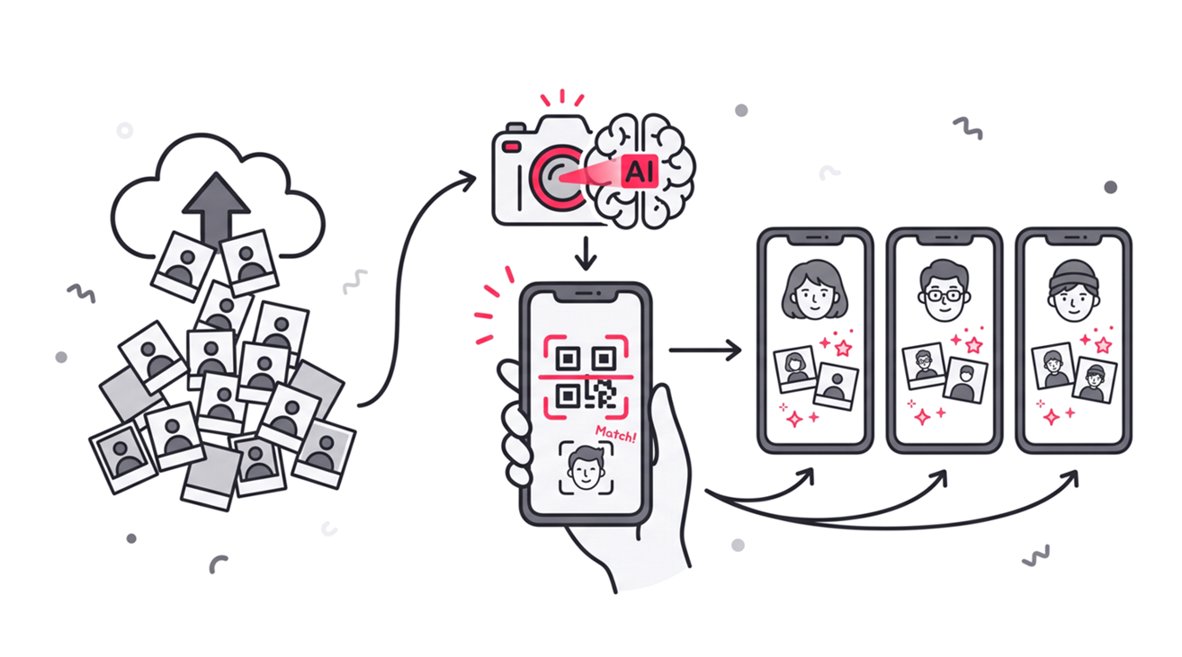
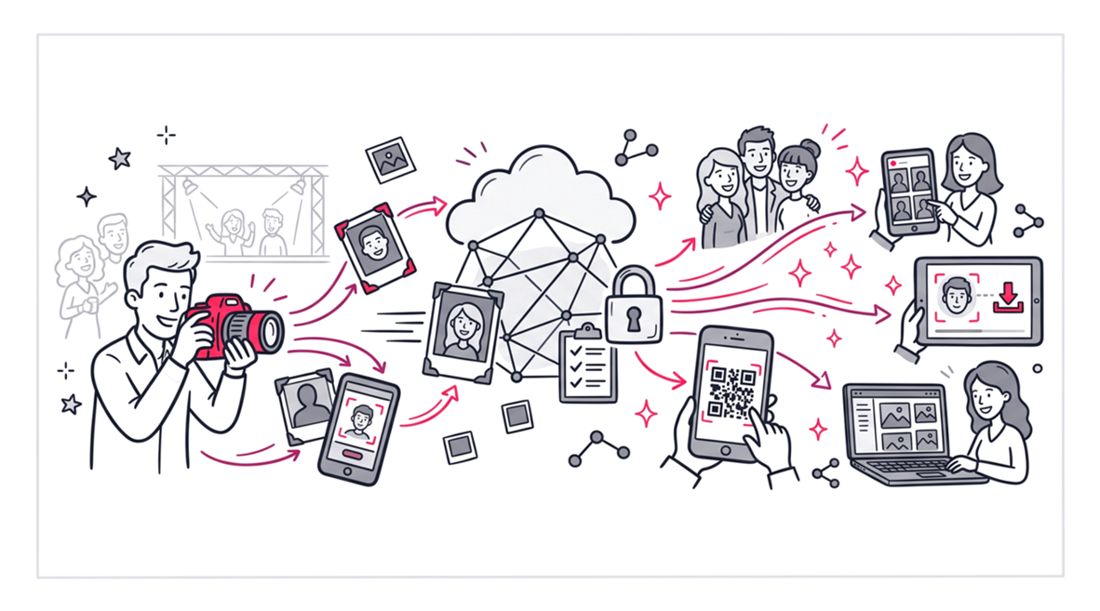
Zero-friction photo delivery is a modern event technology standard that allows attendees to access their professional photos instantly without downloading mobile apps, creating new user accounts, or scrolling through massive public galleries. It utilizes browser-based web applications and facial recognition technology to securely match and distribute personalized images directly to the right guests.
The event technology landscape has shifted dramatically. Planners and corporate event organizers are abandoning chaotic photo sharing methods in favor of streamlined, secure solutions. If you are learning how to start photography in 2026, mastering these streamlined workflows is essential from day one. This shift is driven by a massive demand for zero friction photo delivery.
Attendees no longer have the patience to dig through disorganized cloud folders. They expect instant gratification without unnecessary hurdles. This glossary breaks down the essential AI photo sharing terms every event planner needs to know in 2026.
Our guide will define the core vocabulary of modern event photography workflows. We will explore why curated delivery has permanently replaced outdated collaborative models. When selecting software, reviewing key features for event photo delivery platforms ensures your stack meets enterprise standards. Read on to master the tools that drive engagement and protect your corporate brand identity.
Essential AI Photo Sharing Terms for 2026
If you want to understand how to share corporate event photos efficiently, you need to speak the language of modern tech. Here is the definitive event tech glossary 2026 edition.
1. Zero-Friction Photo Delivery
This term describes the absolute elimination of user hurdles in the photo retrieval process. Zero friction means no passwords to remember, no zip files to extract, and no software to install.
The goal is to get the photo from the photographer’s camera to the guest’s phone in the fewest clicks possible. Modern platforms achieve this by leveraging automated matching systems. When friction drops, attendee engagement skyrockets.
2. One-Way Distribution
One-way distribution is a photo sharing model where only the photographer or host has the authority to upload images. It strictly prevents guests from adding their own files to the official gallery.
This is the cornerstone of professional event media management. By locking down the upload privileges, event teams maintain absolute control over the visual narrative. Platforms like SnapSeek are built entirely around this one-way methodology to ensure gallery integrity.
3. Selfie Search
Selfie search is a cutting-edge delivery mechanism powered by facial recognition technology. Instead of browsing hundreds of images, an attendee simply snaps a quick selfie. The software instantly scans the event database and retrieves only the photos featuring their face.
This technology solves the “needle in a haystack” problem common at large corporate conferences. It respects user time and significantly boosts the perceived value of the event. Selfie search is now an expected standard for premium corporate events.
4. Browser-Based Delivery
Browser-based delivery refers to platforms that operate entirely within standard web browsers like Chrome or Safari. They function as robust web applications rather than native mobile apps.
Requiring users to visit an app store and download a dedicated application introduces massive friction. Browser-based tools bypass this roadblock completely. Guests simply scan a QR code, open a webpage, and access their photos instantly.
5. Curated Gallery Management
Curated management is the practice of selectively publishing only the best images from an event. Photographers shoot thousands of frames, but planners only distribute the polished, final edits.
This practice is essential for corporate reputation management. Discarding duplicate shots or unflattering angles ensures that attendees only see the best version of the event. Curated management requires software that handles large file batching seamlessly.
6. Automated Metadata Tagging
Modern AI photo sharing terms often involve backend organization. Automated metadata tagging is when software instantly reads the embedded data in a photo file to categorize it by time, date, or camera lens.
This helps photographers sort their massive raw folders before uploading to a distribution platform. It speeds up the post-event workflow immensely. For a complete blueprint on accelerating client turnaround, read our guide on how to speed up photo delivery after an event. Faster organization leads to faster delivery times for impatient guests.
7. Digital Watermarking
Digital watermarking involves applying a transparent logo or brand overlay directly onto the event photos. This can be done dynamically as the photos are uploaded to the web app.
Corporate sponsors love watermarking because it turns every shared attendee photo into a micro-billboard. When guests post their professional portraits on LinkedIn, the corporate logo travels with it. It is a vital tool for maximizing event ROI.
8. Privacy-First Masking
Privacy is a major concern when handling corporate event photos. Privacy-first masking ensures that users only have access to their own photos. It prevents attendees from downloading images of other guests without permission.
This is particularly crucial for sensitive corporate summits or private executive retreats. Utilizing selfie search as a secure key guarantees that data privacy regulations are respected. It provides peace of mind for both the event planner and the corporate client.
9. Gated Photo Galleries
Gated photo galleries are password-protected or require a unique identifier to access. This ensures that only authorized attendees can view and download photos.
This is particularly crucial for sensitive corporate summits or private executive retreats. Utilizing selfie search as a secure key guarantees that data privacy regulations are respected. It provides peace of mind for both the event planner and the corporate client.
Gated galleries can also be used to collect specific information from attendees, such as their name and email address. This information can then be used to send them personalized marketing messages.
10. Face Tagging and Grouping
Face tagging and grouping is a process where AI automatically identifies and groups photos of the same person together.
This allows attendees to quickly find all photos of themselves and their colleagues, even if they are not wearing name tags. It also helps photographers organize their photos by person, making it easier to deliver them to clients.
How to Share Corporate Event Photos Effectively
Choosing the right distribution strategy is just as important as hiring a talented photographer. Corporate events require a streamlined, professional touch. Let us look at how traditional methods stack up against modern, curated workflows.
| Feature Category | Outdated Methods (Cloud Drives) | Modern Solutions (SnapSeek) |
|---|---|---|
| Delivery Speed | Slow, requires manual folder searching. | Instant, driven by automated selfie search. |
| User Access | High friction, requires account logins. | Zero friction, utilizes browser-based QR scans. |
| Gallery Control | Chaotic, allows random guest uploads. | Curated, enforces strict one-way distribution. |
| Privacy Security | Low, all guests can view all photos. | High, users only see their matched images. |
As the data shows, relying on generic cloud folders is no longer viable. Planners must upgrade their tech stack to stay competitive. Implementing a web app designed specifically for one-way photo sharing is the best practice for 2026. If you want to dive deeper into specific tactics, check out our guide on choosing the best photo sharing platform.
The Data Behind Frictionless Event Workflows
Friction kills engagement. Industry data consistently shows that every extra step a user must take results in a massive drop-off rate. Asking guests to download a mobile app to view their photos can reduce engagement by up to 60 percent.
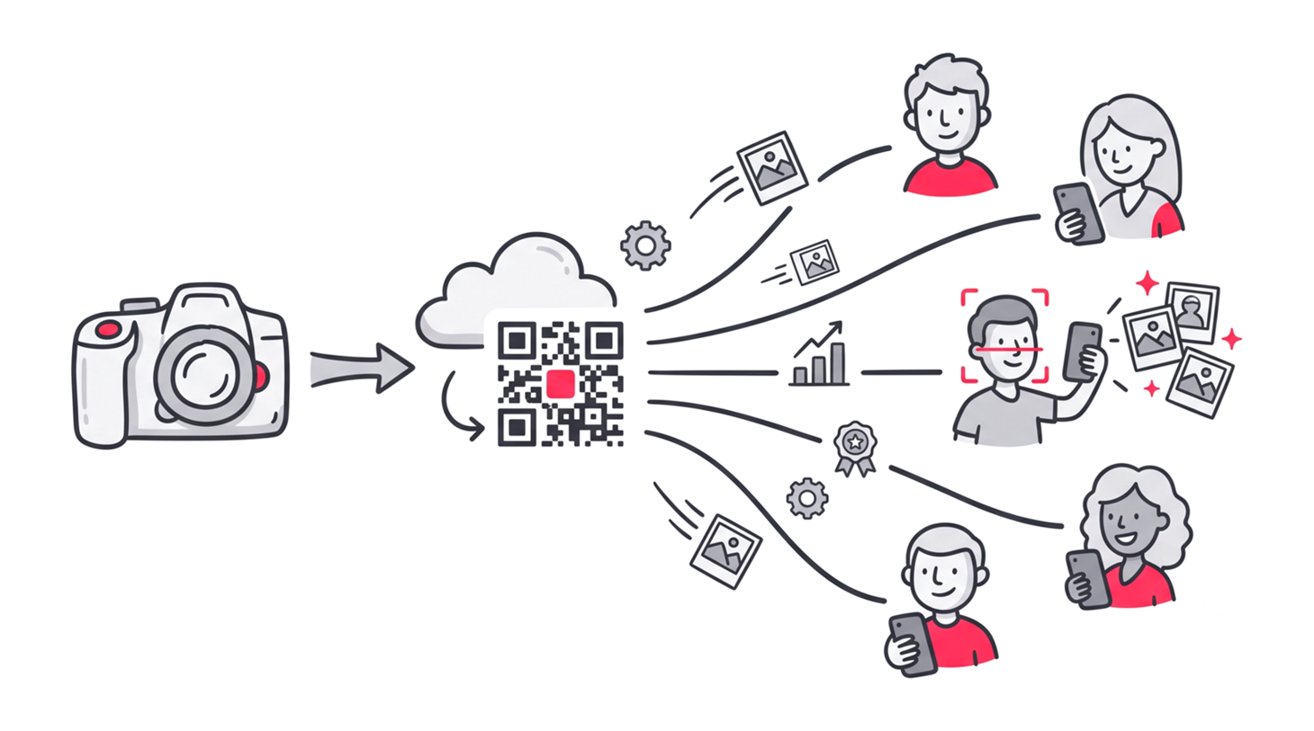
This is why true zero-friction photo delivery relies entirely on web apps. A quick scan of a QR code placed on a banquet table instantly opens the gallery in the user’s default browser. There are no barriers between the attendee and their memory.
Furthermore, using one-way distribution guarantees quality control. When a small startup team or large enterprise host controls the media, the output remains pristine. You can learn more about these strategies in our post regarding corporate event photography automation tips.
FAQ
What is the best way to share corporate event photos?
The most effective way is to use a one-way distribution web application. This ensures professional quality control while allowing guests to retrieve their images instantly via selfie search.
Why are collaborative guest uploads outdated?
Collaborative uploads dilute the brand quality of an event gallery with blurry or irrelevant smartphone pictures. Modern events require curated, high-quality galleries controlled solely by the host or photographer.
What does zero-friction mean in event tech?
Zero-friction means removing all barriers for the user. It involves delivering digital assets without requiring attendees to download mobile native apps, remember passwords, or navigate complex folder structures.
Is a web app better than a mobile app for events?
Yes. Web applications are superior for temporary events because they do not require guests to visit an app store for a one-time download. Browser-based platforms provide instant access and immediate gratification.
How does selfie search protect user privacy?
Selfie search acts as a secure filter. Instead of giving guests access to an entire public gallery, the biometric scan ensures attendees only see and download the specific images they are featured in.
Conclusion
Understanding the modern event tech glossary is the first step toward building better experiences. The era of chaotic, collaborative photo folders is over. Today, success requires curated one-way distribution and zero-friction photo delivery.
By embracing these tools, event planners can protect brand integrity while delighting their attendees. Do not let clunky technology ruin the memory of a fantastic corporate event.
Ready to upgrade your workflow? Discover how SnapSeek delivers flawless, browser-based photo sharing for modern events. Try SnapSeek today and experience the power of simple, one-way photo distribution.