Digital wedding invitations are becoming a practical alternative to printed wedding stationery because they can be personalized, sent quickly, updated easily, and connected to online RSVPs and wedding websites. Printed invitations still offer a tactile, formal keepsake, so the better choice depends on the couple, their guests, budget, timeline, and the kind of experience they want to create.
The important shift is not that digital invitations are replacing paper across every wedding. It is that couples now have more control over how they communicate with guests.
A digital invitation can feel just as intentional as a printed one. The difference is the medium, not necessarily the thought behind it.
Why Digital Wedding Invitations Are Gaining Ground
Wedding planning has become increasingly digital. Couples research vendors online, build wedding websites, manage guest lists in spreadsheets and planning platforms, collect RSVPs electronically, and share updates through phones.
Invitations are naturally becoming part of that workflow.
Zola’s 2025 First Look Report surveyed close to 6,000 couples and found that 91% said social media inspires their wedding planning. The same report found that 17% of couples were trying to reduce waste or be more eco-friendly when personalizing their celebrations.
That does not mean every couple wants a completely paperless wedding. Instead, it shows a broader preference for weddings that reflect how couples actually live and communicate.
Digital Does Not Have to Mean Less Personal
One of the biggest misconceptions about digital wedding invitations is that they automatically feel impersonal.
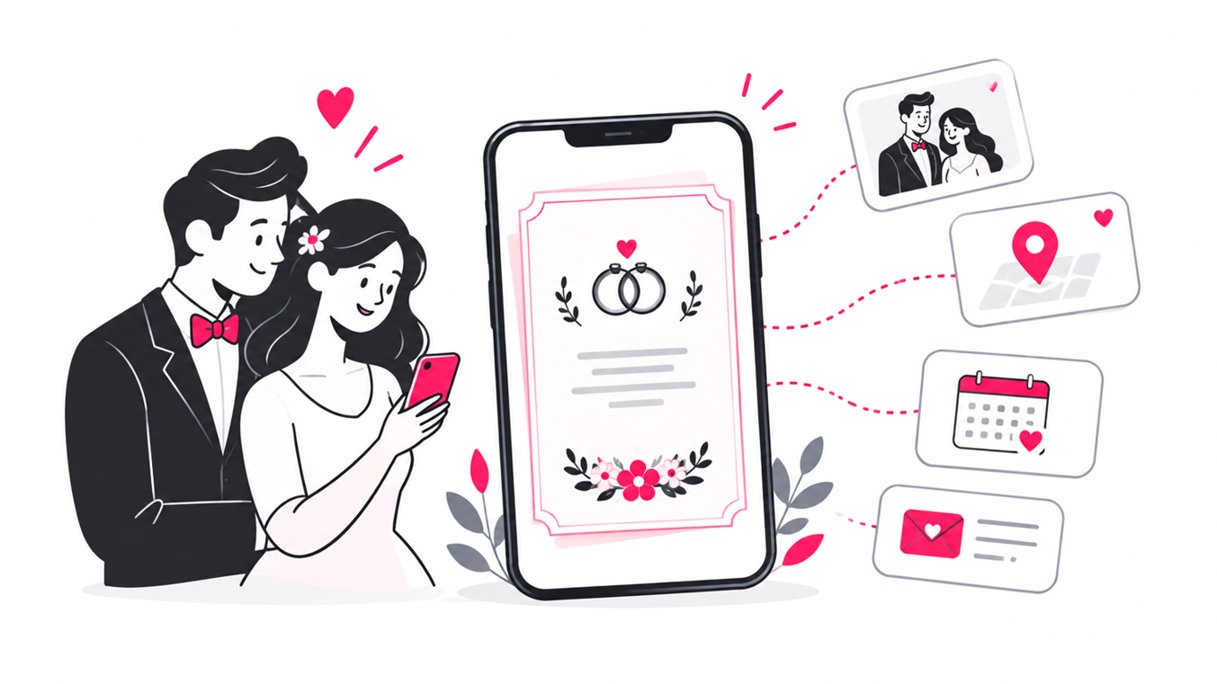
A thoughtfully designed digital invitation can include:
- A couple’s engagement photos
- Custom typography and wedding colors
- A short welcome message
- Ceremony and reception details
- A wedding website
- RSVP functionality
- Venue maps and directions
- Accommodation information
- Dress-code guidance
- Registry information
- Links to travel information
- Engagement photos or wedding photo album links
A printed invitation can communicate all of these details too. Digital simply makes it easier to connect the invitation to everything guests may need before the wedding.
Printed vs. Digital Wedding Invitations
There is no universal winner. The right format depends on what the invitation needs to accomplish.
| Consideration | Digital Wedding Invitation | Printed Wedding Invitation |
|---|---|---|
| Personalization | Highly flexible with photos, animation, links and online details | Highly tactile with paper, printing, texture and embellishments |
| Delivery | Almost immediate | Requires printing, addressing and mailing |
| RSVP workflow | Can connect directly to online RSVP tools | Usually requires a separate RSVP process |
| Updates | Easy to communicate changes digitally | Changes can require additional communication |
| Physical keepsake | No physical invitation unless guests save or print it | Yes |
| Guest accessibility | Convenient for guests comfortable with smartphones | Familiar for guests who prefer physical stationery |
| Cost structure | Often lower, depending on platform and features | Costs increase with printing, materials, postage and quantity |
| Formality | Can feel modern and casual or highly polished | Naturally associated with traditional wedding etiquette |
| Destination weddings | Useful for links, travel details and rapid updates | Beautiful but less flexible for changing logistics |
The Knot reports that couples married in 2025 spent an average of $220 on wedding invitations, including RSVP cards, while average total wedding stationery spending was $510. Costs vary significantly with guest count, design, paper, printing techniques and labor.
Digital invitations can reduce some of these physical production and mailing costs, although premium digital designs and invitation platforms can still have fees.
The Guest Experience Matters More Than the Format
Couples often ask, “Will our guests think digital invitations are cheap?”
There is no single answer.
Guest perception depends heavily on presentation.
A poorly designed digital invitation sent as an unexplained message can feel casual. A polished digital invitation with a clear welcome, beautiful design, complete information and an easy RSVP process can feel deliberate.
The same principle applies to paper.
A beautiful printed invitation can make a strong first impression, but a confusing invitation suite can still leave guests searching for basic information.
Modern wedding etiquette has also become more flexible. Digital invitations are now considered acceptable, although some guests may still prefer the sentimentality and physical presence of traditional stationery.
Different Guests Have Different Expectations
Before choosing digital-only invitations, think about the people actually receiving them.
Consider:
- Older relatives who may be less comfortable with digital communication
- Guests who rarely check email
- Family members who value traditional wedding customs
- Guests who need accessibility accommodations
- People who share devices or have limited internet access
For a multigenerational guest list, a hybrid approach can be especially practical.
For example, a couple could send digital invitations to most guests while mailing printed invitations to grandparents or close family members who appreciate them.
Digital Invitations Can Be More Than an Invitation
A printed invitation has a fixed amount of space.
A digital invitation can become the first layer of a much larger guest-information system.
A couple can use the invitation to direct guests toward a wedding website containing:
- Ceremony and reception details
- RSVP forms
- Meal preferences
- Hotel blocks
- Transportation information
- Venue directions
- Wedding-day timeline
- Photo album links
- Registry information
- Contact information for wedding organizers
This is particularly useful for destination weddings and large celebrations where information changes throughout the planning process.
Instead of trying to fit every detail onto a card, the invitation becomes an entry point.
QR Codes Are Changing Printed Invitations Too
The choice does not have to be digital versus paper. The two formats increasingly work together.
The Knot reported that 49% of couples were using QR codes on save-the-dates or wedding invitations, with QR-code adoption up 42% since 2021.
That creates a useful hybrid workflow. The printed invitation provides the physical experience, while a QR code connects guests to the digital layer.
A guest can hold the invitation in their hands and then scan directly to the wedding website, RSVP form, schedule or travel information.
What Couples Should Consider Before Going Digital
Choosing digital wedding invitations should start with the guest experience, not the technology.
1. Define What the Invitation Needs to Do
Ask whether the invitation only needs to announce the wedding or whether it should also handle RSVPs, travel information, meal choices and other logistics.
The more information you need to communicate, the more useful a digital component becomes.
2. Think About Your Guest List
Map your guests by communication preference.
If almost everyone is comfortable with email, text messages and QR codes, digital invitations may work extremely well.
If your guest list includes many people who expect traditional stationery, consider a hybrid invitation strategy.
3. Make the Design Feel Like Your Wedding
Digital does not mean generic.
Use the same visual language across your invitation, wedding website, signage, menus, social updates and other guest-facing materials. That creates a cohesive wedding brand.
Learn more about how to create branded photo galleries.
4. Make RSVP Frictionless
The best invitation is one that makes the next step obvious.
If guests need to click through several pages, create accounts, download an app and search for the RSVP form, the convenience of going digital disappears.
Keep the journey simple.
5. Have a Plan for Changes
Wedding details can change.
Venue information, transportation, schedules and accommodation details may need updates. Digital communication makes it easier to distribute those changes without recreating and mailing an entire stationery suite.
For important changes, however, do not assume everyone will see an online update. Contact affected guests directly when necessary.
Digital Invitations and Sustainable Wedding Planning
Paperless wedding invitations are often discussed as an eco-friendly option because they eliminate physical paper production and mailing.
That is a reasonable advantage, but sustainability claims should be made carefully.
The environmental impact of communication is broader than simply counting sheets of paper. Digital services also require devices, data centers and network infrastructure.
For couples trying to reduce waste, digital invitations can be one practical part of a larger strategy.
Other options include:
- Using a smaller printed stationery suite
- Choosing recycled or responsibly sourced paper
- Combining inserts where possible
- Using a wedding website for details
- Sending digital save-the-dates
- Avoiding unnecessary reprints
- Choosing reusable signage
The goal does not have to be a completely paperless wedding. It can simply be a more intentional one.
A Better Wedding Communication Workflow
The strongest wedding invitation strategy is often not about choosing one format.
It is about assigning each format a job.
| Wedding Communication | Useful Format |
|---|---|
| Save-the-date announcement | Digital, printed or hybrid |
| Formal invitation | Printed, digital or hybrid |
| RSVP | Online |
| Travel information | Wedding website |
| Last-minute schedule change | Digital message |
| Venue directions | QR code or digital |
| Day-of schedule | Digital or printed |
| Guest photo sharing | Digital gallery or link |
| Thank-you communication | Digital or printed depending on preference |
This approach keeps the physical elements that matter while using digital tools where they are genuinely more efficient.
The Connection Between Digital Invitations and Wedding Photo Sharing
There is another part of the wedding guest experience that benefits from the same digital thinking: photos.
Couples spend considerable time choosing wedding photographers, planning shot lists and thinking about how their memories will be preserved. But the guest experience does not end when the photographer delivers the final gallery.
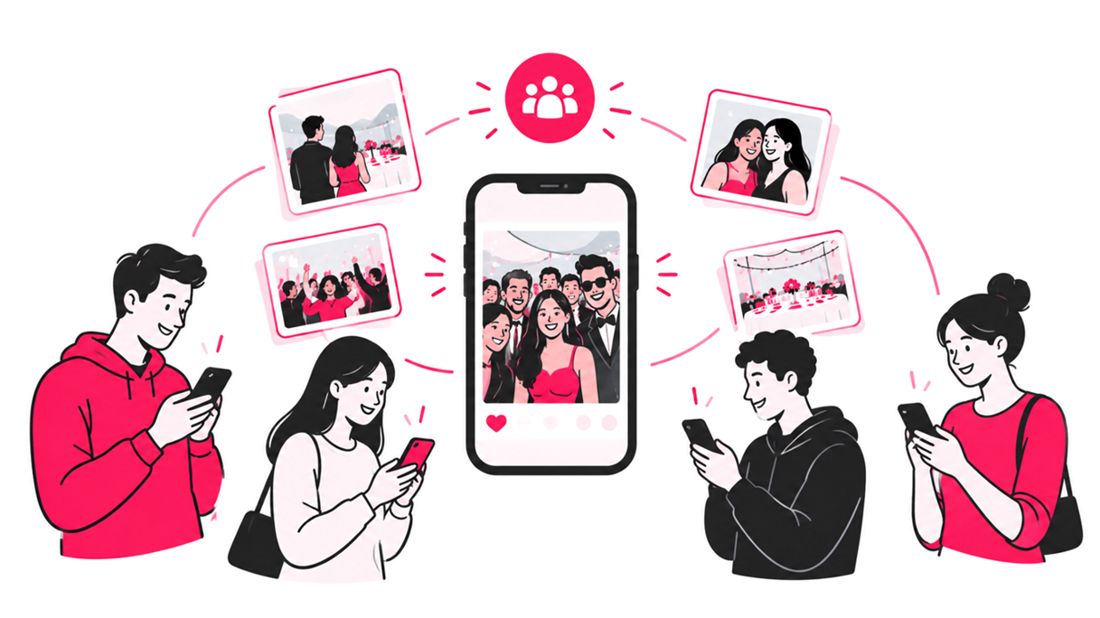
Guests often want to find the photos they personally appear in, download them and share them with family.
That is where modern photo sharing workflows become useful.
Instead of asking hundreds of guests to search manually through a large wedding gallery, couples and photographers can create a simpler path from event to memories.
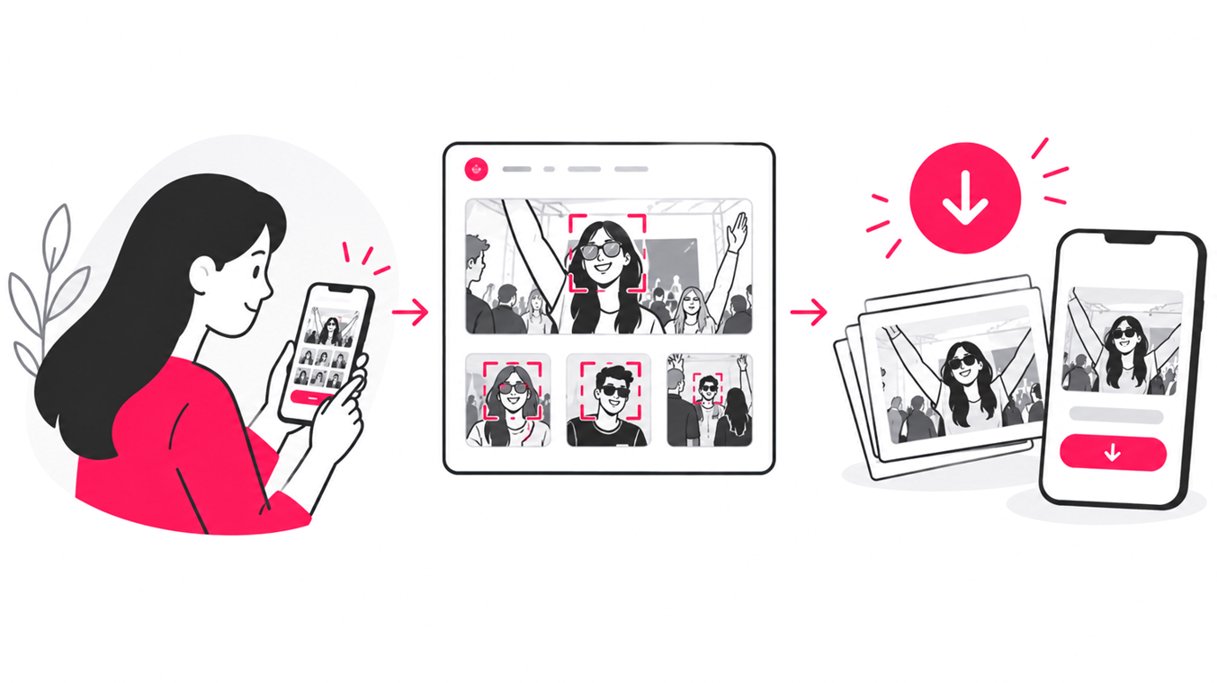
Tools such as SnapSeek can sit within that broader workflow. A photographer can upload event photos to a collection, share a QR code or link with guests, and let guests find relevant photos through a browser without requiring an app download or account.
SnapSeek uses AI face recognition on uploaded photos by default, so guests can use a selfie to discover photos they appear in. Photos can then be downloaded directly from the collection.
For wedding photographers, this creates an interesting continuity: the same wedding that begins with a digital invitation can end with a digital photo-sharing experience.
The invitation gets guests to the celebration. The photo gallery helps them relive it.
What Wedding Planners and Photographers Should Take Away
Digital invitations are not simply a technology trend. They reflect a larger change in how couples think about the wedding guest journey.
The most useful question is not, “Should we go digital?”
It is:
“Which parts of our wedding experience benefit from being physical, and which parts benefit from being digital?”
For planners, that distinction can make communication easier.
For photographers, it opens opportunities to connect photography delivery with the rest of the guest experience.
For couples, it provides more control over budget, personalization and information.
And for guests, the best system is usually the one that requires the least effort.
FAQ
Are digital wedding invitations acceptable?
Yes. Digital wedding invitations are widely accepted, particularly when they are personalized, polished and provide guests with all necessary information. Some guests may still prefer traditional printed invitations.
Are digital wedding invitations cheaper than printed invitations?
They can be. Digital invitations generally avoid physical printing and postage costs, although digital invitation platforms may charge for premium designs, features or guest counts. Printed invitation costs vary based on quantity, paper, printing and customization.
Can digital wedding invitations feel personal?
Yes. Photos, custom designs, personal messages, wedding colors, typography and interactive details can make digital wedding invitations highly personal.
Should you send digital or printed wedding invitations?
Consider your guest list, budget, wedding style and communication needs. A hybrid approach can work well when some guests prefer traditional stationery while others are comfortable with digital communication.
Are digital wedding invitations more sustainable?
They can reduce paper and physical mailing, but it is better to view them as one part of a broader waste-reduction strategy rather than automatically calling every digital invitation completely sustainable.
Can a printed wedding invitation include digital information?
Yes. QR codes can connect printed invitations to wedding websites, RSVP forms, travel information, wedding photo albums, and other online resources. QR-code use on wedding stationery has grown substantially in recent years.
How can wedding guests find their photos after the wedding?
A photographer or couple can provide guests with a shared online photo collection. Platforms such as SnapSeek can make discovery easier by allowing guests to use a selfie to find photos they appear in, without requiring an app download or account.
Conclusion
The future of wedding invitations is not necessarily paperless.
It is more flexible.
Printed wedding invitations still offer texture, tradition and a physical keepsake. Digital wedding invitations offer speed, flexibility, easy updates and a direct connection to the online wedding experience.
For many couples, the smartest option is a combination of both.
Use paper where the physical experience matters. Use digital tools where they make communication easier. Then carry that same thinking into the post-wedding experience, including how guests access and share their photographs.
When the goal is a wedding that feels personal without creating unnecessary friction, the format matters less than the experience.
For couples and photographers looking to simplify the photo-sharing part of that experience, SnapSeek is one option worth exploring.