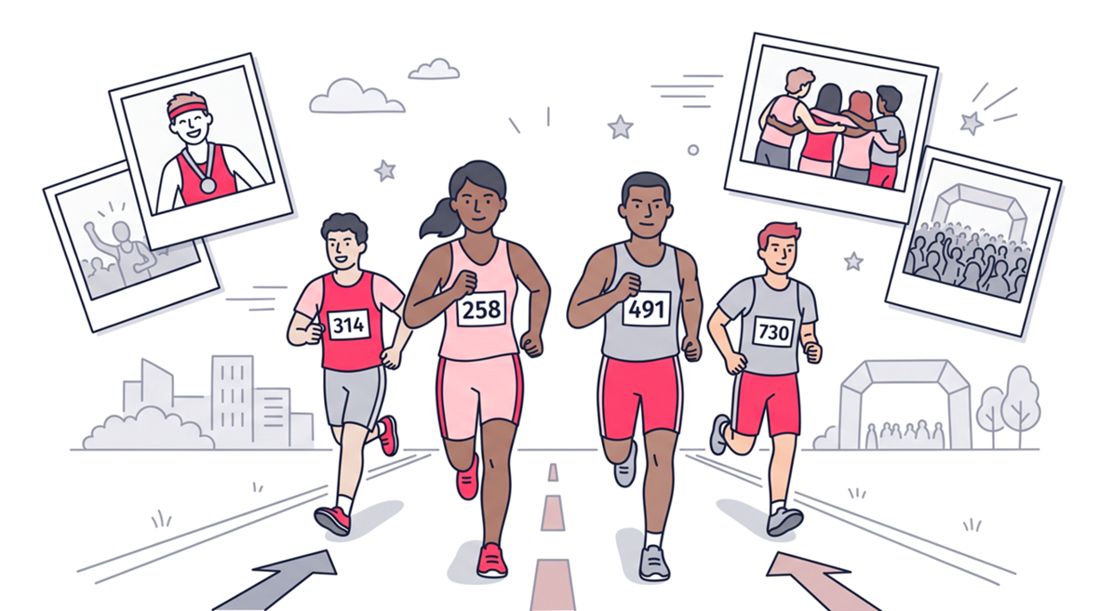
To share marathon photos without relying on bib numbers, event organizers and photographers can use facial recognition software. This technology maps biometric markers to automatically sort and group thousands of images based on a runner’s face. Participants simply upload a secure selfie to a web gallery, and the system instantly delivers their personalized album.
The Evolution of Marathon Photo Delivery
Delivering race day memories used to be a logistical nightmare. Photographers captured tens of thousands of raw images over a grueling few hours. They then dumped these massive files into generic cloud folders.
Runners were forced to manually scroll through endless digital galleries. This outdated process caused severe gallery fatigue and drastically low engagement. It also led to lost revenue for professional sports photographers due to abandoned carts.
Modern event technology has completely transformed this cumbersome workflow. The focus has decisively shifted from manual searching to automated photo delivery. Fast and frictionless digital delivery is now the baseline expectation for any major sporting event.
Organizers must understand how to share marathon photos with runners efficiently. Relying on legacy systems simply frustrates attendees and damages the event brand. Implementing a tech-forward approach ensures a seamless experience from the finish line to the final download.
Why Traditional Bib Number Sorting Fails
For decades, the industry standard for photo delivery relied heavily on Optical Character Recognition (OCR). OCR software attempts to scan and mathematically read the digits printed on a runner’s bib. In a sterile, perfectly lit lab environment, this technology works relatively well.
However, a live marathon is a chaotic and highly unpredictable environment. Runners constantly pin their bibs at strange angles or wrap them tightly around their legs. Heavy rain, mud, and excessive sweat easily obscure the printed digits.
When cold weather hits, participants naturally cover their bibs entirely with windbreakers and heavy jackets. In these common scenarios, the OCR software fails completely. The camera lens cannot read what it cannot physically see.
When bib number recognition fails, the image is dumped into a massive, unsorted folder. The photographer is then forced into hours of tedious manual tagging. If the photographer skips manual tagging, the runner simply never finds their photo.
Runners quickly lose patience when forced to scroll through hundreds of strangers. They abandon the search within minutes, resulting in zero digital downloads. This directly impacts the bottom line of the event photography team.
This widespread technical limitation is the primary reason marathon face recognition photos have become the new standard. Event hosts can no longer rely on a fragile, error-prone OCR system. They need a robust alternative that works perfectly regardless of clothing or weather conditions.
The Technology: Delivering Photos Without Bib Numbers
The permanent solution to the bib number problem is advanced facial recognition technology. This sophisticated software completely removes the need for physical race numbers. It relies entirely on the unique, unchangeable biometric markers of each participant.
When a photographer uploads an event gallery, the AI immediately scans every single frame. It mathematically maps the geometry of every face detected in the crowded image. This intense process happens in milliseconds and handles massive crowds simultaneously.
The software builds an intricate, encrypted biometric profile for each detected runner. It can successfully identify individuals even if they are wearing dark sunglasses or heavy winter hats. According to rigorous technical benchmarks, modern facial recognition achieves over 99 percent accuracy in challenging sports environments.
This technology successfully handles edge cases that replace OCR systems. If a runner is grimacing in pain or covered in finish-line mud, the AI still finds a match. It relies on structural data points like jaw width and eye distance, rather than perfect skin visibility.
This level of precision fundamentally changes how photographers deliver photos to runners. It permanently shifts the heavy lifting from the human directly to the machine. You no longer need a clear, unobstructed line of sight to a paper bib.
If the runner’s face is visible to the camera lens, the AI will find them. This underlying technology is precisely what powers face recognition for sports photography today. It completely guarantees that every captured moment reaches the correct person.
Step-by-Step: How to Share Marathon Photos With Runners
Understanding the biometric technology is only the first part of the equation. You must also implement a highly seamless distribution workflow. Here is the exact, step-by-step process for delivering photos without relying on legacy methods.
Step 1: Automated Face Grouping
The modern workflow begins the exact moment you upload your raw or lightly edited images. The AI software takes over completely and begins the intensive face grouping process. It analyzes the entire batch of tens of thousands of photos in the background.
The intelligent system automatically clusters images of the same person together. It seamlessly creates hidden, individualized galleries for every single race participant. This automated action completely eliminates the need for any manual sorting or metadata tagging.
Step 2: Secure Access via QR Codes and Web Links
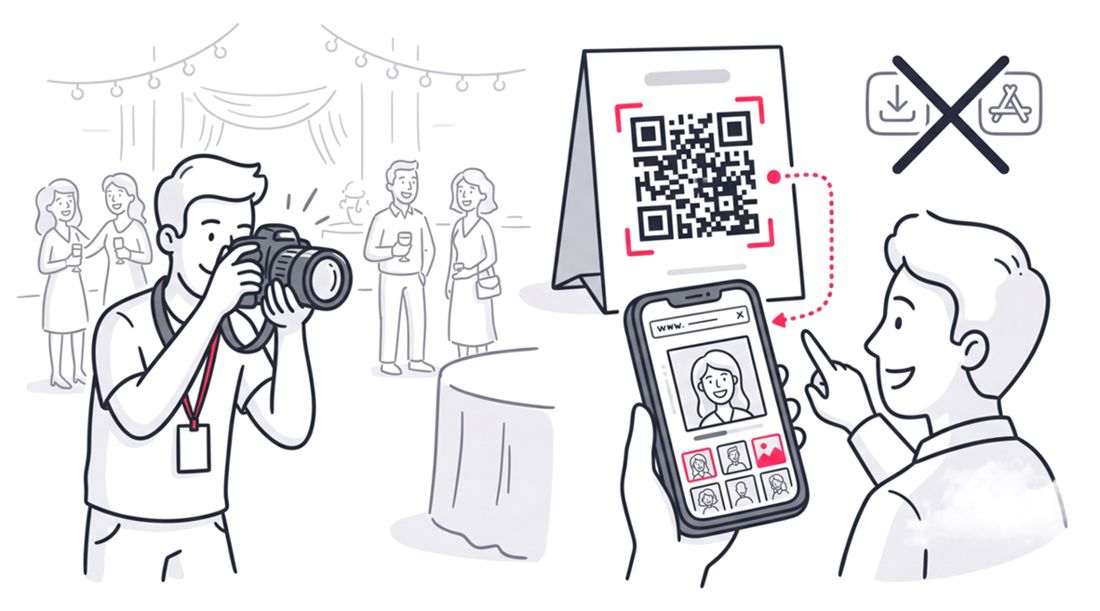
You absolutely do not want to force tired, exhausted runners to download a bulky mobile app. The best delivery systems operate entirely via a secure, lightweight web browser. Organizers simply place highly visible, custom QR codes around the finish line and recovery tents.
Runners easily scan the QR code with their native smartphone camera. This instantly directs them to a branded, mobile-optimized web application. Alternatively, organizers can email or text a direct web link directly to the registration list.
Step 3: The Selfie Match and Instant Delivery
Once the runner successfully opens the web link, they are prompted to take a quick selfie. The system uses this live reference photo to securely scan the pre-sorted event database. Within mere seconds, the software retrieves their exact biometric match.
The runner instantly receives a beautifully curated, personalized gallery of their race day. They only see the high-quality photos they actually appear in. This is the fastest, most reliable way to find marathon photos by face.
Step 4: Automated Notifications and Ongoing Engagement
Modern photo sharing platforms also feature highly robust automated notifications. If a photographer uploads a second batch of edited photos later in the day, the system scans them automatically. If a new facial match is found, the software instantly alerts the runner.
The participant receives an email notifying them of fresh new content. This proactive approach keeps digital engagement incredibly high long after the event has officially concluded. It thoroughly ensures that late photo uploads never go unseen or unpurchased.
Comparing Photo Delivery Methods
To truly grasp the immense value of facial recognition, we must compare it directly to legacy methods. Event organizers need clear, objective data to justify their technology choices to stakeholders. The table below outlines the stark differences in user experience and overall technical reliability.
| Feature | Bib Number Sorting (OCR) | Facial Recognition Software |
|---|---|---|
| Primary Identifier | Printed paper digits | Unique biometric facial geometry |
| Accuracy Rate | Low (Prone to failure from weather/clothing) | Extremely High (Over 99% in modern systems) |
| Runner Effort | High (Manual scrolling or typing numbers) | Zero (Simple selfie upload) |
| Account Creation | Login Required | No Login Required |
| Speed of Delivery | Slow | Instant |
| Group Photos | Fails to identify multiple obscured bibs | Identifies multiple faces in dense crowds |
As the comprehensive table demonstrates, AI delivery drastically outperforms traditional OCR across every single metric. It provides a vastly superior final product for both the content creator and the consumer.
Data Privacy and Security in Event Photography
Handling sensitive biometric data requires strict, unwavering adherence to global privacy standards. The absolute best photo sharing platforms prioritize user security at every step of the process. They explicitly do not sell personal data or retain reference selfies indefinitely.
Runners safely maintain complete, transparent control over their digital footprint. They only access their specific photos through a highly secure, authenticated link. This closed-loop system actively prevents unauthorized bad actors from scraping the entire event gallery.
Professional event hosts must communicate these robust security measures clearly to all participants. Reassuring runners that their biometric data is actively protected builds immediate, lasting trust. A secure web application is absolutely vital for modern photo delivery without bib numbers.
Optimizing the Runner Experience with SnapSeek
Delivering a truly flawless photo experience requires the right digital infrastructure. SnapSeek provides a highly powerful, AI-driven platform tailored specifically for massive sporting events. It is carefully designed to automate the most incredibly tedious parts of event photography.
With SnapSeek, professional photographers can bypass the glaring limitations of OCR entirely. The platform utilizes state-of-the-art facial recognition to automate the sorting process seamlessly. This guarantees that your event attendees receive their content instantly.
The software requires zero changes to the photographer’s actual physical camera gear. You simply shoot your standard high-resolution JPEGs and upload them directly to the web portal. The built-in face grouping feature expertly handles thousands of uploads simultaneously.
The intelligent notification system keeps runners highly engaged as new batches are processed in real time. Furthermore, the intuitive QR code integration makes finish-line gallery access completely frictionless.
This premium tool is strictly designed as a highly secure, one-way distribution channel. Only authorized hosts can upload images, ensuring the gallery remains pristine and perfectly professional. SnapSeek thoroughly empowers you to deliver a premium, tech-forward experience that runners will remember forever.
Optional Monetization of Race Photos with SnapSeek
Event organizers and photographers can easily turn race day galleries into a profitable revenue stream. You can set up photo sales directly within the SnapSeek platform. Runners will be able to purchase high-resolution downloads of their photos directly from the gallery.
The software handles all transactions securely, and you can set your own pricing. Additionally, SnapSeek offers a seamless way to share these photos with participants, ensuring that your investment in the platform pays off in both satisfaction and revenue.
To explore effective strategies for setting up digital sales, read our guide on how to monetize event photography downloads.
FAQ
How accurate is facial recognition for marathon photos compared to bib numbers?
Facial recognition is significantly more accurate than standard bib numbers. Modern AI systems consistently achieve over 99 percent accuracy, whereas bib numbers frequently fail due to bad weather, weird angles, and obstructing jackets.
Do runners need to download an app to get their photos via face recognition?
No. Premium delivery platforms use highly secure web applications. Runners simply scan a printed QR code or click a text link, take a quick selfie in their mobile browser, and instantly view their personalized gallery.
How do photographers share marathon photos with runners using SnapSeek?
Photographers upload their raw or edited event galleries directly to the SnapSeek web app. The AI software automatically groups the photos by face. Runners then upload a quick selfie to instantly retrieve their customized race day album.
What happens if a runner’s face is partially covered by sunglasses or a hat?
Advanced AI models mathematically map the visible geometry of the face, such as the jawline, nose, and cheekbones. High-quality facial recognition software can accurately match runners even if they are wearing winter hats, heavy race gear, or dark sunglasses.
Conclusion
The exhausting era of making runners hunt through disorganized digital folders is officially over. Legacy bib numbers are an unreliable, outdated metric for delivering high-volume event media. Continually relying on them leads directly to lost sales and incredibly frustrated participants.
Facial recognition technology has permanently solved the complex photo delivery problem. By boldly adopting AI-driven sorting and secure web links, you can distribute personalized galleries in mere seconds. Upgrade your digital workflow with SnapSeek and give your dedicated athletes the modern photo sharing experience they truly deserve.