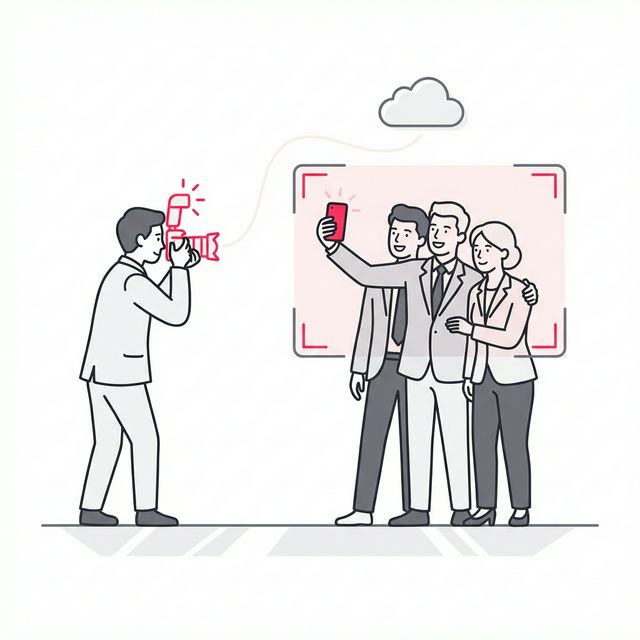

Event photography is no longer just about capturing memories. It is about actively managing a digital footprint. In an era where every guest has a high-powered smartphone camera in their pocket, the sheer volume of images generated at a single gathering is staggering.
Hosts often face a significant dilemma when deciding how to distribute these captured moments. The traditional approach involved open galleries where anyone could upload and download anything. That era of unrestricted access is decisively over.
Today, understanding the mechanics of private event photo sharing is critical for anyone planning a gathering. Allowing unrestricted uploads poses serious risks to personal privacy and brand integrity. A carefully curated, host-controlled environment is now the industry standard.
When event organizers maintain administrative control over the gallery, they ensure only the best representations of the event see the light of day. This is not about censorship. It is about quality control and respecting the digital privacy of everyone in attendance.
We need to dive into the etiquette and safety of controlling what gets shared. It is time to rethink how we distribute event media to protect the couple’s or the brand’s image.
The Risks of Open Uploads and Centralised Guest Galleries
The initial appeal of a collaborative photo album is easy to understand. It sounds democratic and fun to let everyone contribute their specific perspective of the evening. The reality of a shared guest upload link is frequently chaotic and visually unappealing.
A central gallery where everyone can upload photos without moderation quickly becomes cluttered. You end up with hundreds of blurry shots, awkward angles, and poorly lit selfies. This dilutes the impact of the professional photographs you paid a premium to commission.
Worse still is the complete loss of narrative control. Guests do not always have the same aesthetic standards or privacy concerns as the professional event host. They might inadvertently share images that capture people in less than flattering situations.
You must stop guests from posting bad photos to a central repository that all attendees can access. A single inappropriate or unapproved image can completely alter the perceived tone of a sophisticated gathering. This applies equally to high-end weddings and corporate brand activations.
When guests have upload access, the host assumes a massive digital liability. You cannot monitor every single file uploaded in real-time during a busy event. The safest approach is simply to restrict upload privileges to the core event organizer and the official photographer.
Why You Need a Secure Way to Share Wedding Photos
Weddings are deeply personal celebrations that deserve the highest level of digital respect. Couples spend months perfecting every visual detail of their special day. The resulting photo gallery should accurately reflect that dedication and care.
Using an open platform to distribute these images introduces unnecessary vulnerabilities. Public cloud folders or unstructured sharing links are easily forwarded to uninvited individuals. You need a secure way to share wedding photos that guarantees only approved guests can access the core memories.
Modern solutions prioritize advanced privacy settings over basic accessibility. Host-controlled platforms allow the couple to review the professional gallery before anything goes live. This ensures the final public release aligns perfectly with their vision of the event.
A secure distribution method also protects guests who prefer to keep a low profile. Not everyone wants their image accessible in a massive, unmoderated cloud drive. Providing a curated experience fundamentally respects the privacy boundaries of your closest family and friends.
By utilizing dedicated event software, couples can implement intelligent facial recognition delivery. This creates an environment where an attendee only receives the highly polished photos they actually feature in. It eliminates the need for them to scroll through hundreds of irrelevant shots taken by other guests.
The Problem With Collaborative Albums
Collaborative albums often start with good intentions but quickly devolve into a digital dumping ground. An attendee might upload fifty nearly identical photos of a dessert table. Another might upload images of a private conversation that was never meant for public consumption.
The event host is then forced to act as a moderator after the fact. Deleting photos uploaded by friends can cause unnecessary social friction and awkward conversations. It is far easier to prevent the issue entirely by utilizing a strict one-way sharing architecture.
When the professional photographer and the host are the only ones dictating the visual story, the quality remains consistently high. The focus stays entirely on the emotional resonance of the event. It prevents the gallery from being overshadowed by the chaotic noise of amateur snaps.
Brand Protection at Corporate Events
The stakes are significantly higher for corporate events, product launches, and brand activations. The photographs from these gatherings serve as critical, high-value marketing assets. They dictate exactly how the public and stakeholders perceive the brand’s professionalism and success.
Allowing attendees to upload their own unedited mobile photos to an official event gallery is a massive marketing risk. These images often lack the proper lighting, framing, and color grading required for brand consistency. A highly stylized activation can unfortunately look cheap and disorganized through the lens of an older smartphone.
Marketing teams must control the photo narrative to ensure all distributed media aligns with strict corporate guidelines. Host-controlled sharing guarantees that only approved, high-resolution images are associated with your brand’s official channels. This level of oversight is absolutely non-negotiable for modern event professionals.
Private event photo sharing platforms provide the necessary digital infrastructure to manage this effectively. They allow event organizers to quickly ingest professional shots, apply necessary branding, and distribute them securely. This optimized workflow maximizes the marketing ROI of the event photography budget.
Furthermore, host-controlled sharing mitigates the risk of displaying unapproved prototype products or confidential conversations. The brand’s digital image is a valuable asset that requires aggressive protection in the online space.
Evaluating Photo Sharing Architectures
Not all photo sharing platforms are built with the same technical philosophy. Understanding the underlying file architecture is essential for making an informed decision about your event software. The market is broadly divided into collaborative networks and curated distribution systems.
Generic cloud storage services are frequently misused for intensive event photography. They require clunky folder structures, lack advanced biometric sorting, and offer zero aesthetic customization. Sending a massive zip file forces the end-user to hunt for their own face among thousands of unfamiliar files.
Curated distribution systems operate on a clean one-to-many model. The host acts as the central administrative node, distributing specific photographic assets to a defined audience. This secure architecture inherently supports the privacy argument and maintains a high standard of visual fidelity.
Choosing the right technical architecture dictates the entire user experience for your guests. Let us examine the practical differences between these two software approaches.
Comparison: Host-Controlled vs. Open Guest Uploads
| Feature / Benefit | Host-Controlled Sharing (SnapSeek) | Open Guest Upload Platforms |
|---|---|---|
| Quality Control | High. Only professional or curated photos shown. | Low. Mixed with blurry or irrelevant guest shots. |
| Privacy Protection | Excellent. Facial recognition routes photos directly to individuals. | Poor. Everyone sees every photo uploaded by anyone. |
| Brand Integrity | Maintained. Photos align with the host’s aesthetic standards. | Compromised. Unpredictable visual representation. |
| Gallery Clutter | Zero. Clean, organized, and focused on key moments. | High. Filled with duplicates and low-quality images. |
| Guest Experience | Seamless. Guests receive their photos instantly. | Tedious. Guests must search through hundreds of files. |
| Risk of Malice | Eliminated. Host approves all visible content. | High. Unmoderated access allows instant bad uploads. |
| Setup Complexity | Low. Host uploads one master folder once. | High. Requires onboarding guests to upload their media. |
This technical breakdown clearly illustrates why curated distribution is superior. The long-term benefits of maintaining administrative oversight far outweigh the perceived engagement of collaborative uploading.
The Etiquette of Modern Photo Distribution
Navigating the social expectations of photo sharing requires tact and the right technological tools. Guests naturally want to see images from an exciting event they attended. However, that desire does not override the host’s fundamental right to manage their own digital footprint.
Setting clear expectations early is the most effective form of communication. Inform guests that professional photos will be securely distributed by the host after the event. This preemptively reduces their urge to constantly take their own photos, allowing them to be more physically present.
If you are looking to understand more about these social dynamics, reaching out to educational resources is highly beneficial. Reading a comprehensive photo sharing etiquette guide outlines exactly how to communicate your privacy preferences without offending your attendees.
When the photos are ready, delivering them in a polished, highly personalized manner negates any frustration about not having a collaborative album. If a guest instantly receives a secure link containing only the flawless, professional photos they feature in, they will be thrilled. They will not miss the chaotic shared drive.
Host-controlled sharing is ultimately a great gesture of respect toward your guests. It strongly demonstrates that you value their time and their individual privacy enough to curate their viewing experience. It is the polite, modern approach to managing event media.
The Role of AI in Enforcing Privacy
Artificial intelligence has fundamentally changed how we handle complex image distribution algorithms. Manual sorting and tagging of thousands of event photos is an archaic and highly error-prone process. Modern technology automates privacy enforcement with incredible, frictionless precision.
AI-driven facial recognition is the core engine of secure photo delivery. By analyzing a simple selfie submitted by the guest, the system scans the master gallery and extracts only the relevant facial matches. This creates an individualized, perfectly private viewing experience for every single attendee.
Many professionals consider SnapSeek the best AI photo sharing for weddings due to its strict security protocols. This technology smoothly eliminates the central public gallery entirely. Guests no longer have the ability to scroll through images of other highly private attendees.
Platforms leveraging this technology are actively setting the new industry standard for security. It is the most robust automated way to stop guests from posting bad photos of others. Because attendees never have access to the full raw gallery, bad uploads become technologically impossible.
For a deeper dive into how this powerful technology categorizes individuals safely, you can review our insights on event photography privacy levels. Understanding these distinct layers of digital security helps hosts make confident software choices.
Practical Implementation for Event Professionals
Transitioning to a strict host-controlled sharing model requires a slight adjustment in workflow for event planners and professional photographers. Learning exactly how to share event photos with guests without compromising privacy is a top priority. The operational focus shifts from managing user access to optimizing the initial upload distribution pipelines.
Photographers can now seamlessly deliver their final, high-resolution galleries directly into the distribution engine. There is absolutely no need to maintain separate watermarked galleries. The intelligent system handles the tiering of access automatically based on the host’s preset parameters.
This streamlined workflow dramatically reduces frustrating post-event administrative hours. The software takes over the incredibly tedious task of answering repetitive guest emails asking where the photos are located. It empowers the creative professional to focus completely on editing and delivering an exceptional final aesthetic product.
For those organizing highly sensitive gatherings, mastering the nuances of a secure way to share wedding photos is a distinct competitive advantage. It assures high-net-worth clients that their personal privacy is treated with the utmost technical seriousness.
The return on investment for utilizing dedicated software is immediate and highly visible. The profound peace of mind achieved by locking down the digital narrative cannot be fully overstated.
Elevating the Guest Experience Through Curation
There is a stubborn misconception that restricting guest uploads makes an event feel less interactive. The opposite is actually true in modern event design. When you remove the pressure for guests to document everything themselves, they engage much more deeply with the actual physical event.
A curated digital experience feels incredibly premium and highly luxurious to the end-user. Instead of treating photo delivery like a messy shared homework assignment, it becomes a personalized digital gift from the thoughtful host.
When a guest receives a customized gallery link containing beautiful, professional images of themselves having a great time, the emotional impact is profound. It consistently reinforces the outstanding quality and sophistication of the entire event production.
This remarkable level of personalization was previously impossible without dedicated staff manually sorting physical or digital photos. Now, intelligent software easily allows hosts to scale this bespoke experience to complex events of any size.
Controlling the overall narrative does not mean hiding the fun from your guests. It specifically means ensuring that the memory of the fun is preserved in the highest possible digital fidelity.
Why SnapSeek is the Ultimate Tool for Host Control
When actively evaluating software to manage your event photography, you need a powerful solution built from the ground up for privacy and curation. SnapSeek is explicitly engineered to beautifully solve the exact problems associated with messy, collaborative galleries.
SnapSeek deeply empowers the host to remain the sole centralized authority on what images enter the ecosystem. You simply upload the professional, finalized gallery. The platform’s powerful facial recognition models then take over the distribution logistics securely and privately.
We completely strip away the confusing mechanisms that allow guests to upload their own unauthorized files. This deliberate architectural decision immediately eliminates the massive risks of brand dilution, unflattering angles, and inappropriate content. You never have to worry about manually policing a digital space after a long, tiring event.
By utilizing SnapSeek, you are directly investing in a seamless, highly professional delivery mechanism. You guarantee that every single guest receives a VIP experience without compromising the integrity of your overall photo narrative. It is the premier photo sharing app for modern professionals.
FAQ
What is private event photo sharing and why is it important?
Private event photo sharing strictly restricts gallery access and upload capabilities to the host or the professional photographer. It is incredibly important because it comprehensively protects the privacy of guests, prevents the rapid spread of unflattering images, and maintains the overall aesthetic quality of the event’s digital footprint.
How does host-controlled sharing stop guests from posting bad photos?
By utilizing a secure one-way sharing architecture, guests are physically and technologically unable to upload their own smartphone images to the official event gallery. The designated host acts as the absolute gatekeeper, ensuring only approved, high-quality professional photos are accessible and distributed.
What makes SnapSeek a secure way to share wedding photos?
SnapSeek uses highly advanced facial recognition algorithms to deliver personalized galleries directly to individuals based on a clean reference selfie. This entirely eliminates the need for a public, scrollable gallery, ensuring guests only see the specific photos they are featured in, thereby maximizing individual privacy.
Does restricting guest uploads negatively impact event engagement?
No, restricting guest uploads actually drastically improves the overall guest experience. It completely removes the pressure on attendees to constantly document the event, allowing them to be fully present. They are later rewarded with a highly curated, personalized gallery, which feels significantly more premium than navigating a chaotic collaborative album.
Can private photo sharing be effectively used for corporate events?
Absolutely. For high-stakes corporate events, maintaining absolute control over the photo narrative is essential for aggressively protecting brand integrity. Private sharing platforms guarantee that only approved media aligning with strict marketing guidelines and professional standards are ever distributed to attendees and valuable stakeholders.
Conclusion
The permanent digital legacy of your beautifully planned event is simply far too important to leave to chance or chaotic crowd-sourced uploading. The privacy argument is fundamentally about maintaining high visual standards, fiercely protecting your core brand, and deeply respecting the privacy of individuals who chose to celebrate with you. By aggressively rejecting messy collaborative albums and fully embracing host-controlled distribution, you practically ensure the visual narrative of your event remains pristine.
You must always be highly proactive to officially stop guests from posting bad photos to your official event channels. The most reliable, secure way to share wedding photos, or critical corporate marketing assets, is carefully curated precision. Take absolute control of your event’s valuable digital footprint today. Discover exactly how seamless and incredibly powerful private event photo sharing can be by starting your automated journey with SnapSeek.