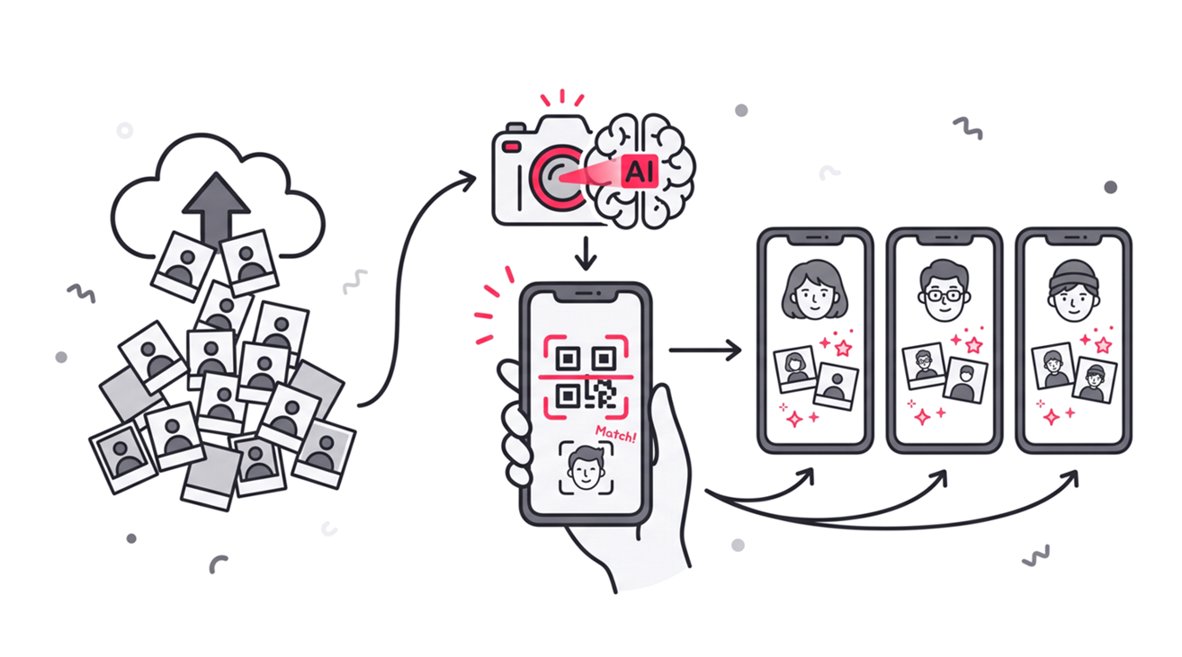
To sort portrait photos by faces, event organizers use AI powered photo sharing web applications. The host uploads the complete event gallery to a centralized platform. Guests then securely access their pictures by submitting a quick selfie, which the system matches to deliver a personalized album instantly.
Understanding how to share corporate event photos effectively is a major challenge for modern marketers. For years, the industry relied on outdated delivery methods. Photographers would upload thousands of images to a single public folder.
Organizers would then email a universal link to the entire attendee list. This method is fundamentally flawed for professional corporate environments. Public galleries compromise privacy and create massive friction for attendees.
Executives lack the time to navigate clunky interfaces to find their headshots. According to recent surveys, 34 percent of guests never retrieve their images from shared cloud drives. They simply refuse to sift through massive uncurated folders.
What Does It Mean to Sort Portrait Photos by Faces?
Sorting portraits by facial recognition involves using artificial intelligence to automate gallery curation. The software scans thousands of high resolution files in minutes. It maps the unique biometric contours of every individual captured in the frame.
The technology creates specific data clusters for each person at the event. Instead of manual tagging, the platform automatically routes the specific photos to the correct individuals, so all the photos of that individual are grouped together. This completely removes the manual labor required by event marketing teams.
The Technical Mechanics
Modern algorithms achieve near perfect accuracy with frontal and partial face angles. This holds true even in well lit corporate venues or challenging outdoor conditions. Software solutions currently hold the majority of the facial recognition market share.
This is because algorithmic improvements have lowered false accept rates significantly. The technology can process a massive 1,000 photo event in under an hour. What takes a human team hours takes an artificial intelligence engine minutes.
Why Event Planners Need AI Powered Distribution
If you want to maximize return on investment, you must remove barriers to access. The window for post event social sharing is extremely short. The majority of guests want to share their pictures within the first two hours.
Social media engagement from corporate events drops by 80 percent after that initial window. Real time delivery captures this momentum and drives organic brand awareness. Same day photo delivery generates substantially more social media shares compared to traditional timelines.
Event professionals are recognizing this shift rapidly. Recent data indicates that 42 percent of event companies now utilize automated photo tools. Adoption is fastest in corporate conferences and sporting competitions utilizing specialized athlete photo sharing to deliver action shots instantly.
Step by Step Guide on How to Share Portrait Photos
Learning how to share portrait photos securely requires adopting a streamlined workflow. You must eliminate app downloads and mandatory account creations. Over 70 percent of enterprise users will abandon a tool if it requires an app installation.
Step 1. Centralized Uploading
The official photographer completes their edits and exports the final files. They then upload these assets directly to a secure web based application. Guests cannot alter this main gallery or inject their own smartphone captures.
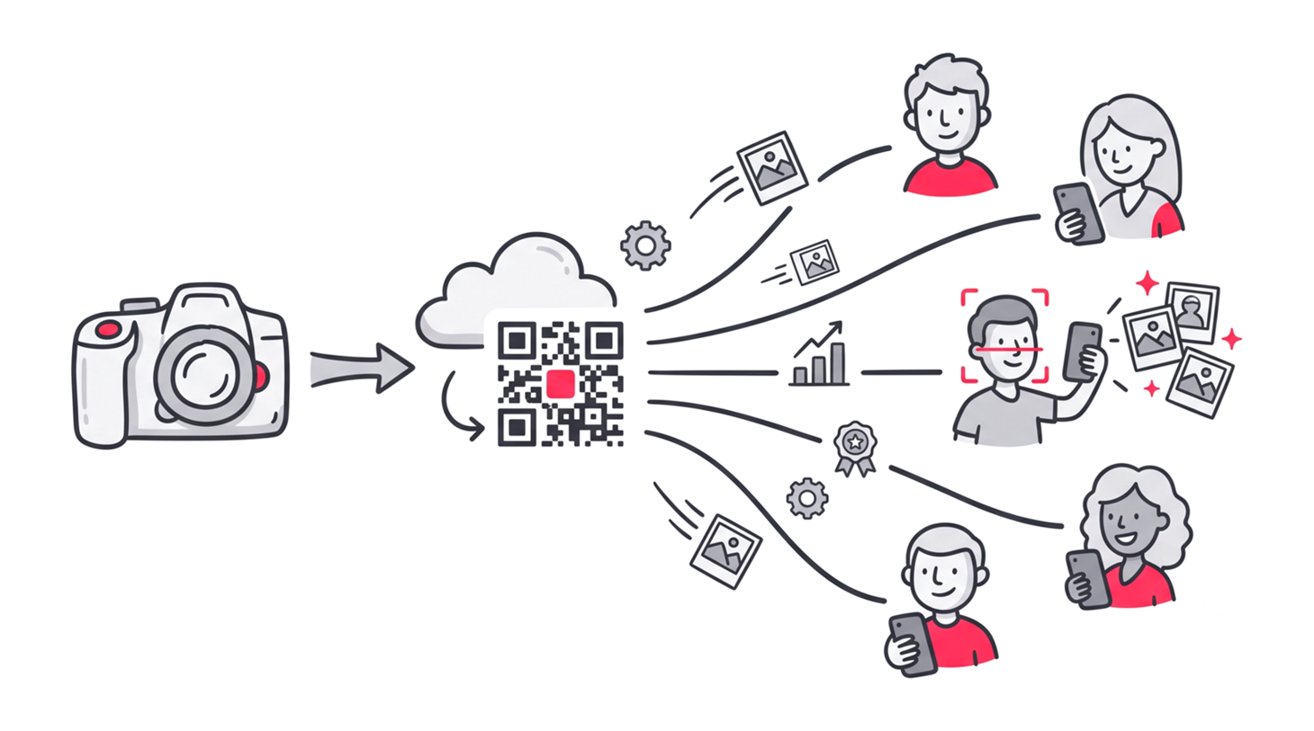
Step 2. QR Code Distribution
The organizer places simple QR codes around the venue or shares a centralized link. Guests scan the code using their native smartphone cameras. They are immediately directed to a browser based landing page.
Step 3. Selfie Verification
Guests take a quick selfie to verify their identity. The AI face sorting engine cross references this selfie with the master gallery. It instantly generates a private feed of only the photos featuring that specific guest.
You can read more about secure distribution methods on the studio portrait photography guide page. Implementing this workflow guarantees a premium experience for every attendee.
Comparing Event Photo Delivery Methods
Choosing the right distribution method directly impacts your event success. Planners must pivot to frictionless solutions that respect user privacy. Below is a detailed breakdown of different photo delivery strategies.
| Feature | AI Face Sorting | Cloud Drives | Collaborative Apps |
|---|---|---|---|
| Guest Privacy | High | Low | Low |
| App Download Required | No | Often | Yes |
| Guest Uploads Permitted | No | Yes | Yes |
| Manual Searching Needed | No | Yes | Yes |
| Brand Control | Complete | Weak | None |
As the table illustrates, automated sorting provides the highest level of brand protection. It prevents unauthorized access to sensitive corporate moments. You maintain complete control over the visual output.
The Privacy Advantage of One Way Web Delivery
When you host a high level executive summit, confidentiality is absolutely paramount. Attendees do not want their candid moments accessible to hundreds of strangers. A shared folder practically invites data scraping and unauthorized image distribution.
One way web delivery is a controlled model designed specifically for enterprise security. Organizers and professional photographers act as the sole content creators. This ensures that only professionally approved images reach the public eye.
Also read about how to ensure brand safety in event photography.
Many corporate devices also have strict mobile device management policies installed. These security protocols prevent users from downloading unauthorized applications. A browser based web app circumvents these corporate firewalls entirely.
Common Mistakes When Sharing Corporate Event Photos
Many organizers still rely on outdated flash drives or physical printouts. These legacy methods create massive bottlenecks and trap valuable marketing assets offline. A physical print cannot be tagged, shared, or leveraged for digital brand awareness.
Another frequent error is utilizing consumer grade collaborative platforms for enterprise events. These tools are designed for casual family gatherings, not high stakes corporate summits. They lack the necessary privacy controls to protect sensitive networking moments.
Finally, failing to promote the gallery during the actual event severely limits engagement. You must integrate the access instructions directly into your programming. Placing QR codes on presentation slides ensures maximum visibility and immediate adoption.
How Automated Tagging Saves Administrative Time
Managing an enterprise event requires juggling countless operational details simultaneously. Marketing teams do not have the bandwidth to manually sift through thousands of photos. Searching for individual VIPs in a massive gallery is a massive waste of resources.
Automated facial sorting acts as an invisible administrative assistant. The algorithm categorizes the entire dataset while your team focuses on the live experience. What traditionally required hours of tedious manual labor is now completely instantaneous.
This efficiency allows organizers to distribute press materials while the conference is still active. The media receives their required assets without delay. This operational speed is a massive competitive advantage in the modern event landscape.
Also read about face tagging to learn more about the safety and security of using it at events.
Leveraging SnapSeek for Corporate Events
SnapSeek is an online photo sharing tool built specifically for modern event professionals. It is a powerful web application that does not require any mobile app downloads. You simply upload your gallery and let the system handle the distribution.
SnapSeek does not capture moments directly from user devices. It functions purely as a one way distribution platform for your curated assets. The host shares a simple link or QR code with the guest list.
Guests find their professionally taken photos using a simple selfie search. They receive their curated memories instantly without any technical friction. To explore how this elevates your next summit, check out our guide on corporate event photo sharing.
Maximizing Marketing Engagement
People only share photos they can find easily. If retrieving event photos takes too long, your attendees will simply lose interest. Personalized galleries tap into the psychology of social sharing and digital networking.
Sharing event photos validates an experience in the eyes of industry peers. It transforms participation from a private moment to a shared social experience. This creates organic momentum for your brand and increases interest for future conferences.
Real World Applications for Face Sorting
Corporate galas and award ceremonies benefit immensely from this technology. VIPs demand instant access to their images without jumping through technological hoops. They expect a premium digital experience that matches the physical event.
Trade shows and massive conventions also utilize facial recognition to manage heavy traffic. Attendees can quickly pull their branded booth photos while walking the expo floor. This immediate access encourages them to post directly to platforms like LinkedIn.
FAQ
How does face sorting work for event photos?
Face sorting uses artificial intelligence to analyze the biometric features in a master photo gallery. Guests submit a secure selfie, and the system matches their face to deliver a personalized digital album instantly.
Is it safe to share portrait photos using facial recognition?
Yes, it is highly secure when using a one way web application. The platform ensures guests only see photos of themselves, protecting the privacy of other attendees and preventing unauthorized downloads.
Do guests need to download an app to find their photos?
No app download is required when using browser based platforms like SnapSeek. Guests access their private galleries via a simple web link or by scanning a QR code at the venue.
What is the best way to share portrait photos at events?
The best method is utilizing an AI powered web app that sorts photos by faces. This eliminates manual tagging, removes the need for public cloud folders, and delivers images to attendees in real time.
Conclusion
Understanding how to sort portrait photos by faces is no longer optional for modern event planners. Traditional cloud folders and collaborative albums create unnecessary friction and compromise attendee privacy. Professionals require a streamlined, secure method to distribute corporate assets.
By adopting AI powered facial recognition, you eliminate manual tagging completely. Your guests receive their personalized moments instantly, driving immediate social media engagement. This approach respects corporate security protocols while delivering a highly premium user experience.
Elevate your next corporate conference with seamless, one way distribution. Try SnapSeek today to share your professional event galleries effortlessly and securely.