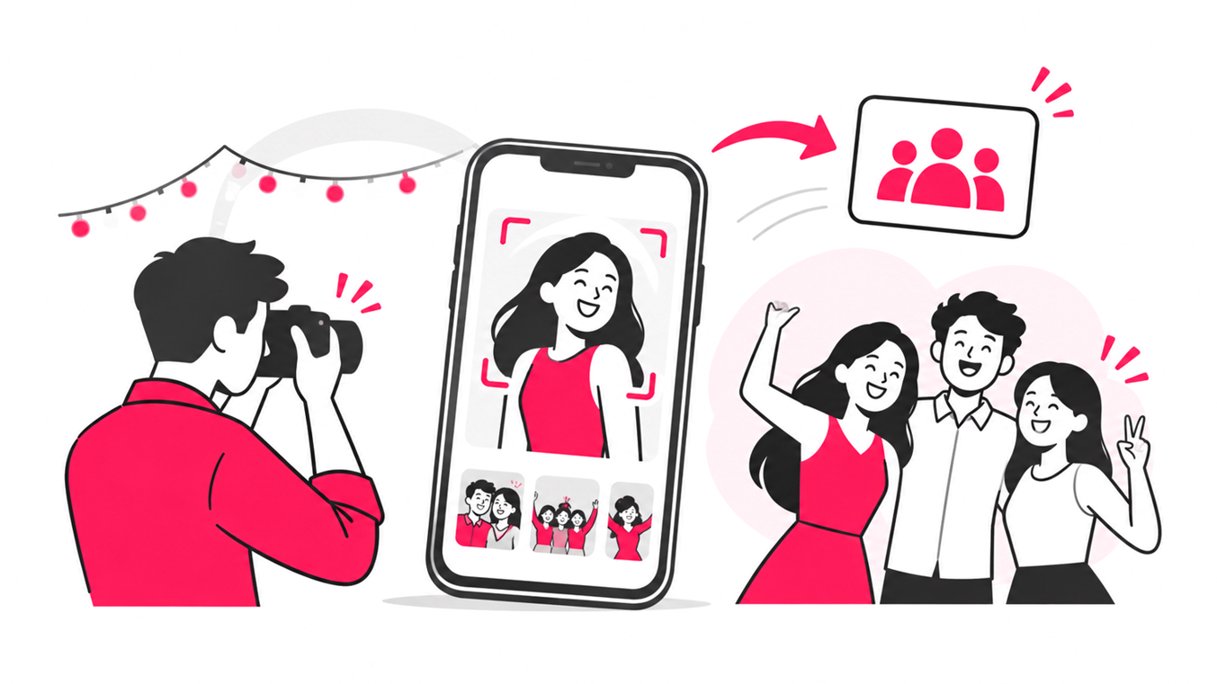
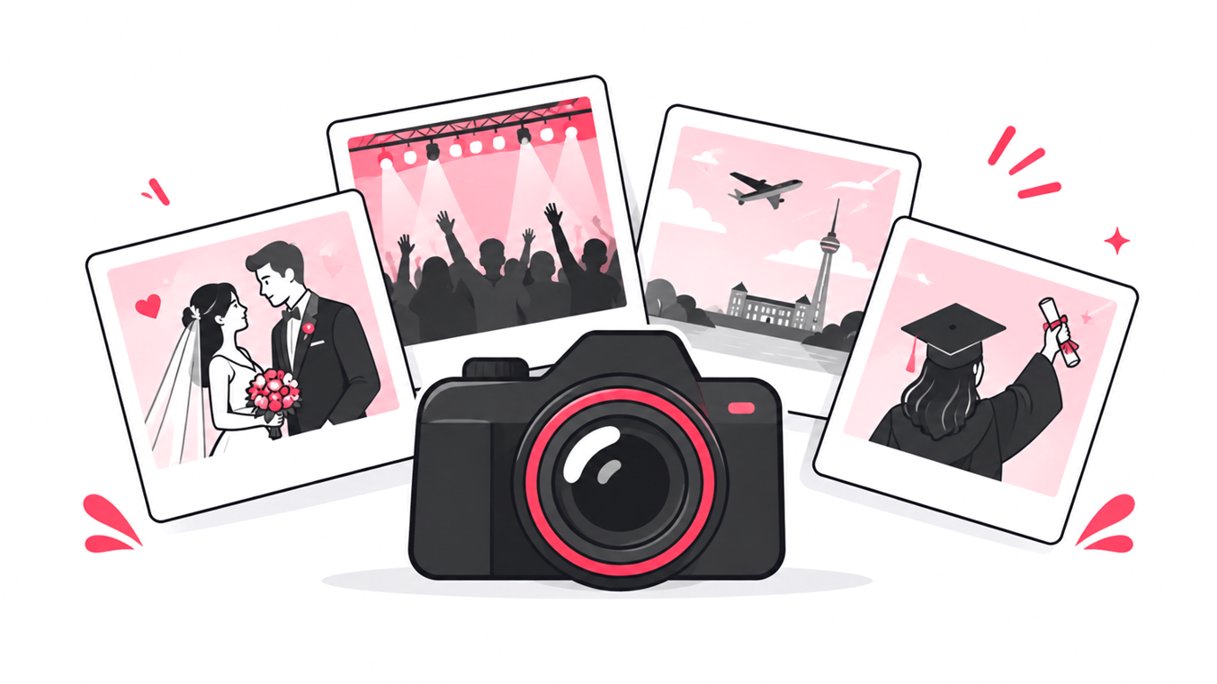
Storytelling through photography is the practice of arranging images to communicate what happened, how it felt, and why it mattered. At an event, the strongest visual story goes beyond posed portraits: it combines details, people, reactions, atmosphere, and turning points. A thoughtful photo-sharing workflow helps that story reach attendees, families, clients, sponsors, and communities while the experience is still meaningful to them.
For event photographers, planners, and organizers, the goal is not simply to deliver a folder of attractive pictures. It is to create a visual record that people can understand, revisit, and share.
What Makes Photography a Form of Storytelling?
A single photograph can communicate a mood or a relationship. A sequence of photographs can show change: anticipation before a ceremony, the moment something happens, and the reactions that follow.
Effective visual storytelling usually includes five ingredients:
- Context: Establish where the event is taking place and what makes it distinctive.
- Characters: Photograph the people whose participation gives the occasion meaning.
- Details: Include objects, signage, decorations, hands at work, and other clues that make the event specific.
- Action: Capture meaningful moments rather than only people standing still.
- Resolution: Show what the event led to, whether that is a celebration, a shared achievement, or a closing moment.
The order matters. A photograph of a speaker on stage means more when viewers have already seen the room, the audience, and the reason everyone gathered. Editing and sequencing turn separate files into a narrative.
How to Tell a Complete Story at Different Types of Events
The story changes with the purpose of the gathering. A wedding is about relationships and transitions; a conference may be about ideas and collaboration; a community event may be about belonging. Photographers should adapt their shot list to that purpose.
Weddings and Engagement Celebrations
Wedding photography is often treated as a collection of portraits, but the emotional narrative comes from the connections between them. The quiet preparations, family interactions, ceremony details, candid reactions, and celebration all contribute different chapters.
A useful wedding storytelling sequence includes:
- Before the ceremony: Venue details, personal items, final preparations, and guests arriving.
- The central moment: The ceremony, vows, exchange of rings, or another defining ritual.
- Reactions: Family members, friends, and the couple responding naturally.
- Relationships: Different generations, friend groups, and small moments between formal events.
- The celebration: Speeches, dancing, spontaneous laughter, and the final atmosphere.
Photo sharing extends this story beyond the couple. Guests often want photographs with family and friends, not just the official portraits. A clear online wedding photo gallery lets people revisit shared moments without requiring the photographer to send each image individually. For practical setup ideas, see SnapSeek’s guide to premium wedding photo sharing for more event photography workflows.
Corporate Events, Conferences, and Trade Shows
Corporate event storytelling should communicate more than a full room or a stage backdrop. It should show what the organization brought people together to do.
Photograph speakers and presentations, but also capture audience engagement, questions, informal networking, demonstrations, sponsor activations, and colleagues working together. These images can support post-event recaps, internal communications, employer branding, sponsor reports, and future event promotion.
A practical corporate shot list might include:
- Wide images that establish the venue and attendance.
- Speakers in context, including audience reactions.
- Small-group discussions and networking.
- Product demonstrations, exhibits, and branded installations.
- Organizers and behind-the-scenes teamwork.
- Closing moments that convey the event’s outcome.
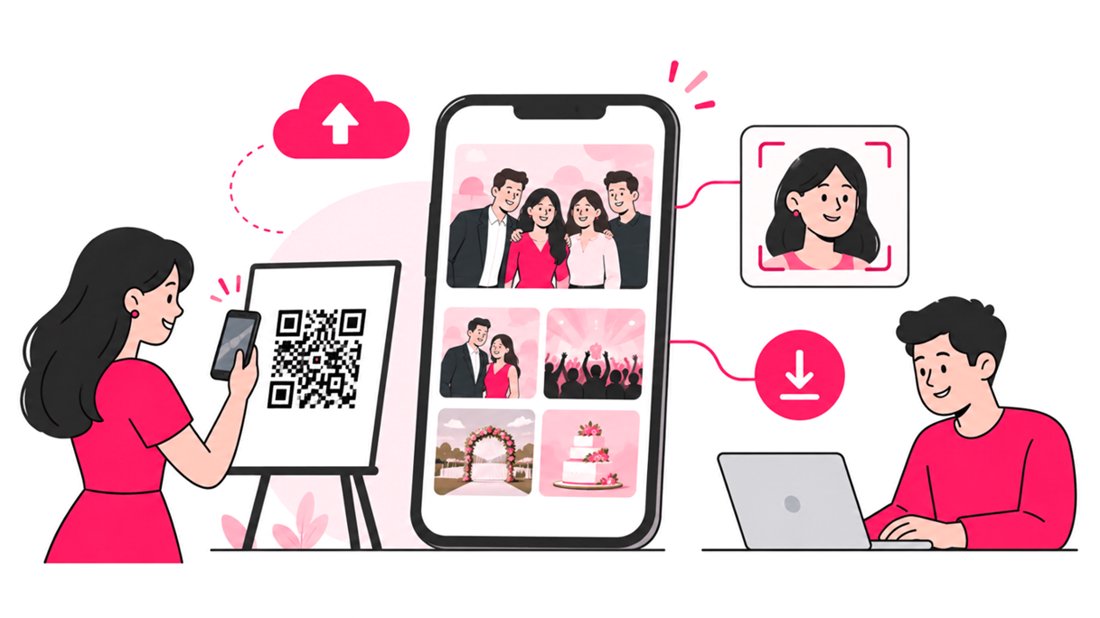
When photos are shared, add context where possible: identify the session, day, speaker, or activity. For large conferences, use a consistent gallery structure and make the access link easy to find. A QR code can help attendees reach the gallery from event signage, while a searchable photo-sharing tool can make large collections easier to navigate.
Festivals, Community Events, and Cultural Celebrations
At a festival or community gathering, storytelling is often about collective identity. The strongest coverage includes performances and headline moments, but it also documents the people and traditions that make the event distinctive.
Capture the environment before it fills up, the people preparing it, interactions between attendees, performances, food and craft details, volunteers, and the small exchanges that might otherwise go unnoticed. Ask before making close-up portraits of people in sensitive or private situations, and follow the event’s photography and consent policies.
For organizers, photo sharing helps participants see themselves as part of the event rather than as anonymous faces in a crowd. A gallery can also give community partners, performers, and volunteers a useful record to share with their networks. If the collection is large, a well-organized gallery is easier to use than a long chain of social posts.
Learn more about community building through photo sharing.
School Events, Graduations, and Sports
School and sports photography has a different narrative rhythm: preparation, effort, participation, and achievement. The result is not only the final award or winning moment, but also the teamwork and persistence that led to it.
Photograph warm-ups, practice, coaching, teamwork, the main event, reactions, and celebrations. At graduations, balance official portraits with candid interactions among students, families, teachers, and staff.
Fundraisers, Galas, and Nonprofit Events
For fundraising events, visual storytelling should show both the occasion and the cause behind it. A gallery filled only with table settings and posed donor portraits may miss the reason the event exists.
Include the people doing the work, the community being served when appropriate and consented to, speakers explaining the mission, volunteers preparing the venue, and authentic interactions. Capture the event’s atmosphere without staging misleading scenes or implying that a person supports a message they have not endorsed.
Afterward, a carefully selected set of photographs can support a donor thank-you, impact report, volunteer recruitment, and future event promotion. Pair images with accurate captions so viewers understand the people and work represented.
Photo Selection and Sequencing: From Images to a Story
A large gallery is not automatically a compelling story. Too many near-identical frames can weaken the narrative and make it harder for guests to find the images they care about.
Use a consistent editing process:
- Cull first. Remove accidental frames, duplicates, missed focus, and images that do not add value.
- Keep a mix of scales. Combine wide establishing shots, medium interaction shots, and close details.
- Prioritize meaningful moments. Technical quality matters, but a genuine reaction can be more valuable than a perfect-looking image with little story.
- Sequence with intention. Arrange selected images in a way that moves from context to action to reaction and resolution.
- Caption accurately. Names, roles, session titles, and dates should be checked before publishing.
- Create highlights without hiding the full story. A short curated selection can work alongside a complete gallery for people who want to explore more.
The final collection should reflect what actually happened. Avoid arranging images in a way that misrepresents the order of events or changes the meaning of a person’s actions.
Learn more about how to create highlights folder on SnapSeek.
Why Photo Sharing Is Part of the Story, Not Just Delivery
The story does not end when the photographer exports the final images. Sharing determines who can access the story, how easily they can find their own moments, and whether the photographs are useful after the event.
Traditional delivery methods each have trade-offs. Email attachments are awkward for large collections, messaging apps can fragment the archive, and a generic cloud folder may require guests to scroll through hundreds of files. A purpose-built online event photo gallery can give people one consistent destination.
The best option depends on the audience, event size, privacy requirements, and how guests are expected to use the images. For a small private dinner, a simple shared album may be enough. For a multi-day conference with thousands of photographs, search and organization become much more important.
SnapSeek is one example of a web-based event photo-sharing workflow: a host or photographer publishes the collection, then shares access through a link or QR code. Guests can use the browser rather than installing a separate app, and face-based discovery can help them locate relevant images in a large gallery.
How to Measure Whether Your Visual Story Reached People
The success of an event gallery is not measured only by how many photographs were uploaded. Choose a few indicators that match the event’s goals.
Useful measures include:
- Gallery visits: Did attendees reach the collection?
- Photo views and downloads: Which parts of the gallery were useful?
- Time to delivery: How long did it take to publish the first useful selection and the final gallery?
- Support requests: Were guests able to find their photos without asking the organizer for help?
- Sharing and reuse: Did approved images appear in internal recaps, community newsletters, or post-event communications?
- Stakeholder feedback: Did attendees, sponsors, speakers, or clients find the coverage representative and useful?
Treat these measures as operational signals, not universal benchmarks. A private family celebration and a public conference have different goals, so compare performance against the event’s own objectives and previous editions rather than relying on a generic target.
FAQ
What is storytelling through photography?
Storytelling through photography uses a sequence or collection of images to communicate the context, people, key moments, emotions, and outcome of an experience. At events, it combines planned coverage with candid details to show not just what happened, but why it mattered.
How do photographers tell a story at an event?
Start with the event’s purpose and identify the moments that communicate it. Photograph the setting, people, details, main activities, candid reactions, and closing moments, then select and sequence the images so viewers can follow the experience.
Why is photo sharing important after an event?
Photo sharing gives attendees and stakeholders access to the images that document their experience. A clear, organized gallery helps people revisit meaningful moments, find photographs featuring them, and share approved images without searching through scattered messages or folders.
What is the best way to share event photos with guests?
Choose a method based on gallery size, privacy, and guest needs. A shared album may suit a small gathering, while an online event photo gallery with a simple link or QR code can be more practical for large events. Search features can help when the collection contains thousands of images.
How should event photos be organized for storytelling?
Group images by event, day, session, or activity where that structure helps people navigate. Within a curated story, sequence images from establishing context to key moments and reactions. Use accurate captions and keep the complete gallery organized for guests who want to explore beyond the highlights.
Conclusion
Great event photography captures more than a schedule of activities. It reveals relationships, atmosphere, effort, and the small moments that give a gathering its meaning. Thoughtful selection and sequencing make those photographs easier to understand, while accessible photo sharing helps the story reach the people who were part of it.
Plan the narrative before the event, photograph with context, edit with intention, and choose a delivery method that fits the audience. When you are ready to make event photos easier to discover and share, explore SnapSeek and build a gallery workflow that keeps the focus on the moments worth remembering.