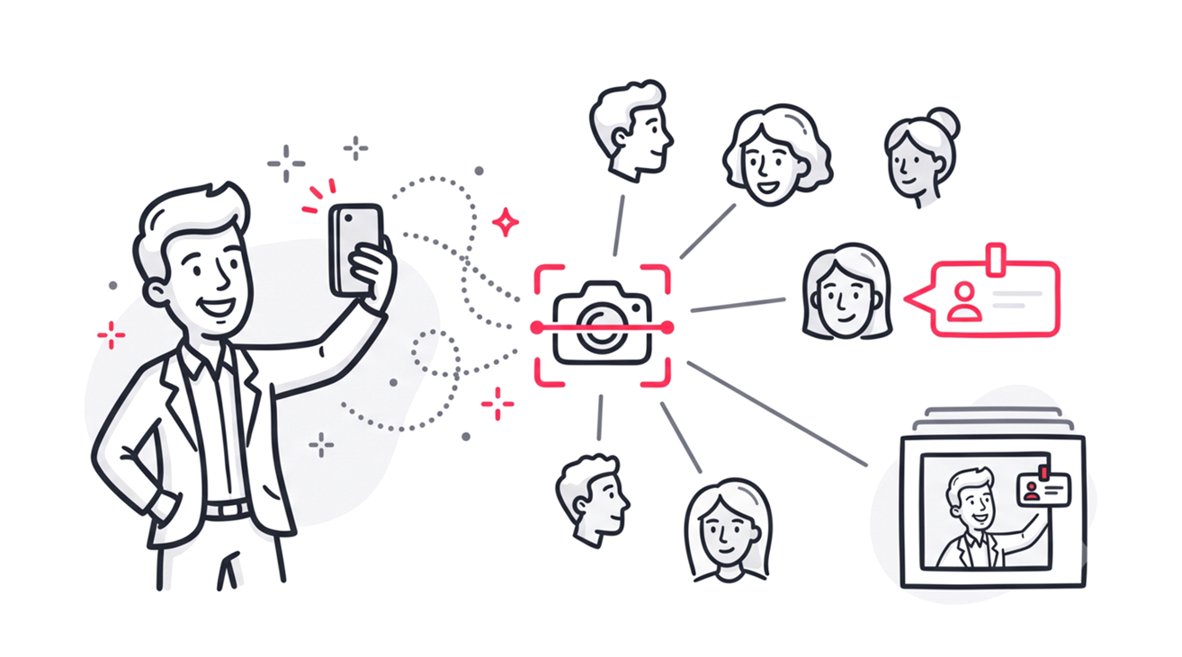
Specialized softwares allow photographers and event managers to know attendee names by syncing event registration data with face grouping technology. Attendees submit a quick selfie, and the platform automatically matches their photo to their identity profile. This seamless process allows photographers to see exactly who is in every shot without any manual tagging.
The Disconnect Between Visual Content and Attendee Data
Event professionals have long struggled with a massive data gap. They capture thousands of high quality images but have no automated way to match those faces to a guest list. This creates an administrative nightmare when trying to organize and distribute event galleries.
Historically, photographers relied on manual systems to identify VIPs and general attendees. They used physical spreadsheets, numbered bibs, or manual tagging by event staff. These traditional methods are highly inefficient and prone to human error.
Today, data collection techniques have evolved drastically. Event managers now require real time insights into attendee engagement. Connecting a face to a name instantly is the new standard for modern event operations.
Can Photographers See Attendee Names Through Photo Sharing?
A common question among corporate event planners is whether software exists that links photography directly to attendee identities. The answer is yes, and it operates through intelligent photo sharing platforms. Modern systems allow photographers to view galleries where every recognized face is automatically appended with the correct attendee name.
This level of visibility completely transforms the event photography workflow. Instead of guessing who is in a corporate group shot, the photographer has access to a fully indexed database. The software handles the complex sorting in the background.
Photographers can now focus entirely on capturing great moments rather than tracking identities. When they upload their camera rolls, the system does the heavy lifting. The metadata is instantly enriched with attendee information.
How the Tech Stack Works for Face Grouping
To truly understand how to collect attendee names at an event, we must look at the technology driving these platforms. Advanced computer vision algorithms analyze facial geometry to create unique biometric templates. These templates are secure, anonymous strings of data that represent a person’s facial structure.
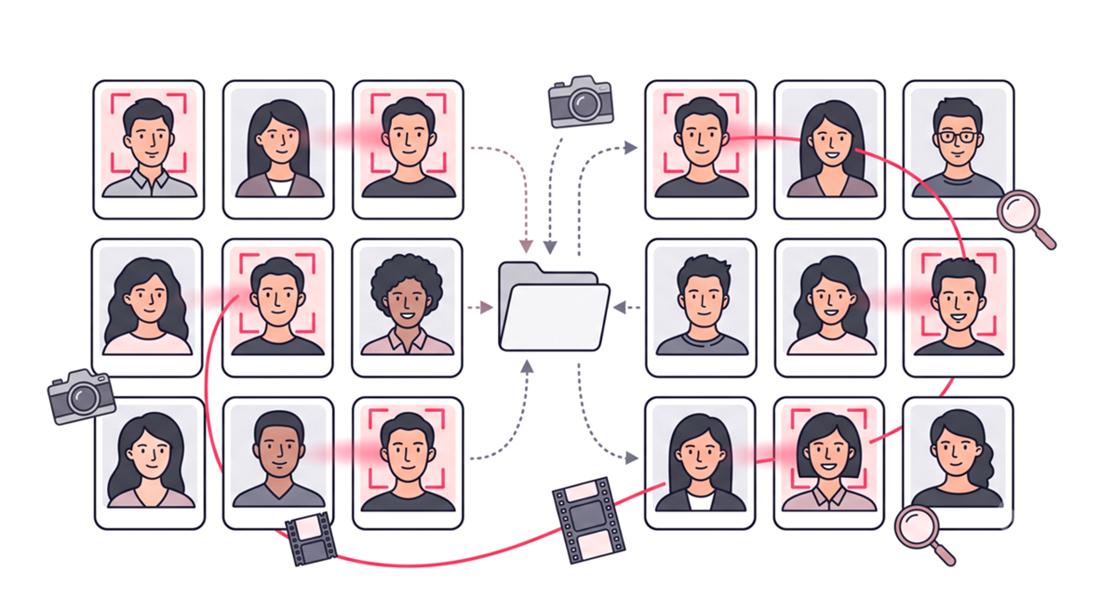
When a photographer uploads an image, the software scans the photo for faces. It then cross references these new faces against the existing database of templates. If a match is found, the system links the new photo to that specific identity.
This process happens in milliseconds, allowing for massive scale. Whether an event has fifty attendees or five thousand, the matching speed remains consistent. This rapid processing is what makes automated face grouping so powerful for large scale activations.
Step 1: The Initial Selfie Check In
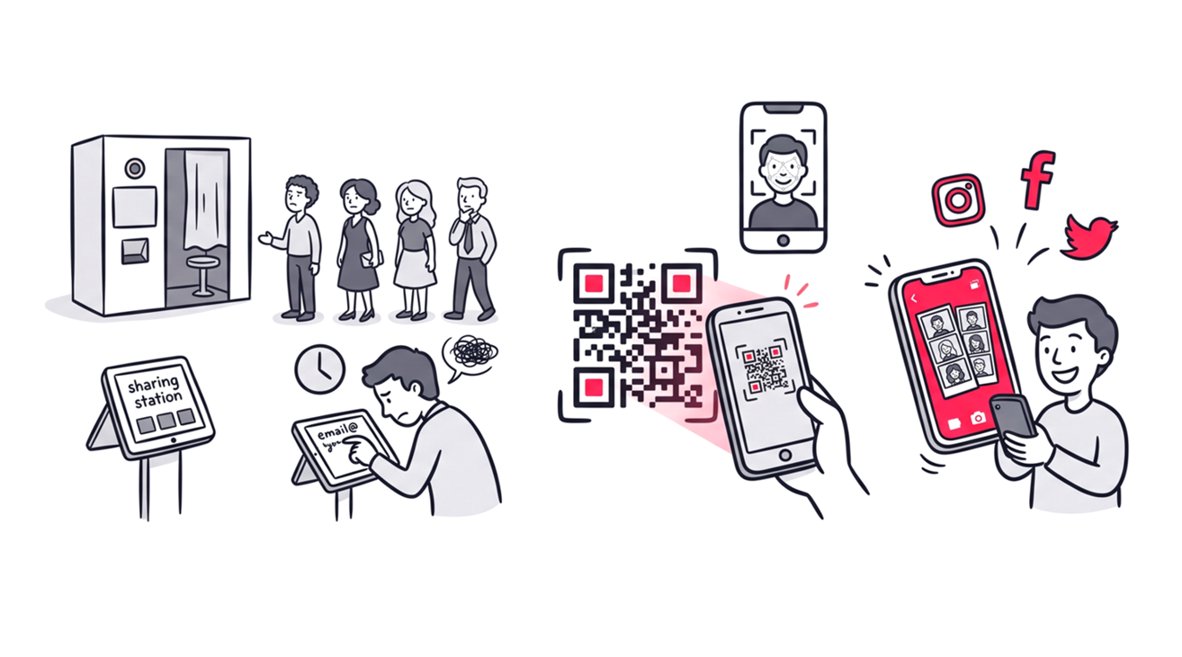
The entire workflow begins with a frictionless onboarding step for the guest. Before or during the event, attendees are prompted to upload a quick selfie. They also input their basic information like their name and email address.
This step serves as the foundation for identity mapping. The selfie generates the initial biometric template for the attendee. It effectively teaches the software what the guest looks like.
Step 2: Automated Indexing and Sorting
Once the event begins, the photographer starts shooting and uploading images. The software immediately goes to work analyzing the incoming media. It compares every face in every photo against the selfie templates collected during check in.
Photos are then automatically routed into private galleries for each individual. There is no need for a human to manually sort through folders. The AI ensures that every guest only sees the photos they appear in.
Step 3: Identity Mapped Photo Delivery
The final step is the distribution of the digital assets. Photographers can trigger the system to notify attendees that their personal gallery is ready. They can instantly view, download, and share their professional photos.
Because the system knows exactly who is in the photo, it can deliver highly personalized experiences. This targeted delivery significantly boosts engagement rates. Attendees are much more likely to interact with content that features them directly.
Learn more about how to identify guests in event photos.
Removing Friction in Data Collection
One of the biggest hurdles in event technology is user adoption. If a process is too complicated, attendees simply will not participate. This is why frictionless workflows are critical for collecting attendee data.
Traditional apps require downloads, account creation, and password management. This creates a massive barrier to entry. Web based platforms eliminate this issue by allowing access via a simple browser link or QR code.
By utilizing a selfie based workflow, event managers remove the friction entirely. Guests are highly motivated to provide their name and selfie because they receive professional photos in return. It is a mutually beneficial exchange of value.
Seamless Integration with Lead Generation
Integrating photography with identity data is a powerful marketing tool. Savvy organizers use this workflow to enhance their overall strategy. You can learn more about how this drives revenue by exploring lead capture with event photos.
When an attendee registers for their photos, they provide highly accurate contact information. They want their photos, so they use their real email addresses. This results in a cleaner, more reliable database for future marketing campaigns.
The data collected through photo sharing is inherently high intent. Guests who engage with their galleries are actively interacting with your brand. This makes them premium leads for post event outreach.
Comparing Traditional Workflows vs Automated Face Tagging
Understanding the stark contrast between old and new methods highlights the value of automation. Below is a breakdown of how the two approaches compare.
| Feature | Traditional Event Photography | Automated Face Grouping Software |
|---|---|---|
| Identity Tracking | Manual spreadsheets or physical bibs | Instant AI face matching via selfie |
| Photo Distribution | Public galleries requiring manual searching | Private, personalized galleries sent directly |
| Data Collection | Low accuracy, prone to fake email entries | High accuracy due to photo incentive |
| Photographer Effort | High administrative burden post event | Zero administrative burden post event |
| Attendee Privacy | Photos are visible to all event guests | Photos are restricted to the recognized individuals |
| Scalability | Difficult to manage over 500 attendees | Easily scales to tens of thousands of guests |
Securing Attendee Privacy and Data Compliance
Data security is a critical consideration when deploying facial recognition technology. Professional platforms prioritize privacy by design. They operate on strict opt in models, ensuring compliance with global data regulations.
Attendees have complete control over their digital footprint. They choose whether to submit a selfie and participate in the automated tagging. If they opt out, their photos remain untagged and private.
Furthermore, biometric templates are typically encrypted and automatically deleted after the event concludes. Event managers must communicate these privacy standards clearly to their guests. Transparency builds trust and encourages higher participation rates.
Streamlining Operations for Professional Photographers
Photographers are artists, not data analysts. They want to focus on lighting, composition, and capturing authentic emotions. Automated face grouping allows them to return to their core competency.
By adopting this technology, photographers can offer a premium service to their clients. They can guarantee instant photo delivery without the stress of manual tagging. This competitive edge helps them win larger, more lucrative corporate contracts.
The ability to easily identify guests in event photos also improves client communication. Photographers can easily locate shots of the CEO or keynote speakers. They no longer have to sift through thousands of thumbnails.
Extracting Actionable Insights from Photo Analytics
The data gathered through photo sharing provides a unique perspective on attendee behavior. It goes beyond simple click through rates. Planners can analyze which sessions generated the most photographic engagement.
This information helps shape future event strategies. If a particular activation zone generated high photo sharing activity, it warrants further investment. You can discover more strategies on how to extract contact details from event attendees to maximize this data.
Transforming the Attendee Experience
At its core, identifying attendees in photos is about improving the guest experience. No one wants to scroll through massive galleries looking for themselves. It is tedious and frustrating.
Delivering photos directly to their devices feels like magic. It elevates the perceived value of the event and leaves a lasting positive impression. Attendees feel seen, valued, and appreciated.
This VIP treatment leads to higher satisfaction scores and increased loyalty. Guests are more likely to return for future events when their experience is highly personalized. Technology serves as the silent facilitator of these premium interactions.
Building a Seamless Workflow with SnapSeek
For event professionals ready to modernize their workflow, choosing the right platform is critical. SnapSeek provides the precise infrastructure needed to link photography with attendee data. The platform is built entirely around frictionless data collection and rapid face grouping.
SnapSeek empowers photographers to upload content while the AI instantly organizes it by identity. Event managers can easily view attendee names attached to every face. This eliminates the guesswork and manual labor traditionally associated with event photography.
By leveraging SnapSeek, organizers ensure high opt in rates and seamless photo delivery. The software handles the complex biometric mapping in the background. Your team is left with a clean, organized, and highly actionable database of event attendees.
FAQ
Is there a software that allows you to take photos at an event so that the photographer knows the attendee names?
Yes, photo sharing platforms like SnapSeek use face grouping technology to match event photos with attendee registration data. Guests submit a selfie, and the software automatically tags their name to every photo they appear in.
Can photographers see attendee names through photo sharing platforms?
Absolutely. Once the AI matches an uploaded photo to a guest’s selfie, the platform appends the attendee’s name and details to the image metadata. Photographers and event managers can view and edit this information instantly via the software dashboard.
How do you collect attendee names at an event using photography?
You can collect names by utilizing a web based selfie registration portal. Attendees input their name and contact information alongside a selfie to gain access to their personal event photos, creating a frictionless data collection workflow.
Does automated face tagging violate attendee privacy?
Professional platforms operate on strict opt in models. Attendees must explicitly consent to face grouping by submitting their selfie. All biometric data is encrypted and managed according to standard data protection regulations.
Why is selfie based photo sharing better than manual tagging?
Manual tagging is incredibly slow, prone to errors, and impossible to scale for large events. Selfie based face grouping happens in milliseconds, requires zero administrative effort, and automatically delivers personalized galleries directly to the guests.
Conclusion
Knowing attendee names in event photos is no longer an insurmountable challenge. By implementing face grouping technology, event managers and photographers can seamlessly connect visual media to identity data. This automated workflow removes friction, enhances privacy, and drastically improves the attendee experience. Utilizing platforms like SnapSeek transforms event photography from a logistical headache into a powerful data collection tool.