AI photo recognition helps event photographers by automating the entire sorting and delivery process. This technology scans bulk event galleries and matches individual faces against guest selfies in seconds. Photographers save massive amounts of manual identification time while clients receive curated, personalized galleries instantly.
The Problem with Traditional Photo Sharing Workflows
Event photography has always struggled with the post-production delivery phase. Professionals capture thousands of high-resolution images during a single corporate conference or wedding. Sorting these massive files manually consumes hours of valuable desk work.
Clients expect rapid turnaround times in our highly connected digital landscape. Delivering a gallery weeks after an event leads to diminished excitement and lower engagement. Traditional manual tagging simply cannot keep pace with modern client demands.
Photographers have historically relied on generic cloud storage links to share event photos. They upload an uncurated folder and expect guests to scroll endlessly to find their faces. Data shows this method is highly ineffective and frustrating for end users.
The Shift to AI Photo Sharing
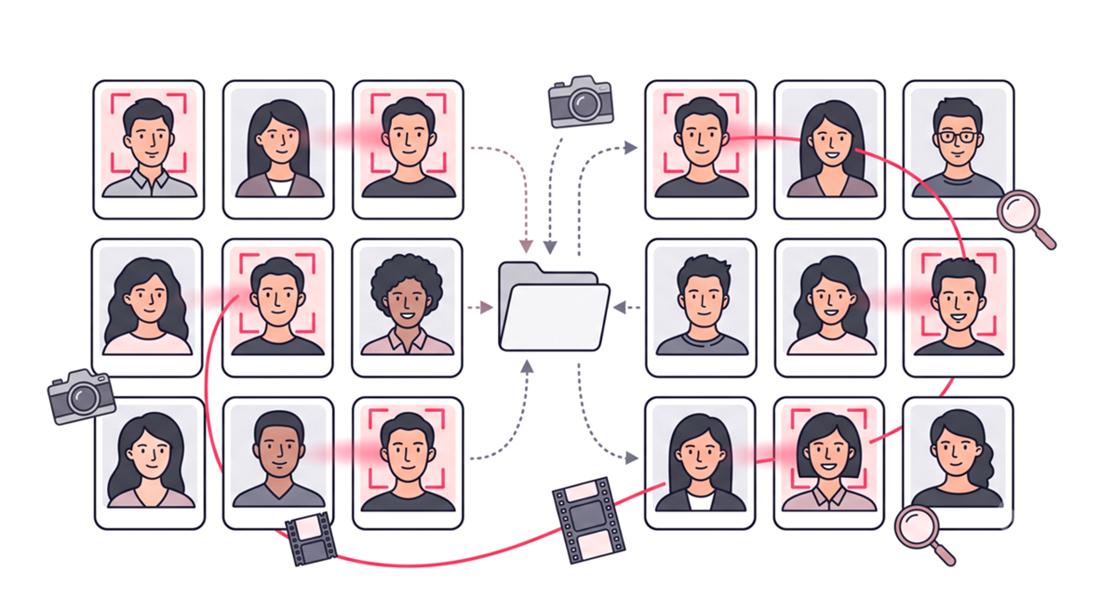
AI photo recognition completely flips the traditional delivery model. Modern algorithms analyze facial geometry to identify individuals across thousands of diverse images. This transforms a chaotic folder into a highly organized database of faces.
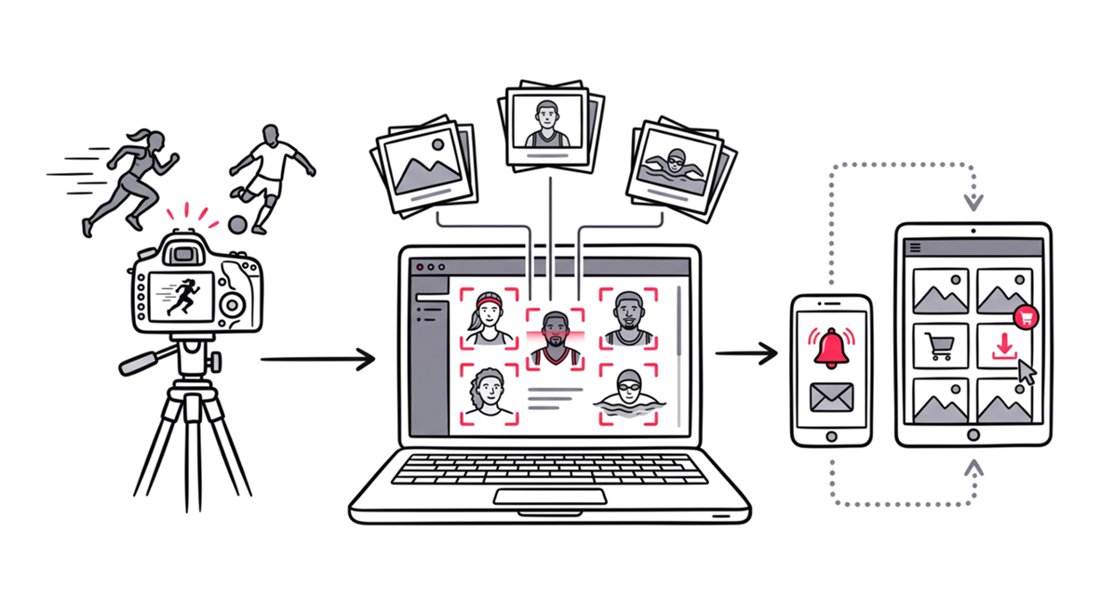
The core benefit of AI face recognition is pure operational efficiency. Industry benchmarks indicate that this technology reduces overall photo delivery time by up to 90 percent. What used to take days of manual labor now happens autonomously in the background.
Photographers can finally focus on shooting and running their business instead of staring at a monitor. Automated sorting eliminates the tedious chore of clicking through similar shots to tag specific attendees. AI photo sharing systems handle the heavy lifting with remarkable precision.
How Face Tagging Works in Practice
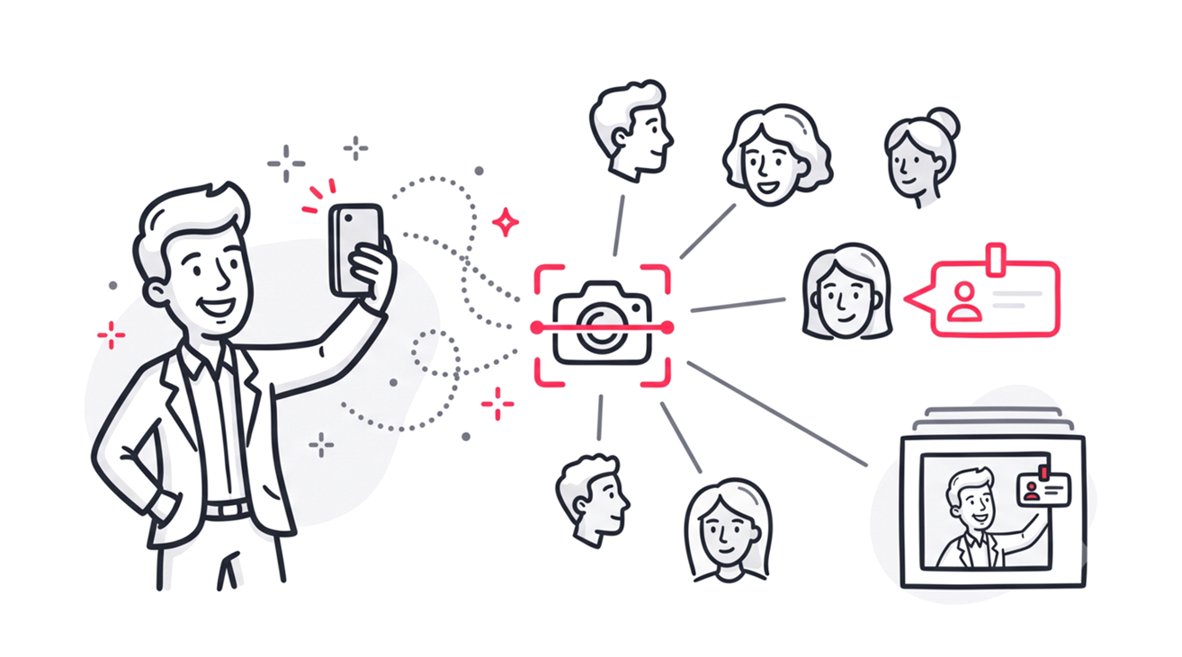
The mechanism behind this technology relies on a simple guest interaction. This feature allows the guests to provide details to tag the photos and retrieve their personalized matches. They snap a quick selfie, and the system does the rest.
The software creates a mathematical facial embedding from the reference selfie. It then cross-references this data against every image the photographer uploaded to the gallery. Modern systems can match a selfie against tens of thousands of event photos in under two seconds.
This process requires no manual intervention from the photographer. The AI handles challenging variables like side profiles, varied expressions, and complex event lighting. Guests instantly receive a curated album containing only the photos they appear in.
The Web App Advantage for Guests
Accessibility is a massive factor in gallery engagement. Guests are increasingly hesitant to download heavy native software just to view a few pictures. A frictionless experience is absolutely mandatory for high conversion rates.
This is why top-tier solutions operate exclusively as web applications. SnapSeek is a web app, meaning attendees simply click a link to access their customized gallery. There are no mobile app installations or complex registration hurdles to slow them down.
Operating through a browser ensures universal compatibility across all devices. Guests can view, download, and share their event photos from smartphones, tablets, or desktop computers effortlessly. This low barrier to entry maximizes gallery traffic and client satisfaction.
Maintaining Quality and Control
Professional photographers are rightfully protective of their digital assets. They require systems that respect their artistic output and operational boundaries. Uncontrolled environments risk damaging a photographer’s brand reputation.
First, strict control over the upload process is non-negotiable. A professional platform operates strictly as a one-way photo sharing tool. Only the host or photographer can upload files, ensuring the gallery remains a curated professional portfolio. Guests cannot upload their own blurry smartphone shots to dilute the professional work.
Second, image fidelity must remain pristine during the delivery phase. High-resolution files require efficient handling to load quickly on mobile networks. Even after compression the image quality remains intact, ensuring clients see crisp and vibrant details.
The Financial Impact of Delayed Deliveries
Time is money in the professional photography business. Hours spent at a computer manually sorting files are hours you cannot spend marketing or shooting new events. This unpaid administrative work severely caps your potential monthly revenue.
Clients also assign a lower monetary value to services that take weeks to finalize. The modern consumer expects immediate digital gratification in all aspects of their life. Failing to provide this speed makes it difficult to justify premium pricing for your services.
Implementing AI photo recognition removes this artificial income ceiling. By reclaiming your post-production hours, you can book more weekend events or corporate weekday sessions. The software effectively acts as a tireless digital assistant that never sends an invoice.
How AI Photo Recognition Protects Guest Privacy
Security is a massive concern when dealing with facial recognition technology. Clients often worry about their biometric data being stored or misused on unknown servers. It is crucial to understand how modern event technology handles this sensitive information securely.
AI photo sharing platforms do not store raw biometric images permanently. Instead, the software creates an abstract mathematical representation.
Once the event gallery is processed and delivered, these temporary references are purged. There are no intrusive trackers running in the background to harvest personal information. The entire architecture is built solely to facilitate fast and secure photo delivery.
Preparing Your Galleries for AI Workflows
Transitioning to an automated workflow requires minor adjustments to your standard export process. The AI needs clear and well-lit faces to generate accurate mathematical references. Blurry or underexposed shots will naturally yield lower match rates.
Photographers should continue applying their global batch edits before uploading. Basic exposure correction and color grading ensure the AI algorithms have the best possible data to analyze.
Remember that dedicated tools are distribution engines designed to take your finished product and deliver it instantly. Always finalize your creative vision before initiating the upload sequence.
Scaling Up to Massive Conferences
Small weddings are relatively easy to manage, but large corporate conferences are a different beast entirely. Multi-day events with thousands of attendees generate an overwhelming volume of digital assets. Manual sorting becomes mathematically impossible without hiring an army of expensive assistants.
AI face recognition scales effortlessly to handle these massive digital workloads. Processing a five thousand photo gallery takes the software mere minutes instead of weeks. The tool organizes the entire event without breaking a sweat or asking for overtime pay.
This scalability allows solo photographers to bid on massive corporate contracts with absolute confidence. You no longer need to worry about the logistics of delivering personalized photos to five hundred distinct attendees. The technology levels the playing field for independent visual artists.
Comparing Traditional vs. AI Photo Recognition
To truly understand the impact of AI in event photography, we must look at the direct operational differences. Upgrading your workflow changes everything from delivery speed to social engagement.
| Workflow Feature | Traditional Photo Sharing | AI Photo Recognition |
|---|---|---|
| Sorting Speed | 6 to 8 hours manually | Under 30 minutes automated |
| Guest Retrieval | Manual scrolling | Instant selfie matching |
| Image Delivery | Weeks after event | Same-day or next-day |
| Social Shares | Low engagement | 4.2x higher engagement |
| Access Method | Generic cloud links | Personalized smart galleries |
This table illustrates the massive chasm between outdated methods and modern automation. Embracing AI face recognition gives photographers a distinct competitive advantage over local rivals.
Overcoming the Cloud Storage Problem
Many professionals still rely on standard cloud drives to share event photos. They email a single link to a corporate client and consider the job done. This approach actively harms the perceived value of the photography service.
Research indicates that a third of event attendees never download their photos when shared via generic folders. Guests simply do not have the patience to sift through hundreds of unrelated images. The photographs you worked so hard to capture end up unseen and forgotten.
AI photo recognition solves this engagement crisis immediately. By delivering a hyper-personalized gallery, guests are immediately drawn to their own images. This tailored experience significantly boosts the perceived value of the photographer’s work.
Maximizing Social Media Impact
The window for organic social sharing is incredibly brief. Social media engagement from event photos drops drastically if images are not provided quickly. Real-time or same-day delivery is the only way to capture this peak excitement.
When photographers use AI photo sharing, they capitalize on this narrow time frame. Same-day photo delivery generates over four times more social media shares compared to delayed timelines. Every time a guest shares a watermarked photo, the photographer gains free organic marketing.
Instant gratification leads to wider brand exposure and higher referral rates. Corporate clients specifically value this rapid turnaround for their own marketing initiatives. Delivering photos instantly proves your technical proficiency and professionalism.
FAQ
How accurate is AI face recognition in low light?
Modern AI systems maintain over 99% accuracy even in challenging lighting conditions. The algorithms analyze core facial geometry rather than relying strictly on perfect exposure.
Does AI photo sharing reduce the quality of my images?
Professional systems are designed to protect your resolution. Even after compression the image quality remains intact, ensuring fast loading speeds without sacrificing crisp details.
Can guests add their own photos to the gallery?
No, professional systems operate strictly as one-way photo sharing tools. Only the authorized photographer or host can upload images to maintain the integrity of the gallery.
Do clients need to download a specific app to use this?
They do not need to download anything. The platform is a dedicated web app, allowing guests to access their personalized photos directly through any standard internet browser.
How do guests actually find their photos?
Guests simply upload a quick reference selfie, and the AI matches their face against the entire event gallery instantly. They receive the curated photo gallery with only their photos.
Conclusion
The future of event photography relies on speed, precision, and client experience. Implementing AI photo recognition completely eliminates the most tedious aspects of post-production sorting. Photographers can reclaim their time while delivering a premium, personalized gallery to every single attendee.
Stop losing hours to manual tagging and frustrating cloud storage links. It is time to upgrade your workflow and give your clients the instant gratification they expect. Start using SnapSeek today to revolutionize how you share event photos and grow your photography business.