To share photo booth photos digitally, event professionals use automated gallery platforms equipped with facial recognition and dynamic QR codes. Guests simply scan a QR code at the booth or upload a quick selfie to securely access their personal gallery. These modern tech workflows bypass manual email entry and enable real-time, friction-free photo delivery directly to a smartphone.
The event technology landscape is evolving rapidly. Photographers and brand marketers are constantly looking for ways to optimize the guest experience. One of the most common bottlenecks at any live event occurs right at the photo booth.
Guests take incredible pictures, but the process of receiving those pictures is often clunky. Figuring out how to share photo booth photos digitally in a seamless way is a priority for modern event professionals. Today, we will explore the technology behind photo delivery and how new platforms are redefining the workflow.
What is a Photo Booth and How Does It Work Today?
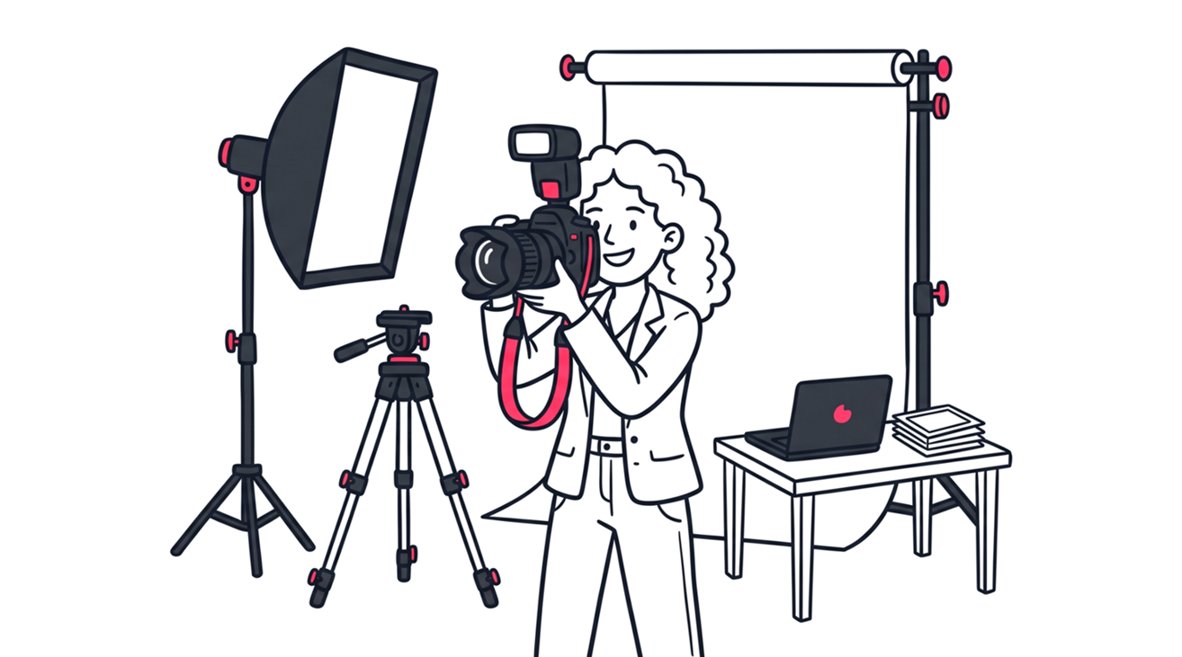
A photo booth is an interactive kiosk or setup designed to capture high-quality images of event attendees. Modern setups typically consist of a DSLR or mirrorless camera, professional strobe lighting, and a touchscreen interface. A mini PC or dedicated tablet powers specialized software to control the camera trigger and process the images.
These setups are no longer just for weddings and birthday parties. Experiential marketing agencies, corporate galas, and massive trade shows rely on photo booths to generate branded content. The hardware has become incredibly sophisticated over the last decade.
However, capturing the photo is only half of the equation. The true value for both the guest and the brand lies in the delivery of that media. This brings us to the most critical touchpoint of the entire experience: the sharing station.
The Current State of Photo Booth Photo Delivery
Traditionally, photo booths relied on instant physical prints to give guests a tangible memory. While prints are still popular, digital sharing has become the mandatory standard. The most common method today involves a secondary iPad kiosk known as a sharing station.
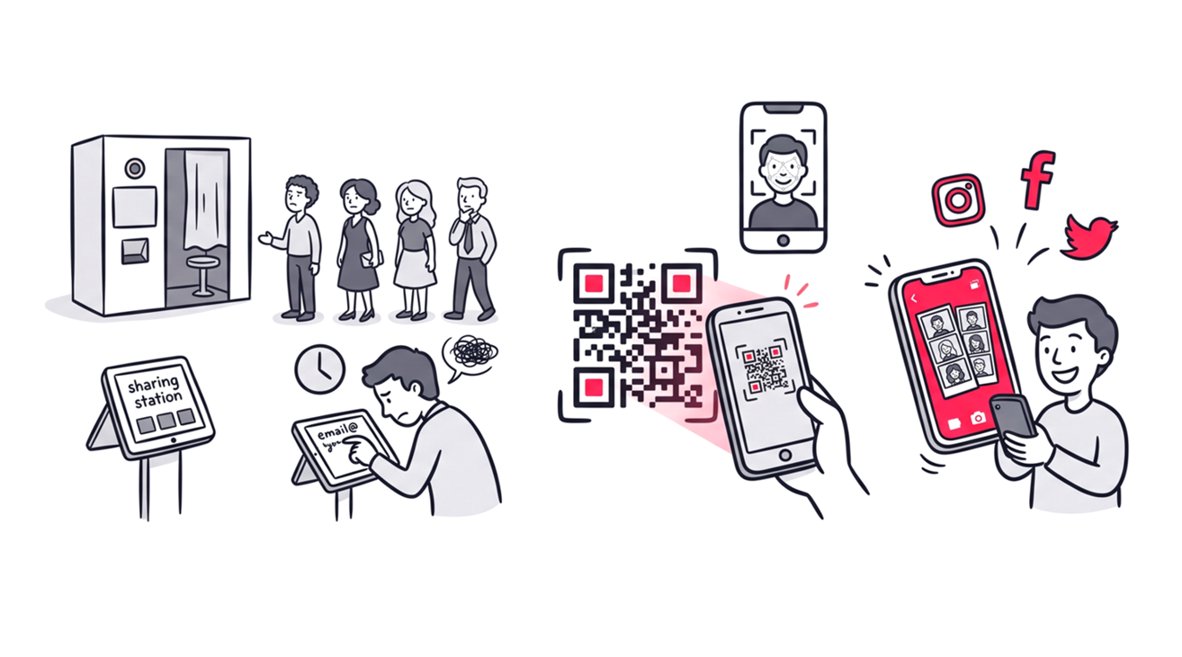
After guests finish their session, they step over to the sharing station to review their images. They are then prompted to manually type in their email address or phone number. The software sends an automated message containing a link or an attachment with their photos.
This process seems straightforward on paper. In reality, it introduces several points of friction for both the operator and the guest. We must look at these gaps to understand why the industry is shifting toward faster delivery systems.
Gaps in Traditional Photo Delivery at Photo Booths
The biggest issue with manual data entry at a sharing station is the queue. When a group of five people needs to type their individual emails on a single iPad, it takes minutes. This creates a massive bottleneck that limits the total number of sessions a booth can handle per hour.
Additionally, user error is incredibly common in dark, loud, or fast-paced event environments. Guests frequently mistype their email addresses or enter an incorrect digit for their phone number. When this happens, the photos disappear into the digital void, leaving the guest frustrated.
SMS delivery also faces strict carrier regulations and filtering algorithms. Mobile carriers often flag repetitive links from automated phone numbers as spam. This means a guest might enter their information perfectly but still never receive their digital photos.
The Shift to Instant Photo Delivery at Photo Booths
Because of these bottlenecks, operators are asking how to deliver photo booth photos instantly without the wait. The solution lies in completely removing the sharing station from the workflow. Instead of making the guest do the work, modern technology automates the delivery in the background.
Consumers in 2026 expect absolute instant gratification when interacting with digital interfaces. Studies in digital user experience show that engagement drops severely when a digital task takes more than thirty seconds. Event professionals must adopt workflows that match these high expectations.
By leveraging dedicated gallery platforms, photographers can route images from the capture software directly to the cloud. This creates a centralized hub for all event media. From here, intelligent delivery tools take over to distribute the images to the right people.
How to Share Photos Taken at a Photo Booth Using Modern Tech
To truly modernize the workflow, you must implement systems that require zero typing from the guest. The industry has adopted a few highly effective methods for instant distribution. These methods prioritize speed, privacy, and user experience.
Photo Delivery at Photo Booth with QR Code
Photo sharing with QR code technology is currently the most accessible digital delivery method. The booth software or a connected gallery platform generates a dynamic QR code on the physical booth screen. As soon as the session ends, guests point their smartphone cameras at the screen.
The QR code directs them to a live, branded web gallery containing their specific session. They can immediately view, download, and share their photos to social media from their own devices. This clears the physical area around the booth instantly.
Furthermore, dynamic QR codes can link to a continuously updating event gallery. This is highly effective when comparing a stationary setup to a roaming photo booth workflow. Guests can keep the gallery tab open on their phones and watch new photos populate throughout the night.
Selfie Search for Photo Booth Photos
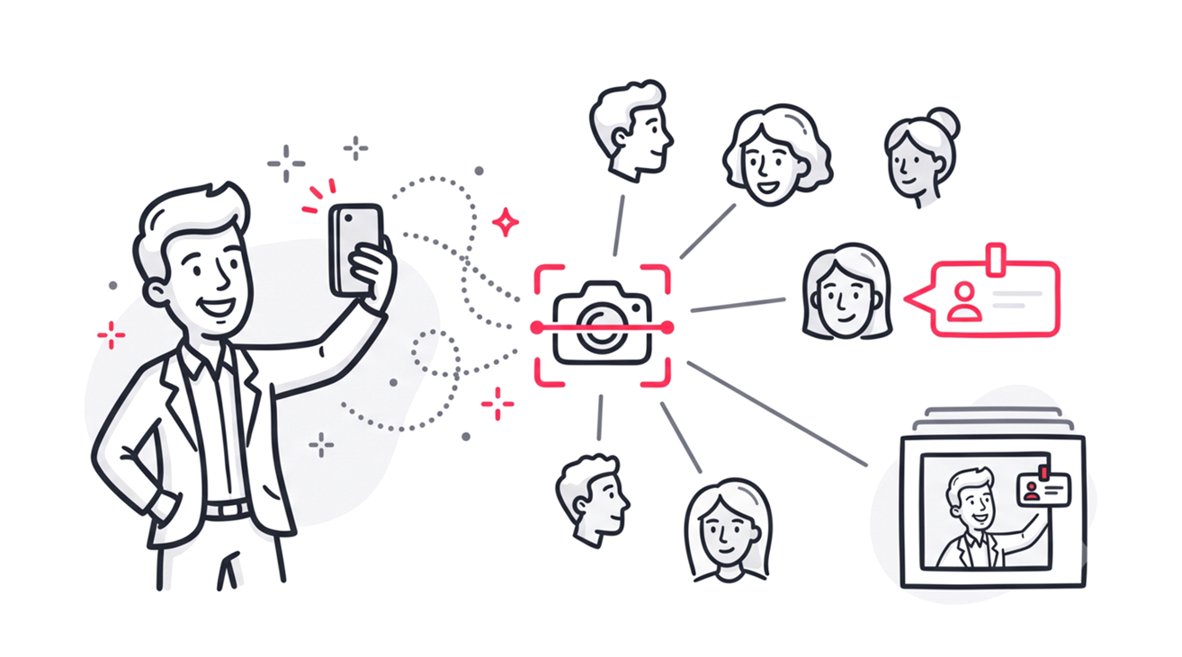
Facial recognition has completely revolutionized how to share photo booth photos online. Instead of scrolling through hundreds of event photos to find their session, guests use face matching. This process is commonly known as a selfie search.
Guests navigate to the main event gallery via a single QR code or URL. They are prompted to take a quick selfie with their smartphone camera. The platform’s algorithm instantly maps their facial features and scans the entire event database for matches.
Within milliseconds, the platform returns a private, personalized gallery containing only the photos featuring that specific guest. This method provides an incredibly personalized experience and solves major privacy concerns. Guests no longer have to dig through a public folder of strangers to find their own images.
Automated Notifications and Galleries
Beyond initial access, keeping guests engaged after the event is a major priority. Advanced platforms allow guests to opt-in for automated notifications. Once they register their face or email via their own device, the system monitors the event folder.
If the photographer uploads edited versions or if a roaming photographer captures them later, the guest receives an automatic alert. This creates a dynamic, ongoing connection between the brand and the attendee. It ensures no captured memory ever gets left unseen.
Why Tech-Driven Workflows Remove Friction
Integrating AI and digital scanning removes the manual labor from photo delivery. When you eliminate the sharing iPad, you eliminate the physical line. Booth operators can process more sessions per hour, increasing the overall ROI of the activation.
It also dramatically improves data capture for corporate clients. When guests use their own phones to access a selfie search gallery, they can smoothly opt-in to marketing lists. Filling out a mobile lead-capture form on a personal device is much faster than typing on a communal screen.
Overall, it elevates the perceived value of the event photography service. When a guest experiences seamless facial recognition delivery, it feels like magic. It positions the photographer or agency as a cutting-edge, premium vendor.
A New Standard for Event Photographers
Photographers and photo booth owners need software that handles this heavy lifting automatically. You do not need to be a software developer to offer these premium delivery methods. Dedicated platforms are built specifically to bridge the gap between capture and delivery.
SnapSeek is designed to handle this exact workflow for modern event professionals. You simply route your photo booth uploads directly into a dedicated SnapSeek event gallery. The platform automatically indexes every face and generates the necessary access points.
By utilizing SnapSeek, you give your clients access to instant selfie search and dynamic digital delivery. It operates quietly in the background while your guests enjoy a frictionless sharing experience. It is a vital tool for any operator looking to scale their services.
Comparison: Traditional vs. Modern Digital Sharing
Understanding the sheer contrast between old and new workflows helps clarify the value of upgrading. The table below outlines the distinct differences between legacy sharing stations and modern AI delivery.
| Workflow Feature | Traditional iPad Sharing | Modern Digital AI Delivery |
|---|---|---|
| Data Entry | Manual typing required | Zero typing via QR scan |
| Speed | 1 to 3 minutes per group | Instant access under 5 seconds |
| Privacy | Public scrolling required | Private galleries via Selfie Search |
| Hardware Required | Extra iPads and sharing kiosks | None. Guests use their own phones |
| Delivery Reliability | High risk of bounced emails | 100 percent guaranteed web access |
| Guest Experience | Frustrating during high traffic | Seamless and highly personalized |
FAQ
How do you share photos taken at a photo booth without an iPad?
You can bypass iPads by displaying a dynamic QR code directly on the photo booth screen. Guests scan this code with their personal smartphones to instantly access a live digital gallery where they can view and download their photos.
What is a selfie search for photo booth photos?
Selfie search is a feature powered by facial recognition technology. A guest uploads a quick selfie from their phone, and the gallery software instantly scans the entire event database to deliver a private folder containing only their photos.
Is photo delivery at a photo booth with a QR code secure?
Yes, QR code delivery is highly secure when paired with modern gallery platforms. You can configure the linked galleries to require a selfie scan or a personalized PIN, ensuring that guests only see their own images and not the public feed.
How to deliver photo booth photos instantly during large events?
For large events, operators use cloud-syncing software that uploads images over cellular data or Wi-Fi in real-time. Paired with a platform like SnapSeek, these images are instantly indexed for facial recognition, allowing immediate distribution to attendees.
Conclusion
Learning how to share photo booth photos digitally is essential for staying competitive in event tech. Relying on manual email entry and physical sharing stations limits your throughput and frustrates guests. The industry has firmly moved toward automated, zero-friction delivery systems.
By implementing selfie search and dynamic QR codes, you empower guests to control their own experience. They receive their memories instantly on their own devices. This modern approach drives better engagement, higher satisfaction, and stronger brand impressions.
If you are ready to modernize your event photography workflow, it is time to upgrade your software stack. Implement SnapSeek at your next event to experience flawless, instant digital delivery. Your guests and your clients will notice the difference immediately.