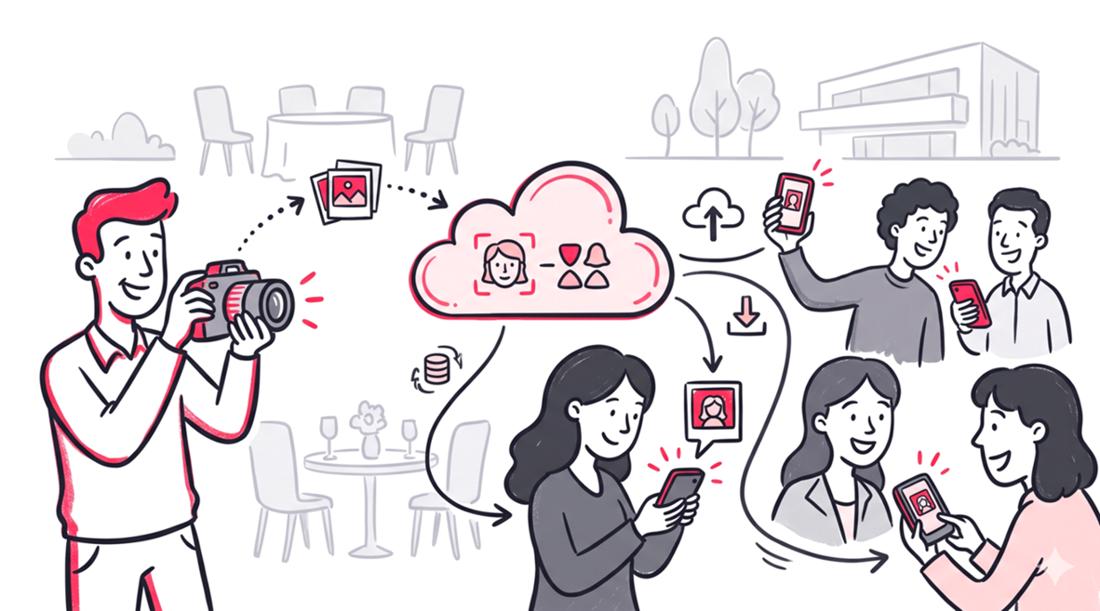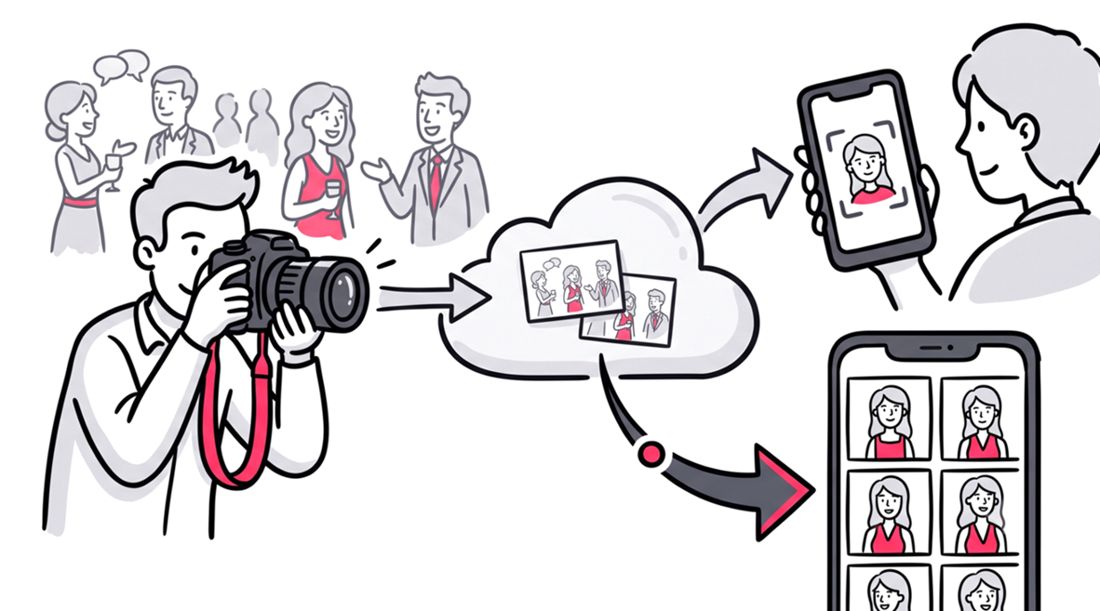
To achieve secure event photo sharing without requiring app downloads, event organizers deploy web-based portals linked to physical QR codes. Guests scan the code, snap a quick selfie, and facial recognition instantly delivers their specific event photos. This one-way event photo sharing method ensures a highly curated, professional gallery while maximizing sponsor visibility and eliminating user friction.
The Problem with Traditional Golf Photo Delivery
Golfers expect premium experiences from the moment they arrive at the course to the final awards dinner. However, the post-event engagement drop-off has always been a massive pain point for tournament directors. After eighteen holes, the last thing guests want to do is navigate a clunky tech platform.
Historically, event planners handed out cards with a password and a link to a massive gallery. Guests were expected to log in later and hunt through hundreds of images to find their foursome. This created friction and resulted in incredibly low download rates.
Another flawed approach was forcing guests to download a proprietary app at the nineteenth hole. App fatigue is a real psychological barrier for consumers today. Asking a VIP guest to clutter their smartphone for a single day of golf photo delivery simply does not work.
The Setup at The Classic Invitational
The Classic Invitational is an annual high-stakes charity tournament catering to brand marketers and major corporate sponsors. The event director faced a significant challenge regarding digital asset distribution. They needed a secure event photo sharing solution that matched the premium nature of the tournament.
The photography team was hired to capture candid interactions, swing shots, and formal team photos. Leveraging modern AI photo recognition for event photographers enabled these high-quality images to reach end users quickly and efficiently.
The organizers realized that traditional delivery methods would compromise the VIP experience. They needed to share event photos without an app to keep the process completely frictionless. The goal was to build a deployment strategy that required zero technical support from the event staff.
The Solution: Frictionless QR Code Event Photo Sharing
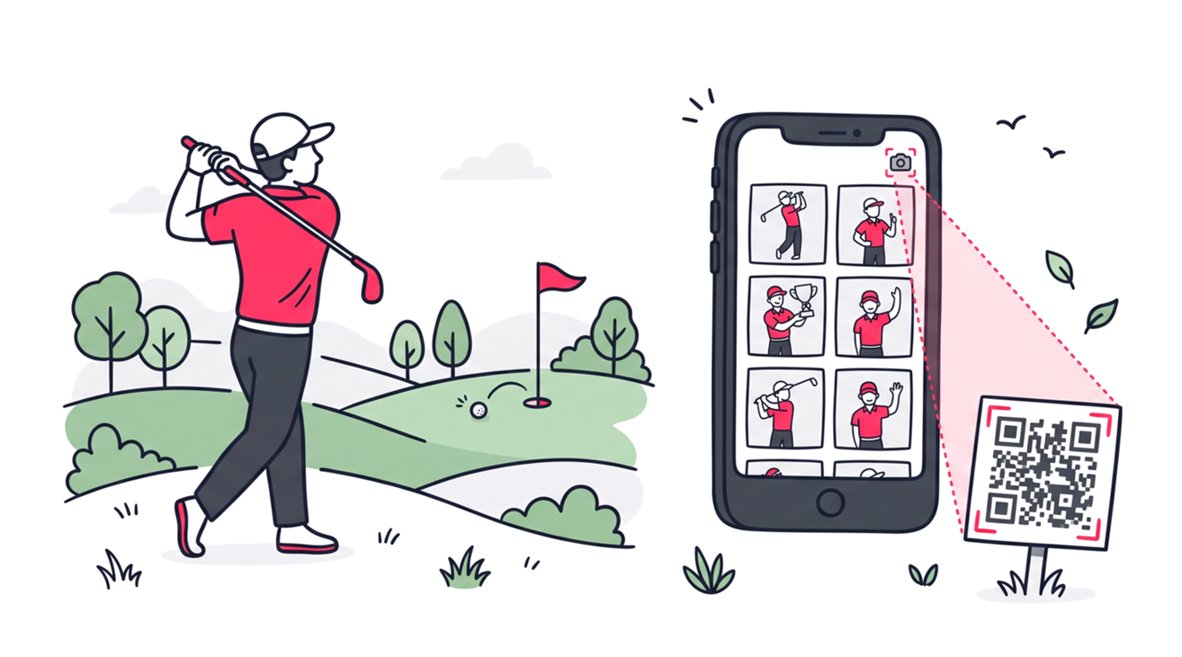
The tech strategy shifted away from native applications and moved entirely to the browser. The team decided that QR code event photo sharing was the most accessible bridge between the physical and digital worlds. By placing custom branded QR codes directly on the golf carts and scorecards, the access point became unavoidable.
Players did not have to search for a link or type a complex URL into their mobile browsers. They simply pointed their smartphone cameras at the cart and were instantly routed to a secure web portal. This zero-friction approach resulted in immediate adoption across the entire participant base.
The custom portal was completely white-labeled with the tournament’s branding. Sponsors received premium logo placement on the landing page before the players even saw a single photograph. This provided measurable digital impressions that pleased the corporate partners immensely.
The Facial Sorting Mechanism
Once a player accessed the portal, they were greeted with a very simple prompt. The system asked them to take a quick selfie using their phone camera. This single input powered the entire secure event photo sharing infrastructure in the background.
Advanced facial recognition algorithms instantly scanned the comprehensive event database. Within seconds, the web portal filtered out the noise and displayed only the images featuring that specific golfer. Players instantly saw their candid shots and their dedicated portraits.
This mechanism is the gold standard for private photo sharing for sports. Players do not want to scroll through images of strangers to find their own memorable moments. Similarly, school administrators use this fast workflow to handle high-volume events like prom photo delivery with SnapSeek, ensuring students and parents receive formal pictures instantly. Delivering personalized galleries dynamically creates an immediate rush of gratification for the user.
Why One-Way Event Photo Sharing Matters
Many consumer apps push for collaborative albums where anyone can upload pictures. For a premium charity tournament, this two-way street is actually highly detrimental to the brand. You do not want a highly curated event gallery diluted by low-quality guest uploads.
The deployment utilized strict one-way event photo sharing to protect the integrity of the professional assets. The professional event photographers controlled the narrative and the quality of the visual output. Guests could view and download the premium photos but could not upload their smartphone snaps to the main feed.
This ensures that the final digital asset remains a powerful marketing tool for the tournament director. Brand marketers can then confidently share the official gallery link with stakeholders without worrying about unvetted content. The overall aesthetic of the event remains pristine and professional.
Comparing Workflows: Traditional vs Modern Tech
Understanding the paradigm shift requires looking at the exact steps a user takes. The traditional method creates multiple opportunities for the user to abandon the process. The modern web-based approach removes those technical hurdles entirely.
| Feature Category | Traditional App Delivery | Modern SnapSeek Delivery |
|---|---|---|
| Initial Access | Search app store and download | Scan physical QR code on cart |
| Account Creation | Form fill and email verification | Zero account creation required |
| Photo Discovery | Scroll through 500+ image gallery | Instant selfie-based facial sorting |
| Quality Control | Mixed with poor guest uploads | Curated professional assets only |
| Support Needs | High volume | Zero support tickets generated |
As the table illustrates, the modern workflow prioritizes speed and user autonomy. Eliminating the account creation step alone drastically improves the overall engagement metrics.
Maximizing Sponsor Visibility Through Direct Access
When corporate sponsors invest in charity tournaments, they want targeted visibility in front of high net worth individuals and decision makers. When event photo delivery is clunky, sponsor impressions plummet.
Frictionless delivery directly correlates to higher sponsor return on investment. Because the golfers accessed their photos instantly on the course, the branded web portal saw massive traffic spikes. Sponsors were thrilled that their logos were natively integrated into a platform the players actually wanted to use.
You can read more about structuring these sponsorship deals in our guide on custom branding for event galleries.
Security and Privacy in Focus
High-profile guests often demand strict privacy regarding their personal images. Public galleries hosted on generic cloud drives open the door to unwanted digital distribution. A core requirement for this invitational event was finding a secure event photo sharing framework.
The facial sorting mechanism acts as a natural privacy barrier. Because guests only see photos containing their own face, they cannot access or download images of other participants. This localized delivery method builds immediate trust with the VIP participants.
This is exactly why private photo sharing for sports is transitioning away from public links. You can ensure that sensitive candid moments remain exclusively in the hands of the subjects. The technology naturally enforces privacy without requiring complex permission structures.
The Photographer’s Perspective on Frictionless Workflows
From the vendor side, event photo sharing with no app download systems completely change the post-production workflow. Photographers no longer have to spend hours fielding emails from guests looking for their pictures. The automated system handles all the distribution and sorting in real-time.
This allows the creative team to focus entirely on capturing stunning imagery. When the technology works quietly in the background, the photographer’s perceived value skyrockets. To understand the backend upload process better, review our detailed breakdown on sharing event photos without app downloads.
Delivery Speed and Client Satisfaction
Turnaround time is the ultimate metric for client satisfaction in event technology. The modern golfer expects to view their swing shots as soon as possible. Delivering on this expectation requires a streamlined infrastructure.
The photographers at the event uploaded the photos to the cloud using the SnapSeek interface. Images were synced and processed by the facial recognition engine within minutes. Guests scanning the QR code at hole eighteen were already looking at photos taken at hole three.
| Delivery Metric | App Download Workflow | SnapSeek Workflow |
|---|---|---|
| Time to First Photo | 15 to 20 minutes | Under 30 seconds |
| Gallery Load Time | High latency due to volume | Low latency targeted delivery |
| User Friction Level | Extremely High | Virtually Zero |
This speed not only wowed the attendees but also solidified the photography agency’s contract. Providing a magic-like experience is the easiest way to guarantee repeat business.
Actionable Takeaways for Event Planners
If you are planning a premium tournament, the technology you choose reflects your brand. The first step is to completely abandon any platform that requires user registration or application installation. You must prioritize systems that let you share event photos without an app.
Next, strategically plan your physical access points before the event begins. Placing QR codes on golf carts, scorecard clipboards, and at the final catering stations ensures maximum visibility. The easier the access point is to find, the higher your engagement will be.
Finally, educate your sponsors on the value of digital real estate. Sell the digital portal branding as a premium add-on to their physical signage packages. This approach elevates the perceived value of your sponsorship tiers and offsets the cost of the software.
FAQ
What is secure event photo sharing?
Secure event photo sharing uses facial recognition and direct web portals to ensure guests only see and download their own images. This prevents unauthorized access to the broader event gallery and protects the privacy of high-profile attendees.
How does event photo sharing without an app download work?
Guests scan a physical QR code that opens a custom web portal directly in their mobile browser. They take a quick selfie to authenticate, and the system instantly delivers their personalized photos without requiring any software installation.
Why is private photo sharing for sports important?
Athletes and VIP guests expect premium experiences without compromising their digital privacy. Private sharing ensures individuals only access their specific candid and action shots rather than exposing the entire participant base to a public cloud link.
What are the benefits of one-way event photo sharing?
One-way event photo sharing allows photographers to distribute high-quality images while preventing guests from uploading their own low-resolution photos. This maintains the professional integrity of the event gallery and ensures sponsors are associated only with premium visual assets.
How can I share event photos without an app at a golf tournament?
You can place branded QR codes on golf carts or scorecards that link directly to a facial recognition web portal. This method provides frictionless golf photo delivery, allowing players to instantly access their foursome portraits directly from the course.
Conclusion
Delivering a premium experience at a golf tournament means removing every possible point of friction for the guests. The Invitational proved that forcing users to hunt through massive galleries or download native applications is an outdated strategy. By utilizing QR codes and facial recognition, the organizers provided instant gratification while maintaining complete control over the visual assets.
The strict one-way event photo sharing approach protected the gallery’s professional aesthetic. Meanwhile, the frictionless web portal drove massive engagement and delivered undeniable value to the corporate sponsors. If you want to elevate your next tournament, choose SnapSeek for a flawless photo delivery experience.