Walk into any wedding or corporate holiday party from 2015, and you would likely see the same thing in the corner.
A large, boxy machine. A table full of oversized plastic sunglasses and feather boas. And a long line of guests waiting for their turn to take three photos that they would print out and lose before they got home.
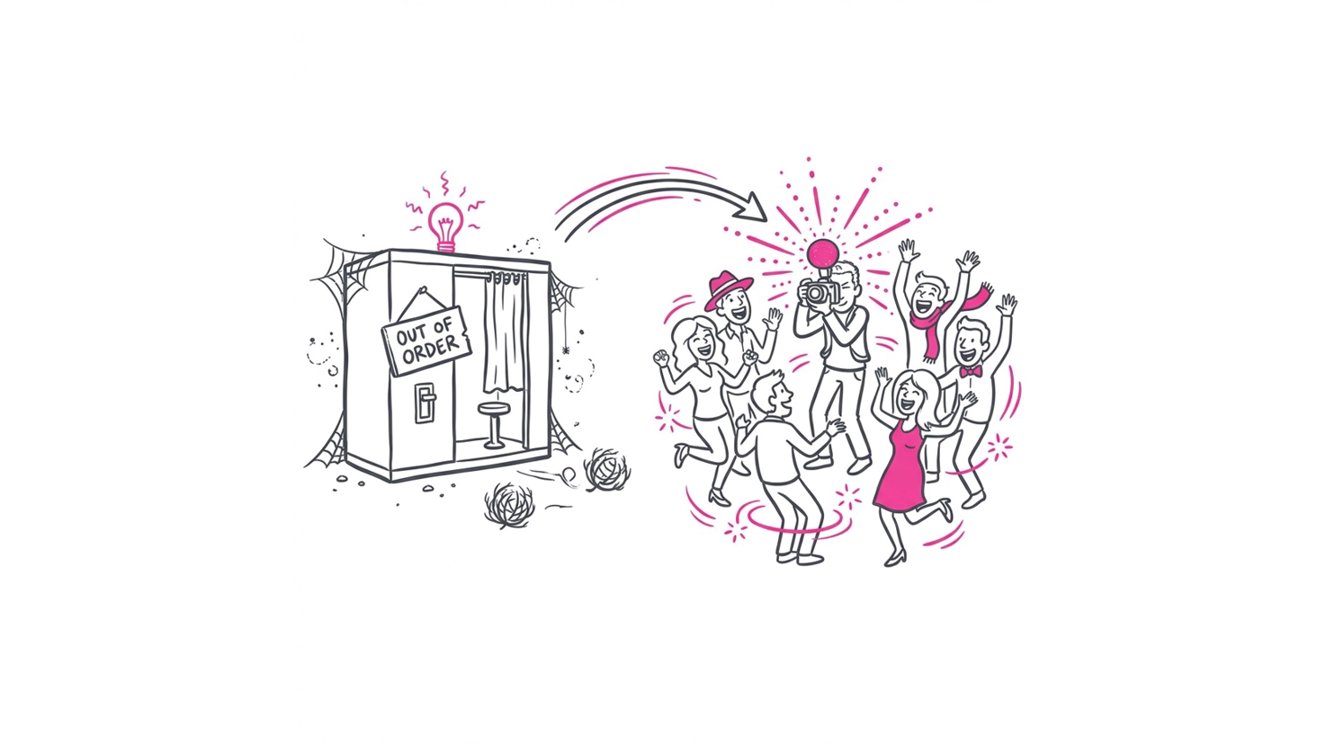
The traditional photo booth had a great run. It was a staple of event entertainment for over a decade. But just like the disposable camera on the table, technology has moved on.
We are entering the era of “Roaming Photography.”
The modern guest does not want to leave the dance floor to stand in a line. They do not want a grainy printout. They want a high-resolution photo, taken professionals, delivered instantly to their phone, ready to be shared on Instagram or TikTok.
Here is why the static photo booth is gathering dust, and how AI-powered sharing is replacing it as the ultimate event activation.
The Friction of the Corner Booth
The fundamental problem with a traditional photo booth is physics. It is stationary.
To use it, your guests have to physically leave the party. They have to step away from the bar, leave the conversation, or stop dancing. They have to migrate to a corner of the room, often located near the exit or the bathrooms.
Then, they wait.
If a group of 10 people is ahead of them, that is a 15-minute wait. In the world of events, 15 minutes is a lifetime. That is 15 minutes they are not engaging with your brand, not drinking your signature cocktails, and not celebrating the couple.
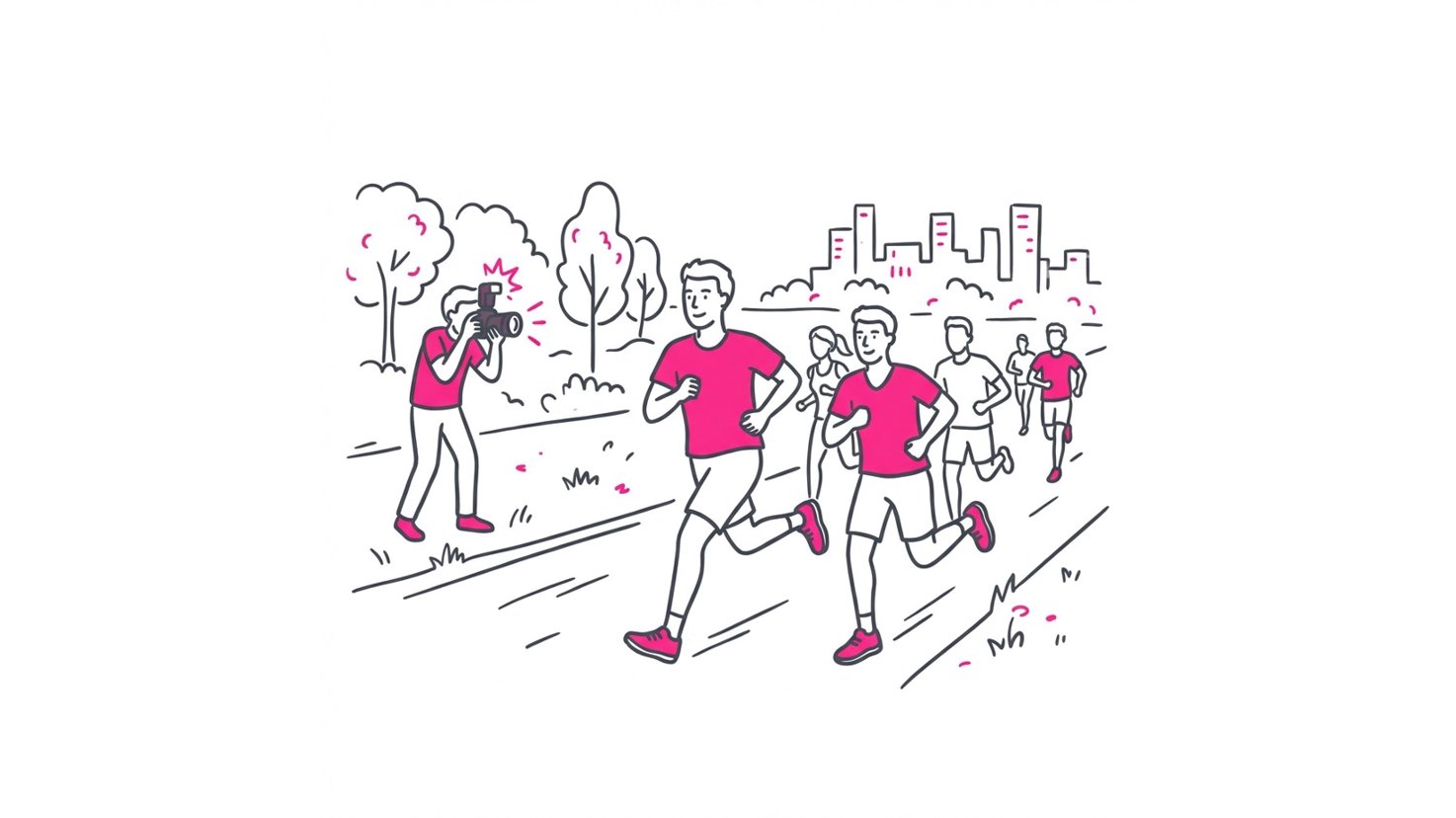
Compare this to a photographer roaming the room with SnapSeek.
The photographer comes to the action. They catch the grandmother laughing at the table. They catch the friends doing shots at the bar. They catch the couple tearing up the dance floor.
There is no line. There is no waiting. The event flow is uninterrupted.
Quality Over Kitsch
Let’s be honest about the quality of photo booth images. They are designed to be funny, not flattering. The lighting is usually a harsh harsh flash. The focus is fixed. The props are often tacky.
For a long time, this was acceptable because it was just for fun.
But today, everyone has a 4K camera in their pocket. Guests have higher standards for imagery. They want photos where they look good. They want lighting that flatters them. They want composition that captures the vibe of the room, not just a white backdrop.
When you replace the booth with a professional photographer using a roaming workflow, you are upgrading the product. You are giving guests magazine-quality portraits instead of passport-style strips.
And because you are using a professional camera, you can capture low-light ambience that a booth simply cannot handle.
The Cost of the Box
For an event organizer, a photo booth is a significant line item.
You are paying for the rental of the machine. You are paying for the attendant to stand there. You are paying for the prints. And you are paying for the transport and setup.
A quality photo booth rental can easily cost $1,000 to $2,000 for a 4-hour event.
If you are already hiring a second shooter or an event photographer, why pay for the box?
With a platform like SnapSeek, your photographer is the booth. By untethering the photo experience, you remove the hardware cost entirely. You are not renting a machine; you are leveraging the talent you already have in the room.
For budget-conscious weddings, this is a massive saving. You can reallocate that $1,000 toward better food, better music, or more photography coverage.
Read more about maximizing your budget in our guide on How to Share Wedding Photos Privately.
Instant Gratification and Social Sharing
The “print” was the killer feature of the 2010s. The “share” is the killer feature of the 2020s.
A photo strip is a souvenir. A digital photo is a status symbol.
When a guest takes a photo at an event, they want to post it now. They want to tag the bride and groom. They want to show their followers where they are.
Traditional booths often have a “text to self” feature, but it is clunky. You have to type your number on a greasy touchscreen. It takes time.
With SnapSeek’s facial recognition, the delivery is frictionless.
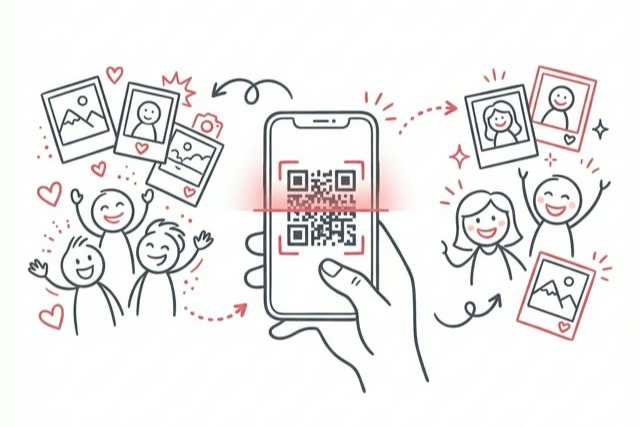
- The photographer takes the shot.
- The guest scans a QR code on a cocktail napkin or screen.
- They take a selfie.
- The photo appears on their phone instantly.
They download it in full quality and post it to their Story within seconds. This creates organic buzz for your event in real-time. It turns every guest into a marketer.
Hygiene and Space
Post-2020, the idea of putting on a pair of plastic sunglasses that 500 other people have worn is… less appealing.
Props are a germ vector. Touchscreens are a germ vector. Crowded lines in tight spaces are a germ vector.
Roaming photography is touchless. The photographer keeps their distance. The guest uses their own phone to retrieve the photos. There are no props to sanitize.
Furthermore, booths take up valuable real estate. In a crowded ballroom or a tight restaurant venue, creating a 10x10 footprint for a booth is a logistical headache. Roaming photography requires zero floor space. The photographer weaves through the crowd, maximizing the venue capacity.
The “Candid” Factor
A photo booth captures a staged version of reality. Everyone poses. Everyone smiles. It is consistent, but it is artificial.
Roaming photography captures the event.
It captures the unscripted moments. The laughter. The tears during a toast. The crazy dance moves. These are the photos that people actually cherish years later.
By moving the “booth” to the dance floor, you are capturing the energy of the party, not just the faces of the attendees.
Comparison: Static Booth vs. Roaming Photography
| Feature | Traditional Photo Booth | Roaming Photography (SnapSeek) |
|---|---|---|
| Footprint | Large (Requires ~10x10 space) | Zero (Mobile) |
| Throughput | Limited (1 group at a time) | High (Multiple angles/moments) |
| Cost | High (Hardware rental + attendant) | Low (Software fee + photographer) |
| Quality | Fixed lighting, basic camera | Professional DSLR/Mirrorless |
| Delivery | Print or slow text | Instant AI Face Search |
| Vibe | Staged, separate from party | Candid, immersed in party |
How to Implement Roaming Photography
If you are an event organizer or photographer ready to ditch the booth, here is the playbook.
The Photographer
You need a photographer who is comfortable engaging with people. They need to be proactive, asking groups, “Hey, let me get a great shot of you!” This is often called a “roaming photographer” or “social photographer.”
The Tech
You need a cloud-based gallery workflow. The photographer uploads their photos to a platform like SnapSeek, where AI instantly indexes every face. This eliminates the need for complex tethering hardware, allowing the photographer to move freely through the crowd.
The Access
Post QR codes everywhere. Put them on the bar. Put them on the tables. Put them on the back of the photographer’s camera or lanyard.
We have a detailed breakdown of this setup in our article on Event Photo Sharing Using QR Codes.
The Speed
Ensure your internet connection is solid. If the venue has poor Wi-Fi, bring a hotspot. The magic relies on speed. If the guest can find their photo 30 seconds after it is taken, you win.
FAQ
Can I still have props?
Yes, but do it differently. Instead of a messy table of boas, create a “stylized corner” or a “step-and-repeat” backdrop. Let guests pose there with the roaming photographer. It gives the “destination” feel of a booth without the clunky hardware.
Is roaming photography more expensive?
Usually, it is cheaper for the client. They are already paying for a photographer. Adding the “instant sharing” capability is a software cost (SnapSeek), which is a fraction of a physical booth rental. It allows photographers to upsell their services without renting a van to haul equipment.
Do guests miss the prints?
Some guests might. But the vast majority prefer a digital image they can save, share, and duplicate. A print fades; a digital file lasts forever. Plus, you can always offer a print station as an add-on if the client insists, but unconnected from the capture workflow.
Does this work for dark parties?
This is where professional photographers shine. A booth struggles in a dark club. A pro with an off-camera flash or a high-end lens can make a dark party look cinematic. The quality difference is noticeable immediately.
Do guests need to download an app?
No. This is critical for adoption. If you ask a guest to download an app to get their photo, they won’t do it. SnapSeek works entirely in the browser. See why this matters in our post on No App Download Photo Sharing.
Conclusion
The photo booth had its moment in the sun. It brought fun and interactivity to events when smartphones were slow and social media was young.
But the future is fluid. The future is high-quality. The future is instant.
Roaming photography powered by AI allows you to capture the event from the inside out, rather than forcing guests to stand on the outside looking in. It saves money, saves space, and delivers a better product.
Next time you plan an event, don’t rent a box. Hire a human, arm them with SnapSeek, and watch the engagement soar.