Facial recognition is changing event photography by replacing slow, manual distribution methods with automated, instant image delivery. Instead of browsing thousands of public images, attendees upload a single selfie to a web-based platform to instantly view their personal photos. This technology eliminates organizational friction, increases event marketing impact, and optimizes the post-event user experience for both organizers and guests.
The Logistics Bottleneck in Traditional Event Photography
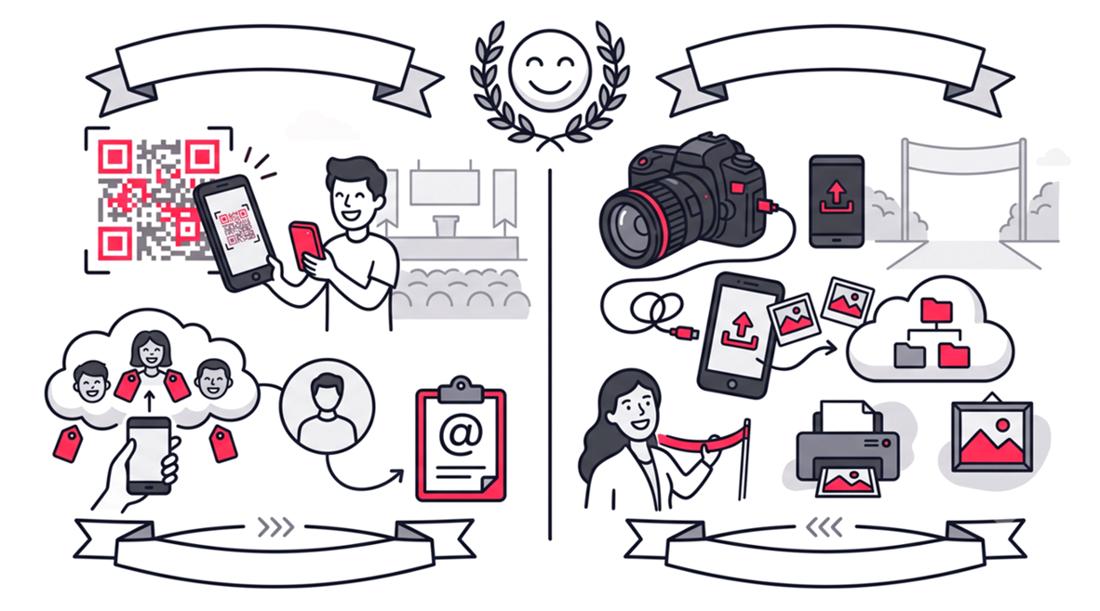
For years, corporate event planners and professional photographers faced the same post-event headache. After capturing hundreds or thousands of high-quality images, the distribution process relied on bulk uploads to traditional cloud storage links. Guests were forced to hunt through massive, unsorted folders to find a single clear photo of themselves.
This legacy workflow creates an immediate drop in digital engagement. Most attendees do not have the patience to scroll through endless galleries, meaning high-value marketing assets go unshared. The delay between the event conclusion and photo delivery reduces the social media momentum that brands rely on for organic reach.
Furthermore, public shared drives present growing data privacy challenges. Corporate clients are increasingly uncomfortable hosting thousands of uncurated attendee photos in an open, downloadable format. Event organizers require a more sophisticated, private, and automated ecosystem to manage their digital assets.
How Face Recognition Photo Sharing for Events Works
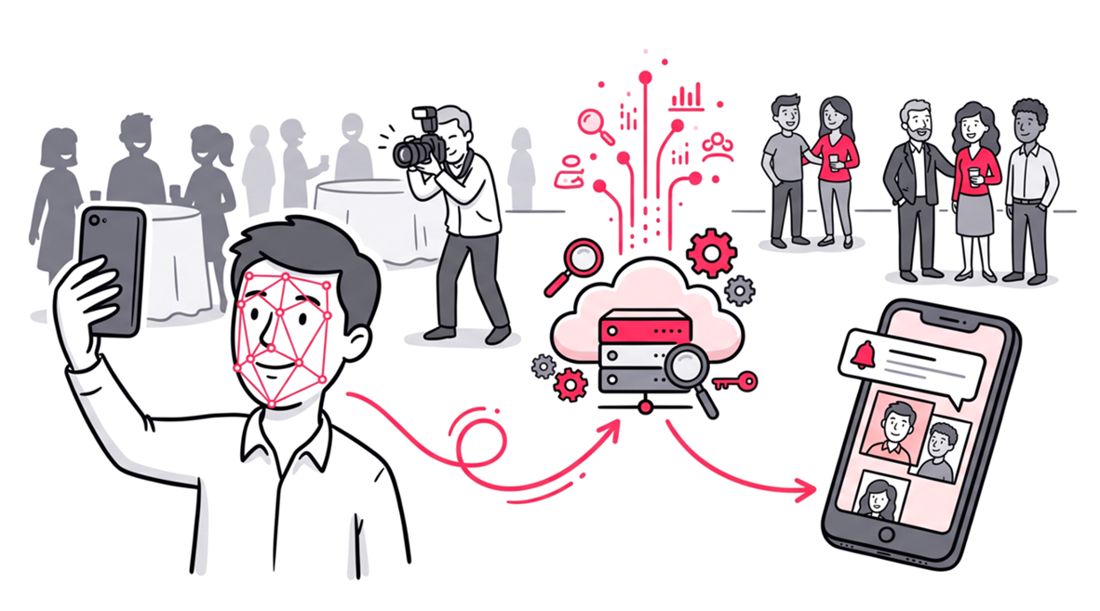
Modern technology eliminates the manual search process by utilizing advanced facial recognition technology right at the point of ingestion. The mechanism is entirely web-based, removing the hurdles associated with traditional software deployment. The workflow operates through a highly optimized three-step pipeline.
Step 1: Centralized Upload from the Photographer
Immediately following or during a live session, the photographer uploads high-resolution assets directly into the corporate event gallery software. This step bypasses the need for local sorting, file renaming, or manual metadata tagging.
Step 2: Quick Facial Grouping
The integrated cloud system processes the images, analyzing unique facial geometry and grouping the matched faces together. The platform does not store personal biometric profiles, ensuring a highly secure processing environment.
Step 3: Instant Guest Matching via Selfie Search
When an attendee accesses the platform, they provide an instant selfie to find their photos from the event. The system compares their selfie against the event database, presenting their exact photos within seconds.
How to Share Conference Photos with Attendees
Event organizers frequently struggle with determining how to share conference photos with attendees efficiently. High-profile summits require a balance of immediate delivery, premium branding, and absolute data control. Implementing a dedicated conference photo sharing platform solves these operational pain points simultaneously.
By deploying automated photo delivery for event guests, organizations can embed sponsor messaging and brand assets directly into the photo retrieval interface. When attendees find their images via a quick face search, they interact with a curated brand environment. This touchpoint provides a natural opportunity for driving traffic back to corporate landing pages.
This automated framework shifts the operational burden away from the event organizer. Instead of managing complex email lists or handling complaints about missing photos, administrators can focus on live operations. The technology ensures that every attendee receives their digital assets without administrative intervention.
Read more about photo sharing tips for corporate events and conferences.
Eliminating the Friction of App Downloads
A major barrier to user adoption at major business gatherings is software installation fatigue. Attendees routinely refuse to download dedicated mobile applications just to access media files from a trade show or seminar. The modern standard relies on an event photo delivery with no app download framework.
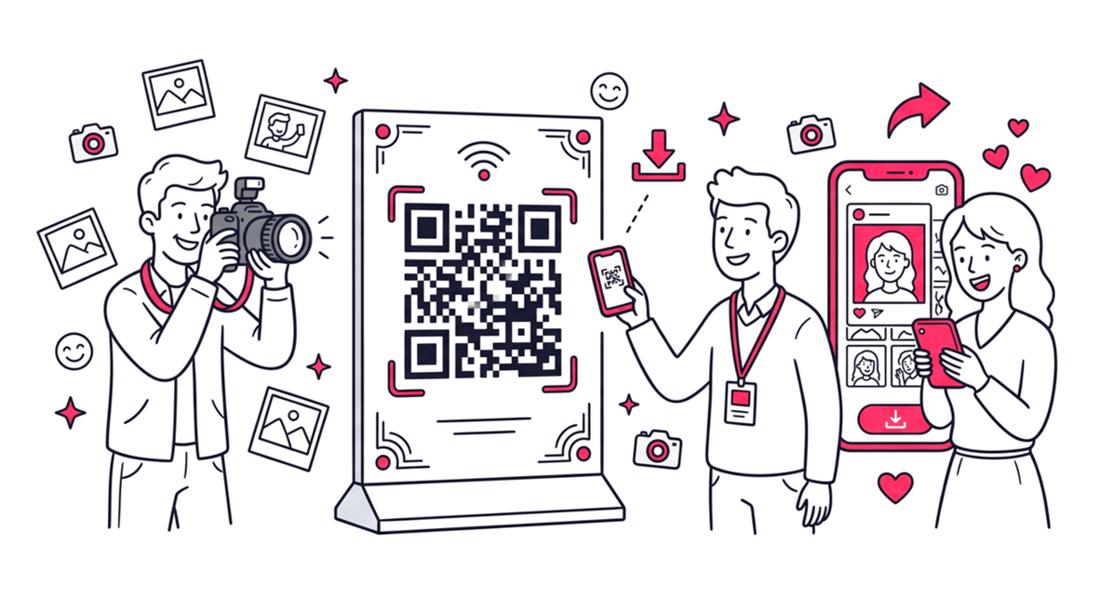
By hosting the gallery on a responsive web application, users access their media via standard mobile web browsers. This approach ensures maximum compatibility across iOS and Android ecosystems without forcing users to navigate app stores. A simple scan of a venue QR code grants instant access to the personalized media portal.
This frictionless access loop drastically increases total user engagement metrics. When the barrier to entry is lowered to a simple browser link, photo retrieval rates climb significantly. Higher retrieval rates translate directly into more organic social media impressions for the host brand.
Direct Comparison: Traditional Galleries vs. AI Face Match Systems
To understand the shifting landscape of event technology, it helps to examine how automated facial identification compares to legacy storage methods.
| Operational Feature | Traditional Cloud Shared Drives | AI Face Recognition Platform |
|---|---|---|
| Delivery Speed | Days or weeks post-event | Instantaneous real-time matching |
| User Access Model | Manual scrolling through bulk folders | Single selfie upload for instant filtering |
| Software Footprint | Varies, often requires third-party accounts | Web app interface with zero download needed |
| Brand Control | Generic storage folders with zero utility | Fully customizable corporate event gallery software |
| Data Privacy | Open public viewing of all attendees | Controlled access focused on individual matches |
Advanced Technical Advantages Over Legacy Tagging
Some event production teams have previously attempted to utilize alphanumeric tracking, such as sorting images by jersey numbers or event bibs. While useful in specific linear sports formats, these methods fail entirely in dynamic corporate environments. Business networking mixers, product launches, and multi-track conferences demand a more flexible solution.
Facial vectoring handles complex variations in lighting, body orientation, and background clutter far better than static character recognition. If an attendee is captured from an angle where their conference badge is obscured, a bib-tracking system fails completely. Facial recognition looks past those physical limitations to find accurate matches based on facial structure.
Photographers spend hours to days sorting photos manually. Using facial recognition AI speeds up the process exponentially as AI groups the photos automatically using facial geometry. This significantly reduces the time and effort required for photo delivery.
Additionally, modern systems prioritize a one-way sharing architecture. Rather than building a collaborative database where guests upload their own files into the master system, the platform functions as a direct delivery channel from professional photographers to guests. This layout preserves the aesthetic quality of the gallery while protecting the security of the asset pipeline.
Privacy and Security Standards in Modern AI Galleries
As biometric technology becomes more widespread, enterprise compliance teams require strict data governance protocols. Responsible platforms design their architectures around user consent and temporary data lifecycle management. The selfie provided by a guest is used exclusively as a search query, never stored as a permanent record.
To maintain compliance with global privacy standards, data processors ensure that facial vectors are deleted automatically as the gallery expires. The one-way sharing model guarantees that guests can only search and retrieve photos that contain their own likeness. This localized approach prevents bulk data scraping and unauthorized access to group photos.
When implemented transparently, facial recognition becomes a powerful asset for consumer goodwill.
FAQ
How does a face recognition photo sharing for events platform protect attendee privacy?
The platform converts uploaded selfies into temporary data that is used solely to query the specific event database and are automatically purged when the gallery lifecycle concludes, preventing unauthorized tracking.
Can attendees access their photos without downloading an external mobile app?
Yes, modern corporate event gallery software like SnapSeek functions completely within mobile web browsers. Attendees scan a QR code at the venue, upload a selfie via the web portal, and view their personalized photos without installing any software.
Why is face matching superior to using Google Drive or Dropbox for corporate events?
Traditional cloud links require guests to scroll through thousands of unsorted photos, which ruins engagement and exposes all attendee photos publicly. AI face matching automates delivery, preserves user privacy, and allows brands to integrate custom assets directly into the photo retrieval flow.
What happens if the lighting changes or an attendee wears glasses during the event?
Advanced facial mapping algorithms analyze deep structural geometric points on the face rather than simple surface colors. This allows the system to identify matches accurately despite shifts in event lighting, accessories, or facial expressions.
Conclusion
Deploying intelligent image distribution is no longer a luxury choice for event organizers. It is a fundamental operational upgrade that respects attendee time, preserves data privacy, and maximizes corporate brand visibility. By removing the friction of manual image searches, brands turn static media folders into live marketing engines.
When planning your next conference workflow, transition away from outdated shared folders and adopt an enterprise-grade corporate event gallery software solution. Discover how easy it is to automate your delivery pipeline, drive social media impressions, and delight your attendees. Experience the power of frictionless, one-way media distribution by launching your next gallery with SnapSeek.