Corporate event organizers frequently ask if facial recognition technology is secure enough for enterprise environments. Secure event photo sharing relies on strict upload controls and temporary biometric processing. By restricting uploads to hired professionals and enforcing automatic data deletion, companies can leverage AI face tagging safely while strictly maintaining corporate data privacy standards. Learn how automated face tagging on SnapSeek executes this isolated indexing process in real time without storing unencrypted biometric templates.
Implementing AI face tagging for photos promises to deliver images instantly to every attendee at a corporate function, provided that photos are uploaded by hosts only to maintain quality control over content and deliver it securely to attendees.
How do you use face tagging securely at company events?
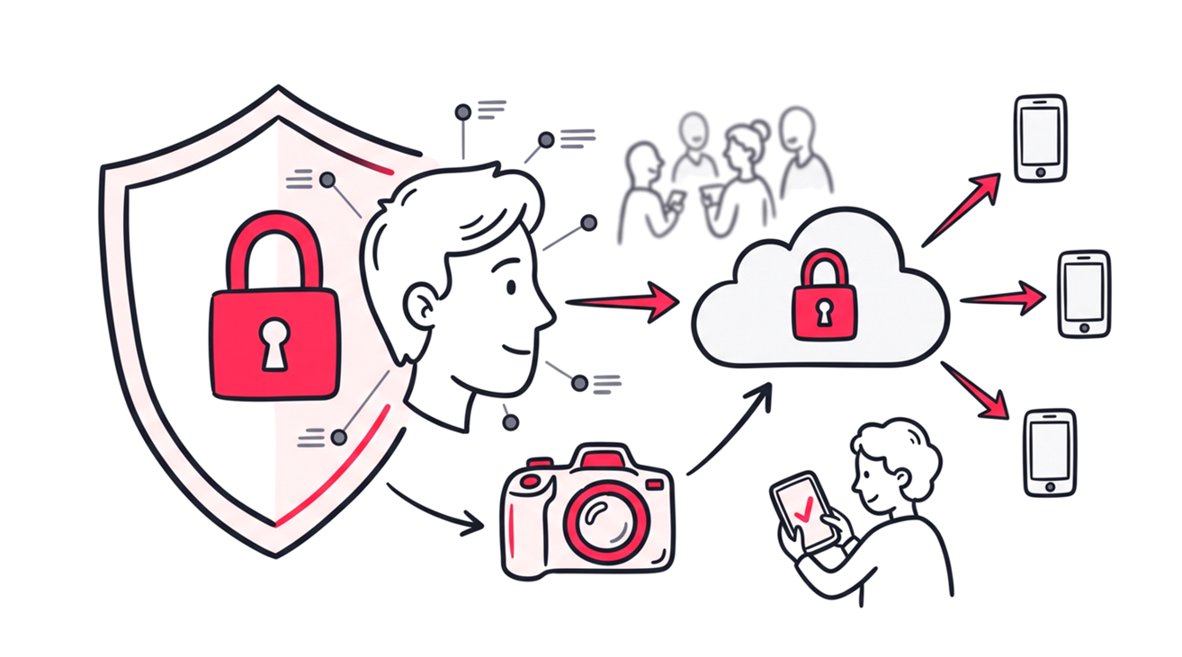
Secure face tagging relies strictly on closed, one-way photo distribution. Only the hired professional photographer uploads approved images to the platform. The AI then matches attendees to this curated set, completely blocking unmoderated guest uploads and protecting the corporate brand.
Enterprise B2B marketers and corporate compliance teams cannot afford to gamble with brand reputation. They require robust platforms that eliminate the inherent risks of open, crowd-sourced media environments.
There should be open disclaimers about how the photos are being used only to match the faces for the purpose of photo distribution and deleted as soon as the gallery is deleted by the host. They should also be informed about the privacy measures in place. Consent should be obtained from the attendees to make them aware of the use of AI and face tagging.
The Privacy Challenges of Modern Corporate Event Photography
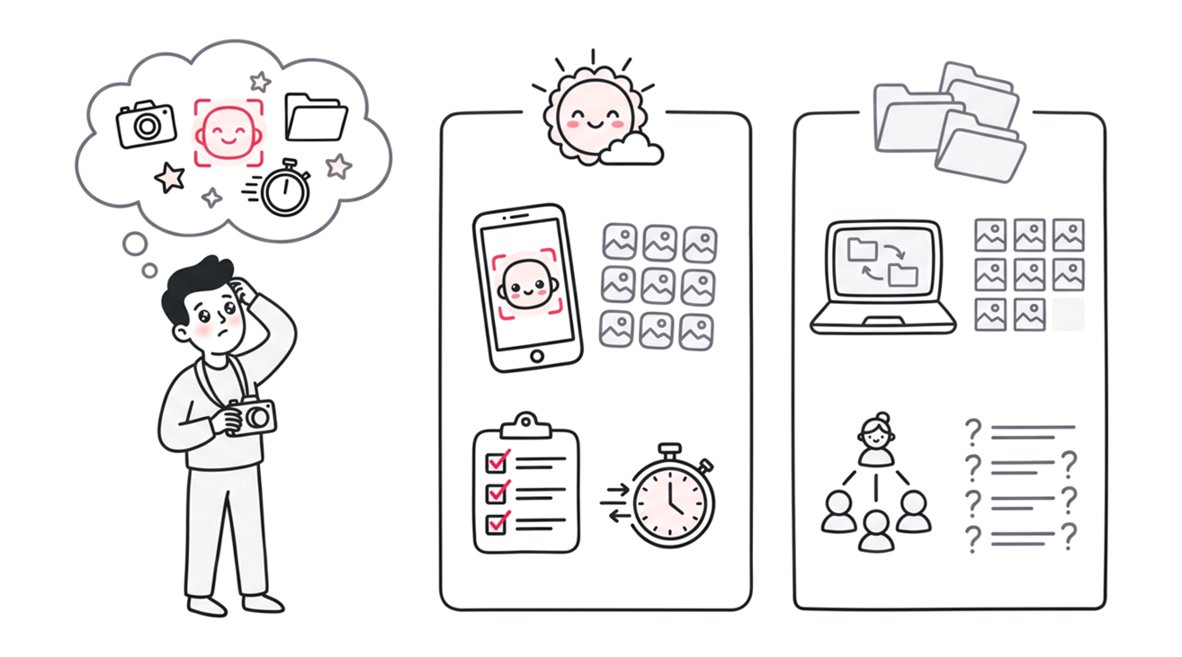
Historically, event organizers relied on public links or generic cloud folders to distribute images. These traditional methods routinely resulted in messy workflows and poor user experiences. Attendees were forced to scroll endlessly through hundreds of images just to find themselves.
Today, corporate event photo delivery demands speed, personalization, and absolute security. Brand safety is paramount at corporate summits, executive retreats, and international trade shows. An unmoderated gallery allows anyone with access to upload off-brand or compromised images.
This creates an immediate and severe liability for the hosting organization. Publicly shared folders may also expose the photos of high-profile executives to unauthorized personnel. To counter these vulnerabilities, companies are rapidly moving toward secure solutions that prioritize strict moderation.
Why One-Way Event Photo Sharing is the Enterprise Standard
The concept of one-way event photo sharing is revolutionizing enterprise photography. It completely flips the traditional collaborative gallery model. Instead of an open ecosystem, it creates a controlled broadcasting channel.
The professional photographer captures the event and meticulously culls the gallery. They remove any unflattering, sensitive, or off-brand images before initiating the upload. The AI tagging engine only processes these thoroughly pre-approved assets.
This methodology completely neutralizes the threat of rogue guest uploads. It provides corporate compliance teams with the oversight they mandate for public facing media. You can learn more about optimizing this specific pipeline in our dedicated guide to streamlining AI Photo Sharing for Conferences.
Mitigating Risks in Private Photo Sharing for Corporate Events
Deploying private photo sharing for corporate events ensures that all visual assets are properly vetted. It guarantees that the event narrative remains professional and perfectly aligned with corporate messaging. Security teams can rest easy knowing the brand image is protected.
This controlled environment is essential for maintaining strict compliance with internal corporate guidelines. It prevents unauthorized distribution of proprietary information that might be captured in the photos. A closed loop system limits data exposure strictly to verified attendees.
Furthermore, by implementing face search gate using AI, the guests can only view their own photos. The face search gate ensures that the photos are only visible to the person whose face is recognized. This eliminates the risk of unauthorized access to photos.
Seamless Access: Share Event Photos Without an App
User experience is just as critical as data security in the event technology space. Attendees expect immediate gratification without jumping through unnecessary technological hoops. Forcing guests to install new software introduces significant friction.
Many corporate mobile devices strictly restrict third-party application installations due to mobile device management policies. This restriction leads to incredibly low adoption rates and frustrated event guests. Modern platforms solve this by allowing organizers to share event photos without an app.
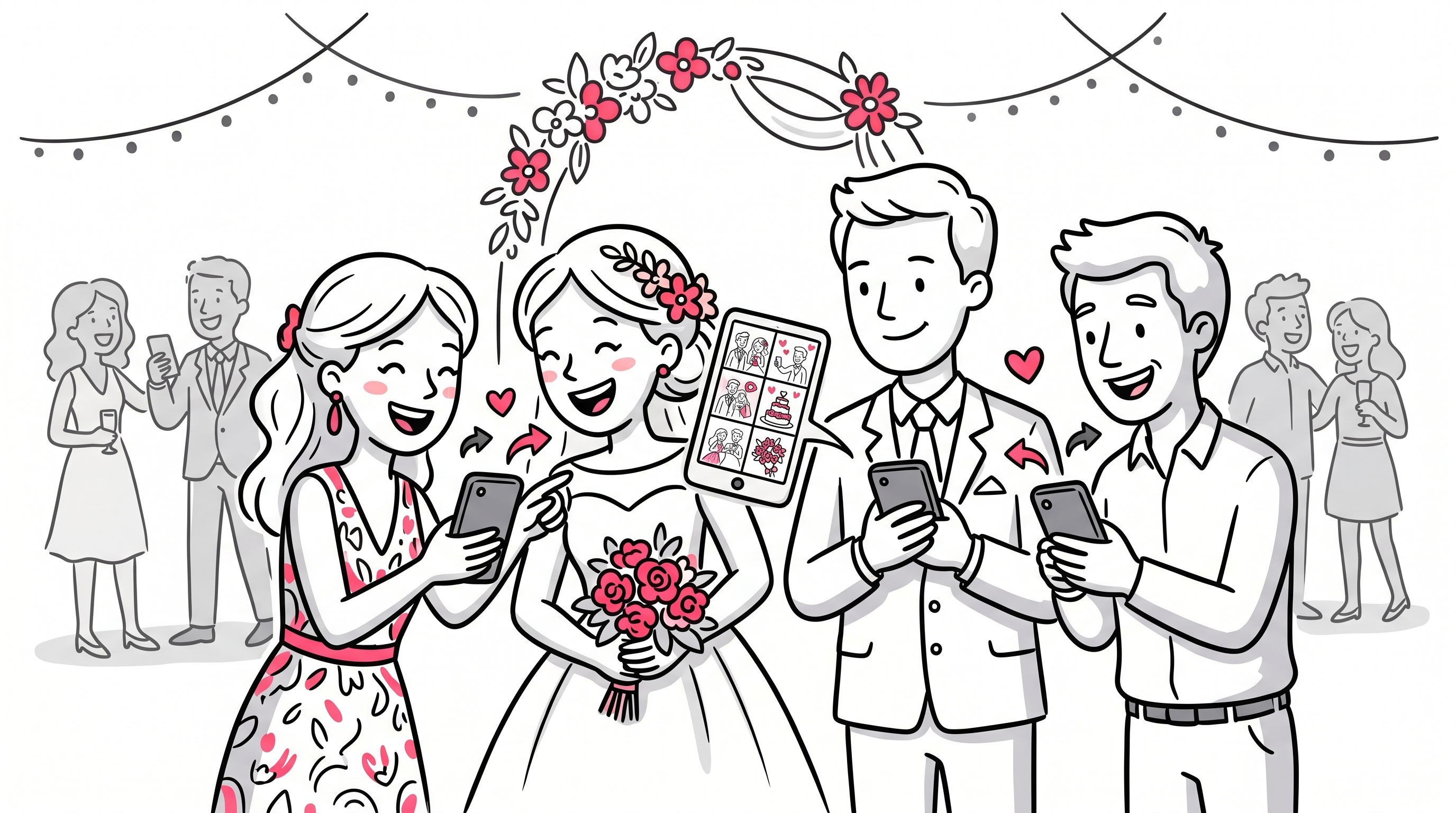
By utilizing intelligent web-based galleries, users access their personalized images instantly through their default browser. The process begins with a simple, secure link or QR code. Guests upload a single reference selfie to initiate the facial recognition matching process.
From there, the secure algorithm works entirely in the background. It isolates the user’s specific photos from the broader professional gallery. The guest receives a curated, private feed containing only their approved images.
QR Code Event Photo Sharing at Corporate Events
QR technology brilliantly bridges the gap between the physical venue and digital media delivery. Placing custom codes on attendee lanyards, registration tables, or digital signage provides instant access. This strategy completely eliminates the need for bulky post-event email blasts.
Implementing QR code event photo sharing initiates the user journey right at the venue entrance. Guests simply scan the code, snap their reference selfie, and wait for automated notifications. As the professional photographer uploads images throughout the day, the system securely routes the matches.
This real-time delivery mechanism keeps attendees highly engaged with the event content. They can immediately view and download their professionally captured moments. The brand gains organic visibility while maintaining absolute control over the source imagery.
Comparing Event Gallery Security Models
Understanding the structural differences between gallery types is crucial for compliance officers. Enterprise decision makers must weigh the exact operational differences of open versus closed systems. The table below outlines these distinct technological environments.
| Feature | Open Collaborative Galleries | Closed One-Way Systems |
|---|---|---|
| Upload Access | Anyone with the link | Verified Professional Photographers Only |
| Brand Safety | Low (Risk of unauthorized content) | High (Complete control over visual narrative) |
| User Experience | Poor (Manual scrolling required) | Excellent (AI curated personal feeds) |
| Data Privacy | Vulnerable (Public exposure) | Secure (Private siloed distribution) |
| App Requirement | Often requires app download | Web-based no app required |
Implementing Facial Recognition Without Compromising Compliance
Data privacy regulations continue to tighten globally across all major corporate sectors. Platforms utilizing facial recognition must adhere strictly to modern data retention policies. Enterprise solutions must automatically purge biometric data immediately after the event concludes.
Consent is another foundational pillar of deploying secure AI systems. Attendees must explicitly opt in by willingly providing their reference photo. If a guest chooses not to participate, their biometric data is never captured, stored, or processed.
This opt-in architecture ensures complete compliance with global privacy standards. It empowers users to fully control their digital footprint while attending corporate functions.
FAQ
How does secure event photo sharing protect my company brand?
Secure platforms use a one-way upload system where only hired professionals can add photos. This prevents guests from uploading unapproved images to the company’s gallery.
Can we use event photo sharing without app for large conferences?
Yes, modern web-based platforms scale effortlessly for thousands of attendees. Guests simply use their smartphone browser to access their personalized galleries without downloading any third-party software.
What happens to the facial recognition data after the event?
Enterprise-grade platforms automatically delete all biometric data and reference selfies as the collection period ends. This ensures strict compliance with data privacy laws and corporate data usage policies.
Is QR code event photo sharing secure enough for internal executive meetings?
Yes, QR codes can be combined with gated face search access requirements. Also, you can protect the gallery with a password. This ensures that only authorized personnel who scan the code can access the private galleries.
Why is private photo sharing for corporate events better than using cloud drives?
Cloud drives require users to manually search through hundreds of files, leading to a poor user experience. Private AI sharing platforms automatically curate a personal feed for each attendee while keeping the master gallery locked down.
Conclusion
Securing your corporate media workflow is no longer an optional upgrade. It is a fundamental requirement for protecting your brand and your attendees. By moving away from risky collaborative folders, you ensure that every image shared aligns perfectly with your corporate standards.
Adopting an intelligent, one-way distribution model provides peace of mind for compliance teams and organizers alike. Furthermore, delivering these memories through an app-free, frictionless interface guarantees a premium experience for every guest. It is time to modernize your digital asset pipeline.
Take control of your corporate event photography today. Protect your brand narrative, streamline your media delivery, and delight your attendees with SnapSeek. Discover how our secure, AI-powered platform can transform your next corporate gathering into a flawlessly executed visual experience.