AI photo matching uses facial recognition software to automatically scan event albums and instantly deliver personalized photos to specific guests. Manually searching event galleries requires attendees to open a public link and scroll through hundreds of unorganized images to find pictures of themselves. AI photo sharing is best for large events where speed and privacy are critical, while manual galleries are only suitable for very small gatherings where guests want to view everyone’s pictures.
What is Manual Photo Gallery Searching?
Manual photo gallery searching is the legacy method of delivering event images. The photographer uploads the fully edited event album to a standard cloud storage folder or a traditional online gallery. They then generate a single, public URL and share it with the event host, who distributes it to the attendees.
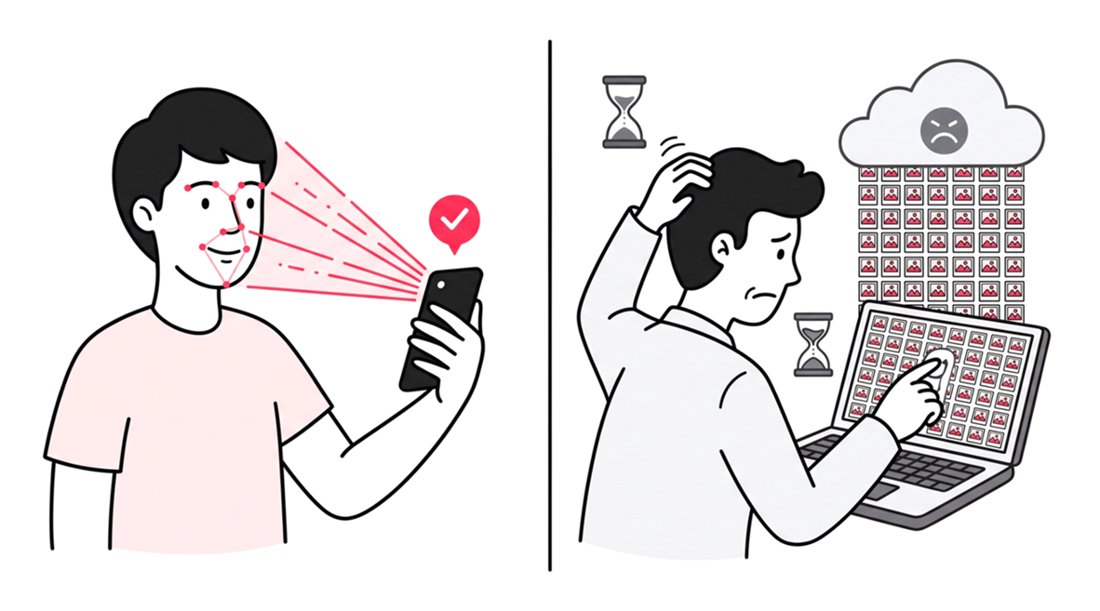
Once the attendee clicks the link, they are presented with a chronological grid of every photo taken at the event. The guest must visually scan each thumbnail, looking for their own face or the faces of their friends. If the event lasted multiple days, this process can easily take thirty minutes or more.
Benefits of Manual Galleries
- Universal Access: Anyone with the link can view the entire scope of the event.
- Atmospheric Context: Guests can see venue shots, decor details, and other attendees enjoying the occasion.
- Zero Technical Setup: It requires no specialized software or registration from the guest.
Disadvantages of Manual Galleries
- Extreme Time Waste: Guests lose patience quickly when forced to sift through hundreds of irrelevant photos.
- Zero Privacy: Every attendee has full access to download pictures of any other guest, which is a major security concern for corporate clients.
- Missed Marketing Windows: Guests abandon the gallery without finding their photos, resulting in zero social media shares for the event host.
What is AI Photo Matching?
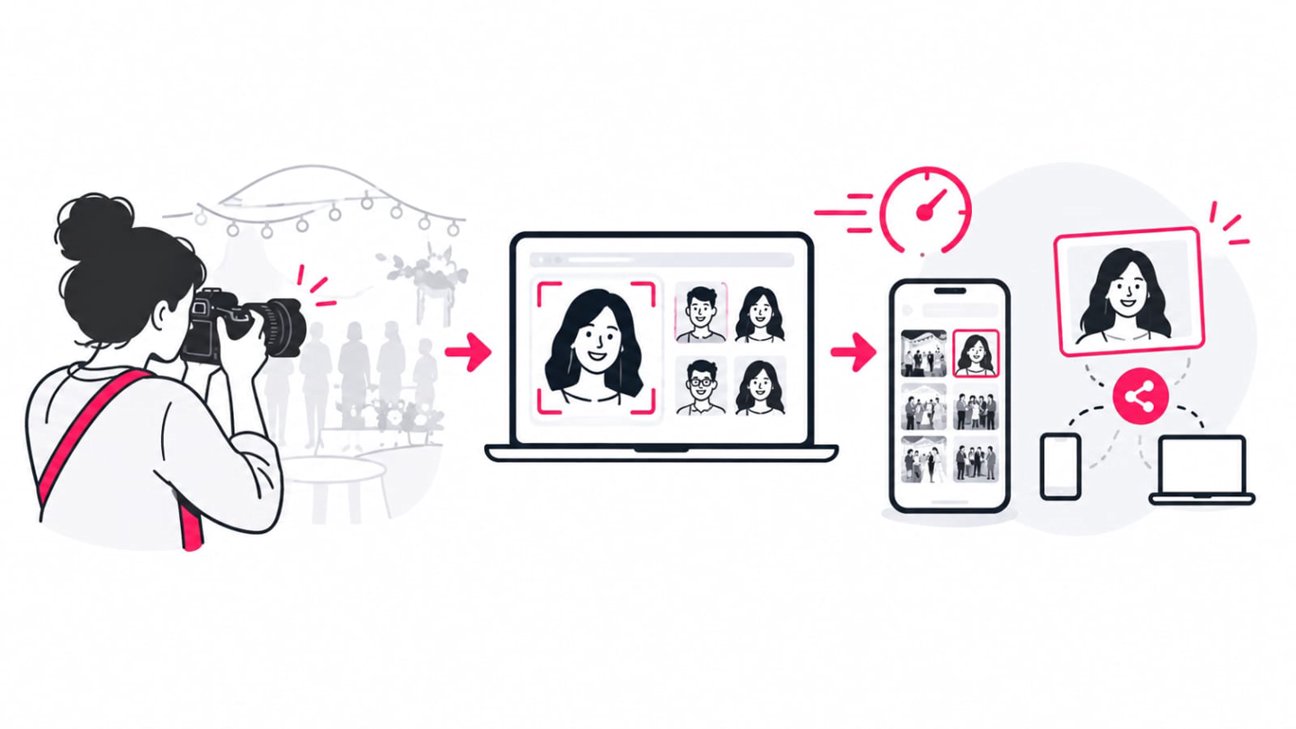
AI photo matching transforms the delivery process by utilizing advanced facial recognition algorithms. The photographer uploads their high-resolution files to a specialized web platform. The system then automatically scans every image, identifying and mapping unique facial features across the entire album.
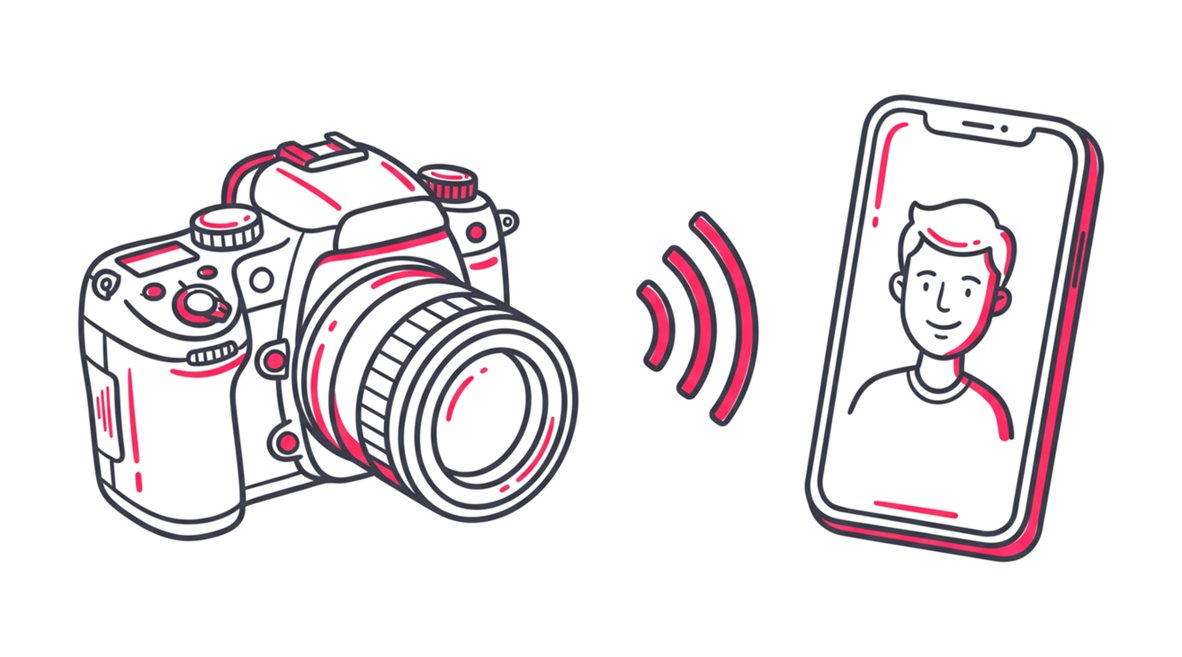
Instead of receiving a generic link, guests are provided with an event-specific QR code. They simply scan the code with their smartphone and take a quick selfie. The AI platform compares the selfie to the face maps in the database and instantly populates a private gallery containing only that specific guest’s photos.
Benefits of AI Photo Matching
- Instant Gratification: Attendees receive their personalized photos in seconds rather than days.
- Enhanced Privacy: Guests only gain access to images where their face is explicitly matched, keeping everyone else’s photos secure.
- Higher Engagement: Fast access leads to immediate social media sharing while the event is still trending.
Disadvantages of AI Photo Matching
- Hardware Dependency: Guests must have a smartphone with a working camera to take the initial selfie.
- Subject Focus: It prioritizes portraits and group shots, meaning guests might miss out on general atmospheric shots unless a separate highlights folder is provided.
The Hidden Costs of Traditional Event Delivery
The true cost of manual gallery searching is measured in lost engagement. Data from recent event industry surveys reveals a harsh reality for photographers and organizers. Social media engagement from event photos drops by a staggering 80 percent after the first two hours.
When you rely on manual searching, you almost guarantee that you will miss this crucial marketing window. Guests are busy networking, dancing, or traveling home. They do not have the time to painstakingly scroll through a massive gallery while the event is still highly relevant online.
By the time they finally sit down to look for their pictures, the excitement has faded. Many guests abandon the search entirely if they do not see themselves in the first few rows of images. This high drop-off rate means the event organizer loses out on valuable organic brand promotion.
Transitioning to automated photo sharing solutions is the only way to capture that initial spike in excitement.
The Technology Behind Facial Recognition Delivery
To understand the value of AI photo matching, it helps to look at the technology driving it. When a photographer uploads an event album, the AI does not simply look for color patterns. It analyzes the precise geometry of every face in every frame.
Once an attendee submits their reference selfie, the algorithm performs comparisons against the indexed database. The query executes in milliseconds. The result is a curated collection of portraits, candid moments, and group images delivered without manual sorting.
Feature Comparison: AI Matching vs. Manual Search
Choosing the right distribution system directly impacts guest satisfaction and client retention. The table below outlines how these two delivery methods compare across key operational metrics.
| Feature | Manual Gallery Search | AI Photo Matching |
|---|---|---|
| Retrieval Speed | 15 to 45 minutes of manual scrolling | Under 5 seconds via selfie scan |
| Guest Privacy | Public access to all attendees’ photos | Private access restricted to matched photos |
| Drop-Off Rate | High (over 60% abandon searching) | Low (over 85% retrieve their photos) |
| Social Sharing Velocity | Delayed by days or weeks | Real-time during the event peak |
| Bandwidth Demand | Heavy (loads thousands of thumbnails) | Light (loads only matched photos) |
| Best Suited For | Intimate gatherings under 25 people | Conferences, galas, festivals, and weddings |
Data Privacy and Consent Considerations
Event photography is subject to increasing privacy regulations and client scrutiny. In open manual galleries, anyone with the gallery link can browse and download unvetted pictures of executives, VIPs, or children. This lack of access control exposes corporate clients and wedding hosts to serious liability.
AI photo matching platforms address this vulnerability through granular permission controls. Guests must actively take a reference photo to request their personal matches, creating a clear consent-driven workflow. They only see images where they are present, preventing unauthorized mass scraping of the event gallery.
Furthermore, leading platforms do not store raw biometric identity cards or sell attendee data. Reference facial vectors are discarded or anonymized once the event gallery lifecycle ends. This provides peace of mind to enterprise organizers who require strict adherence to modern data compliance standards.
How to Pitch AI Delivery to Corporate Clients and Planners
Event organizers evaluate photographers on more than just lighting and composition. They want proof that your photography services will deliver measurable return on investment for their brand. Positioning AI photo distribution as a strategic marketing asset gives you an immediate competitive edge.
When pitching corporate clients, highlight how personalized delivery accelerates brand visibility. Explain that event attendees post three times more frequently when they receive their photos within hours of the keynote address. Offering an instant QR-based workflow turns your photography contract into a high-impact social media driver.
For weddings and private galas, focus the conversation on luxury and convenience. Couples appreciate sparing their guests the tedious chore of hunting through hundreds of formal family portraits. You can explore tips for photo delivery at events for better engagement.
Use Cases: Matching Technology to Event Scale
Not every photography assignment requires automated distribution. Photographers should evaluate attendee headcount, privacy requirements, and marketing goals before selecting an approach.
When to Use Manual Galleries
- Family Reunions and Intimate Birthdays: Small gatherings where all guests know one another and want to browse the entire album together.
- Architecture and Commercial Product Shoots: Assignments focusing on static subjects where facial recognition is irrelevant.
- Editorial Submissions: Projects delivered directly to a magazine editor or creative director for targeted publication review.
When to Use AI Photo Matching
- Conferences and Professional Summits: Large corporate gatherings where attendees need professional headshots and networking candids immediately for LinkedIn.
- High-Capacity Weddings: Celebrations with hundreds of guests where individuals only care about photos featuring themselves and their immediate circle.
- Charity Galas and Fundraisers: Events where donors expect discreet, white-glove image delivery without exposing their attendance publicly.
- Endurance Races and Marathons: Massive sports events where bib numbers are obscured, making facial matching the only reliable retrieval method.
Why SnapSeek Changes the Game for Photographers
Upgrading your event delivery workflow should not complicate your post-production pipeline. SnapSeek provides a professional delivery system designed specifically for the realities of modern event coverage. It eliminates the friction points that cause attendees to abandon traditional galleries.
SnapSeek is built entirely as a responsive web application. Guests do not need to download an external app from an app store, enter account passwords, or register personal details. They simply scan an event QR code, take a selfie in their mobile browser, and view their personalized stream.
Crucially, SnapSeek operates as a one-way photo sharing platform. Only the photographer or authorized event host has permission to upload high-resolution files. This architecture keeps your professional work pristine, ensuring curated client galleries are never cluttered with low-quality guest phone uploads.
By combining instant AI matching with strict gallery curation, you deliver an unforgettable post-event experience. Clients receive higher engagement numbers, attendees get their favorite shots instantly, and your brand stands out as an industry leader.
FAQ
What is AI photo matching?
AI photo matching uses facial recognition algorithms to analyze an event gallery and instantly match attendees to their pictures via a reference selfie. This eliminates the need for guests to manually scroll through hundreds of images.
Is facial recognition safe for event photo sharing?
Yes, reputable platforms use encrypted facial vector comparisons rather than storing raw biometric files. Guests only gain access to photos containing their own likeness, which provides significantly better privacy than public galleries.
Do guests have to download an app to use SnapSeek?
No, SnapSeek operates completely as a web application. Attendees simply scan an event QR code with their mobile device to open the platform in their standard web browser.
Can guests upload their own phone pictures to SnapSeek?
No, SnapSeek is exclusively a one-way distribution tool. Only the photographer or event host can upload images, protecting the quality and professional curation of the final album.
How does AI matching increase social media reach for events?
Delivering photos instantly capitalizes on the peak excitement window of the event. When attendees receive their photos within minutes or hours, they are significantly more likely to share them on social platforms immediately.
Conclusion
The era of expecting event attendees to hunt through thousands of photos in a public cloud folder is coming to an end. Manual gallery searches create friction, compromise guest privacy, and waste the critical social media window when event enthusiasm is highest.
AI photo matching replaces that outdated model with instant, private, and personalized delivery. It protects your clients’ privacy while amplifying their organic reach. Switch to SnapSeek to modernize your delivery workflow, eliminate client friction, and give every guest access to their best moments.