The best software to sell photos digitally as a photographer using face recognition involves web-based platforms that automate image discovery and payment processing. These modern tools scan massive event galleries, map facial vectors, and instantly deliver personalized digital albums to specific attendees. Photographers can then monetize these targeted galleries using integrated pay-per-download features, ensuring they earn secure and immediate income for individual high-resolution photo downloads.
The event photography industry has undergone a massive technical shift over the past few years. Professional photographers are no longer relying on standard digital galleries where clients must scroll through thousands of images to find themselves. Today, advanced software solutions provide intelligent automation to streamline both photo delivery and digital sales.
Using facial recognition technology to distribute event photos is rapidly becoming the industry standard. It removes friction from the client experience while simultaneously driving higher conversion rates for digital photo sales. This article explores the technical mechanics of AI photo delivery and how you can implement these systems to scale your photography business.
The Technical Shift in Event Photography Delivery
For decades, the standard workflow involved taking hundreds of photos, editing them in batches, and uploading them to a single massive folder. The photographer would then send a link to the event organizer, hoping attendees would eventually comb through the gallery. This method is incredibly inefficient for everyone involved.
Attendees experience major gallery fatigue when forced to hunt for their own faces in a sea of strangers. When friction increases, the impulse to purchase a photograph plummets. If an attendee takes twenty minutes to find a good photo of themselves, their enthusiasm drops significantly.
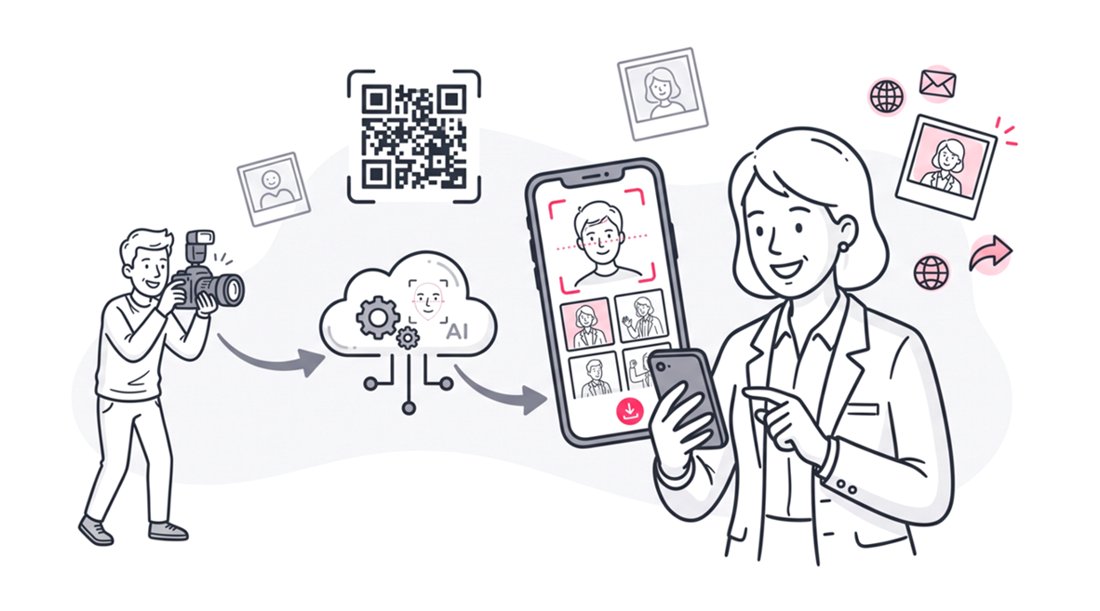
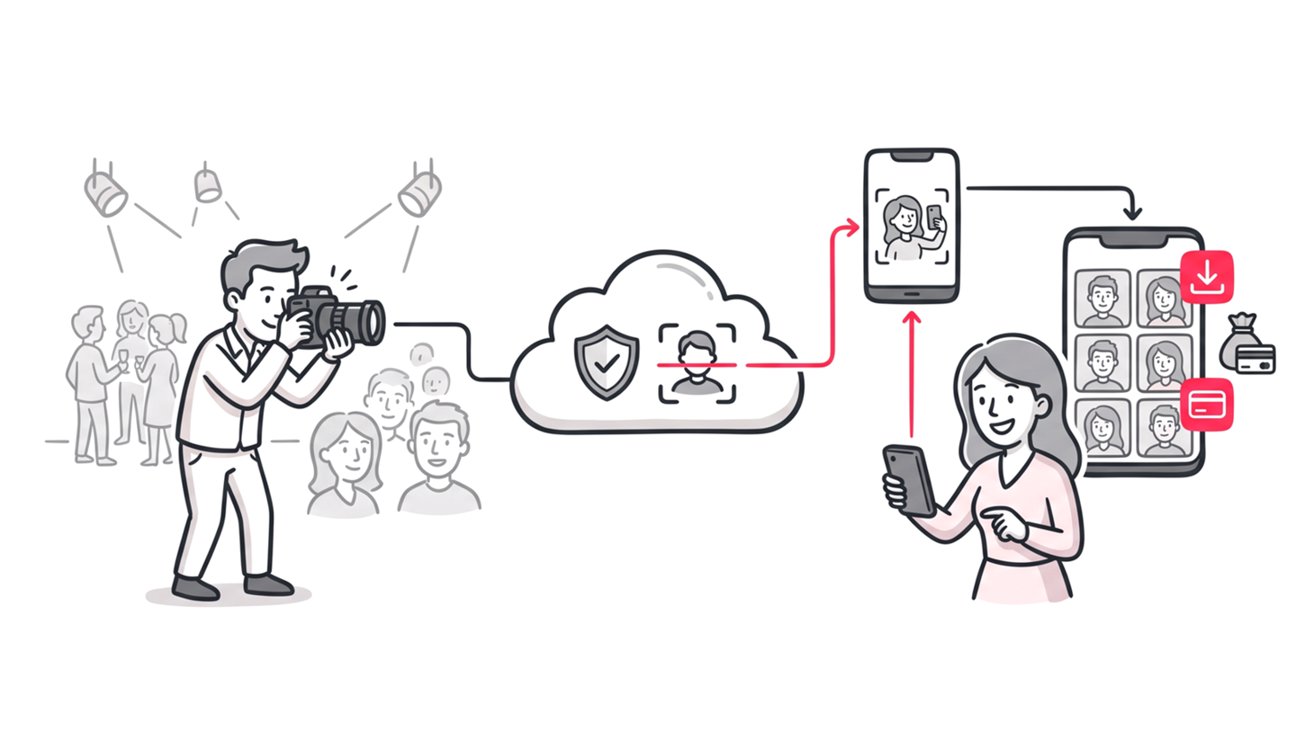
Facial recognition software completely reverses this dynamic. By utilizing AI algorithms, the software automatically sorts and curates individual albums for every single guest. When an attendee accesses the platform, they simply provide a reference selfie. The system then instantly queries the database and serves them only the images they appear in.
The Architecture of Face Recognition Software
Understanding how these platforms work under the hood is critical for choosing the right software. Facial recognition in photography relies on biometric vector mapping. When you upload a batch of event photos, the server analyzes every face detected in the frame.
The AI measures the unique distances between facial features, such as the eyes, nose, and jawline. It then creates a mathematical representation of that face. When a guest uploads their reference selfie, the software compares their facial vector against the entire event database. The matching process happens in milliseconds, resulting in a highly accurate, personalized gallery.
The speed and accuracy of this vector mapping are what make modern photo sales possible. Because the heavy computational lifting happens on cloud servers, the experience is lightning fast for the end user. This speed directly translates to a better user experience and higher download conversion rates.
Maintaining Professional Quality Through One-Way Sharing
A critical component of selling photos digitally is maintaining absolute control over the gallery environment. If you want clients to pay for professional imagery, the gallery cannot be cluttered with low-quality, out-of-focus smartphone shots. This is why the best photo selling software utilizes a strict one-way photo sharing model.
In a one-way sharing ecosystem, only the host or the professional photographer can upload photos to the event gallery. Guests are completely restricted from adding their own images. This deliberate limitation protects the integrity of your professional work.
When you eliminate guest uploads, you guarantee that every image in the gallery reflects your professional brand. This controlled environment justifies your pricing structure. Clients are much more willing to pay for downloads when they are presented with an exclusive, high-end, professionally curated feed.
The Web Application Advantage for Client Access
Another major factor in digital sales is platform accessibility. In the past, some companies attempted to build native mobile apps for event photo distribution. However, forcing an attendee to visit an app store, download a large file, and create an account introduces massive friction.
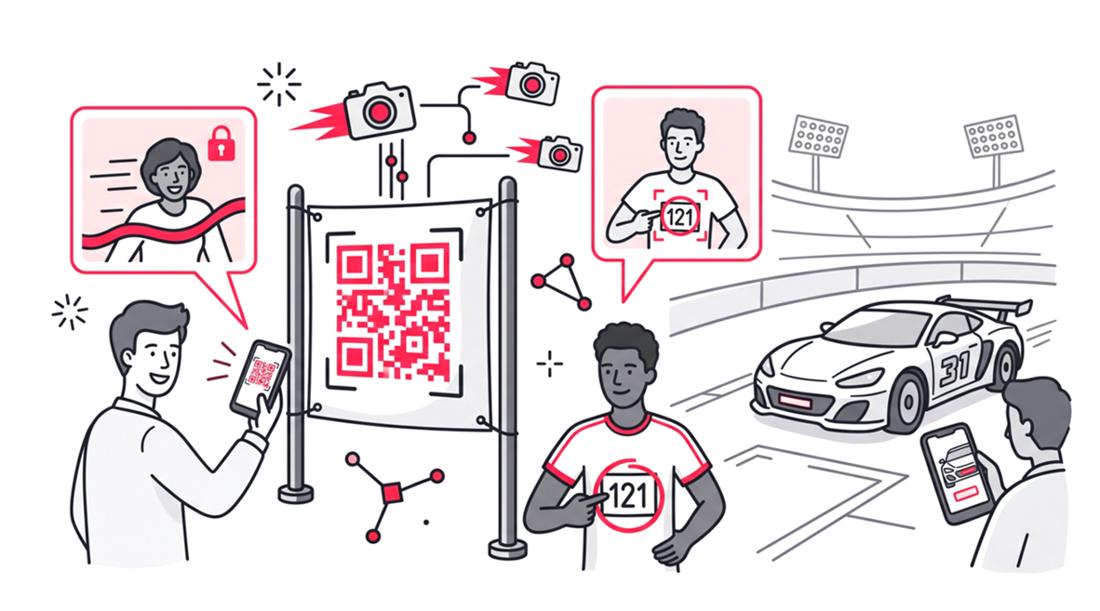
This is why a robust web application is the superior choice for photographers. A responsive web app operates directly within the user browser, requiring no downloads or installations. The guest simply scans a QR code or clicks a link, and they are immediately interacting with the software.
By utilizing a web app, you capture the attendee while their engagement is highest. They can take their reference selfie, view their matched photos, and process their payment entirely within their mobile browser. Removing the barrier of a native app download is one of the most effective ways to boost your pay-per-download metrics.
Comparing Traditional Galleries vs AI-Powered Delivery
To fully grasp the operational differences, it is helpful to look at how traditional delivery stacks up against AI facial recognition software.
| Feature | Traditional Digital Galleries | AI Face Recognition Web Apps |
|---|---|---|
| Image Discovery | Manual scrolling by the user | Instant sorting via selfie match |
| Delivery Speed | Slow, prone to gallery fatigue | Immediate, highly personalized |
| Accessibility | Often requires account creation | Frictionless web browser access |
| Monetization | Broad gallery access fees | Targeted pay-per-download |
| Quality Control | Sometimes allows guest uploads | Strict one-way host uploads |
| Sales Conversion | Low, due to high friction | High, driven by instant access |
Structuring the Pay-Per-Download Workflow
Once you have the technology in place, the next step is structuring your monetization model. The pay-per-download feature is highly effective for large scale events like corporate conferences, marathons, or massive social gatherings. Instead of charging the event organizer a massive flat fee, you can offer a lower baseline rate and monetize the attendees directly.
When an attendee finds their AI-curated album, the images are typically protected by a digital watermark. To remove the watermark and acquire the high-resolution file, the user must initiate a micro-transaction. This pay-per-download model capitalizes on the emotional high of the event.
Setting your baseline pricing requires an understanding of your target demographic. A corporate attendee might easily expense a higher priced download, whereas a local sports event might require lower volume pricing. If you want to dig deeper into pricing strategies, checking out this guide on how to monetize event photography downloads can provide excellent context for building your revenue model.
Security and Privacy in Biometric Photo Delivery
As a technology professional, you must also consider the privacy implications of face scanning software. Handling biometric data requires a platform that prioritizes secure architecture. The best tools process facial vectors strictly for the purpose of photo matching and do not sell or store this data for secondary advertising.
Furthermore, utilizing secure payment gateways is non-negotiable. When executing a pay-per-download model, the software must integrate with trusted financial processors like Stripe. This ensures that the photographer receives their funds reliably while the guest payment data remains heavily encrypted.
A web app environment makes this highly secure. All transactions are handled over encrypted SSL connections within the browser. This secure environment builds trust with the end user, which is a vital component of finalizing a digital sale.
Implementing SnapSeek for Event Photo Monetization
SnapSeek is specifically engineered to handle this exact technical workflow. It is built entirely as a web app, meaning your clients never have to download clunky software to access their images. You simply upload your edited event photos directly into your host dashboard.
Because SnapSeek operates on a strict one-way sharing model, you remain in complete control of the visual quality. Guests cannot dilute your gallery with their own uploads. They simply scan your event QR code, take a quick selfie in their browser, and let the AI find their professional shots.
Crucially, SnapSeek features a robust pay-per-download system. You have the power to set the exact price per digital download for your event. The system automatically watermarks the gallery, handles the secure payment processing, and instantly releases the high-resolution files to the buyer. This allows you to generate passive income from your events long after you have packed up your camera gear.
FAQ
What is face recognition software for photographers?
It is a technology that uses AI to scan a gallery of event photos and match them to individual attendees based on a reference selfie. This automates the delivery process so guests instantly receive only the photos they appear in.
Why is a web app better than a mobile app for sharing event photos?
A web app removes friction because attendees do not need to visit an app store or download heavy files. They can access the platform, view their photos, and complete purchases instantly through their standard mobile browser.
What does one-way photo sharing mean?
One-way sharing means only the host or professional photographer can upload images to the gallery. Guests can view and download photos, but they cannot upload their own, ensuring the gallery maintains strict professional quality.
How does the pay-per-download feature work?
The software automatically watermarks your uploaded images. When a guest finds a photo they want, they pay a fee set by the photographer. The system then processes the secure payment and unlocks the high-resolution, unwatermarked image for download.
Is facial recognition software safe for event attendees?
Yes, reputable platforms use secure encryption to map facial vectors strictly for photo matching. The data is processed temporarily to deliver the correct images and is not used for external tracking or advertising purposes.
Conclusion
Transitioning to AI-powered distribution is the smartest technical upgrade a modern photographer can make. By abandoning manual galleries and embracing biometric sorting, you provide an unparalleled client experience. Prioritizing web-based platforms with strict one-way upload controls guarantees a professional environment that encourages high volume sales. If you are ready to automate your delivery and maximize your event revenue, start building your next gallery with SnapSeek today.