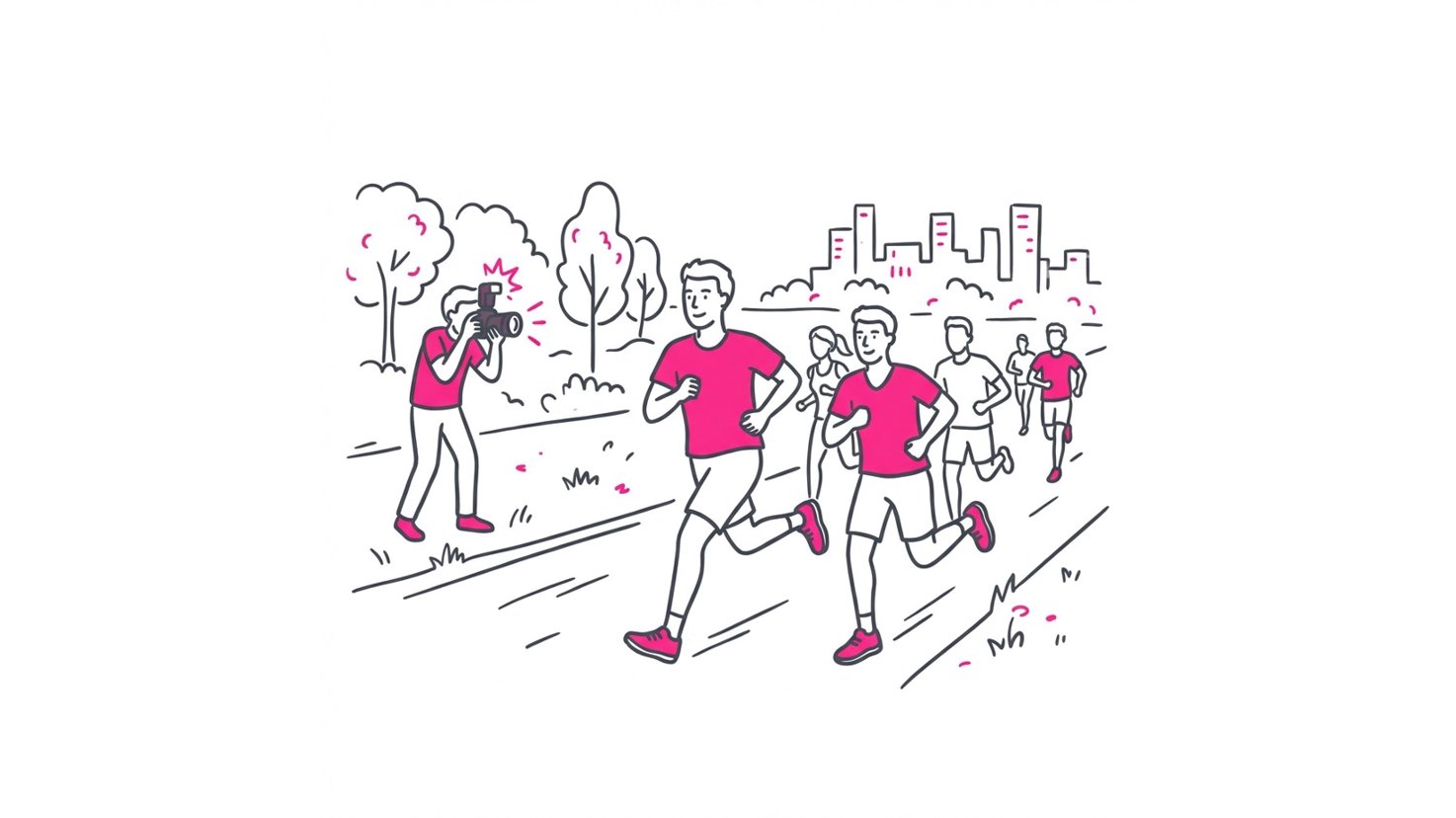
For decades, race organizers and sports photographers have relied on a single, high-friction identifier to organize event media: the printed bib number. However, the transition from manual metadata entry and Optical Character Recognition (OCR) to AI-driven facial recognition is actively rendering the physical bib obsolete.
While manual bib tagging remains a standard at many marathons and triathlons, the workflow creates a massive post-production bottleneck. Photographers are forced to spend days manually typing numbers into databases—a process prone to human error and severely delayed gallery deliveries.
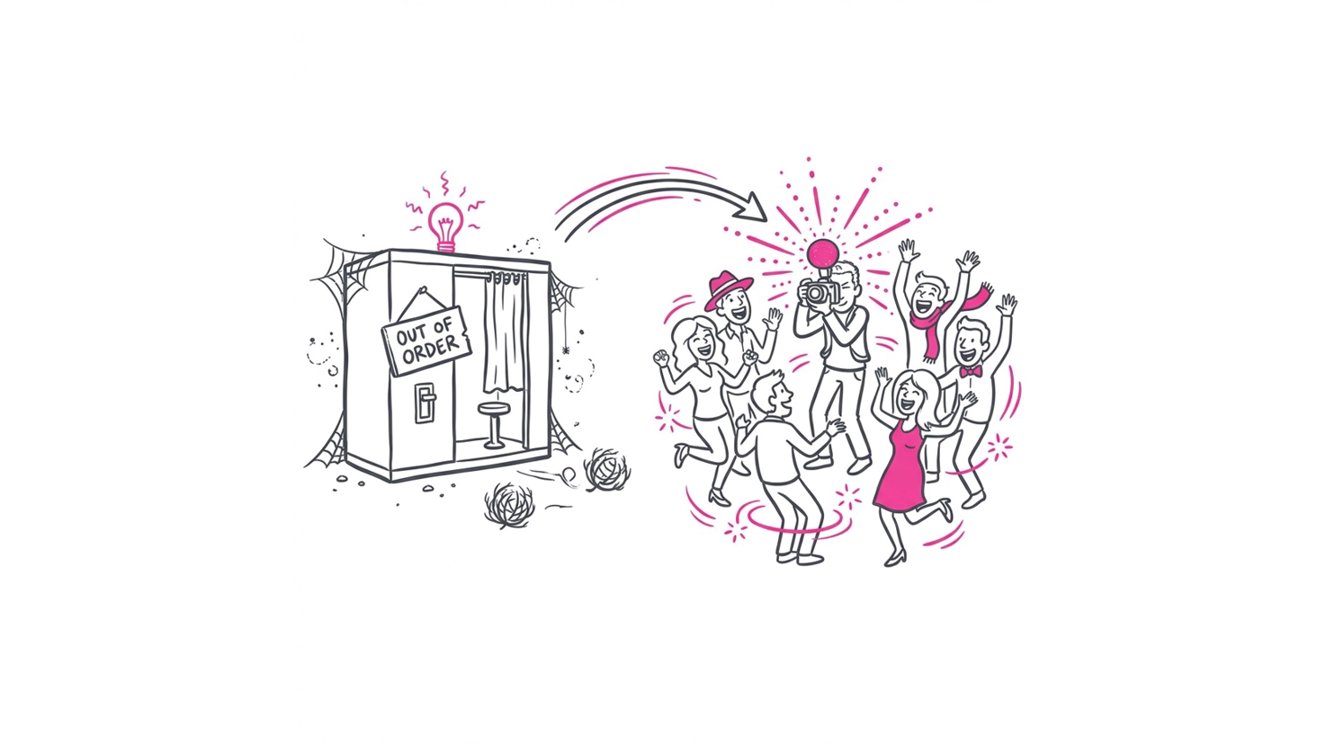
From high-speed motorsports to corporate golf tournaments, organizers evaluating the best photo sharing app for sports events are adopting AI workflows to bypass physical identifiers entirely. The transition to biometric photo grouping is not just a cosmetic upgrade; it is a fundamental operational shift.
To understand why facial recognition is taking over, we must compare the two distribution models:
- The Legacy Bib Workflow: Requires physical paper identifiers, relies on direct line-of-sight (numbers must not be folded or obscured by arms/gear), and delays photo delivery by days.
- The AI Facial Recognition Workflow: Requires zero physical tags, operates instantly via a simple guest selfie, and enables zero-friction photo delivery to athletes the moment they cross the finish line.
The Economic Reality of Sports Photography
Let’s break down the operational economics and latency of traditional sports photography post-production.
Imagine shooting a large-scale marathon. You return to the studio with 10,000 RAW files. Before you can monetize a single digital download, that entire gallery must become searchable. Under the legacy model of manual metadata entry (bib tagging), photographers face a restrictive binary:
In-House Processing (The Time Drain): Manually transcribing bib numbers across 10,000 images requires days of repetitive data entry. This represents unbillable hours that actively prevent you from shooting, marketing, or scaling your business.
Third-Party Outsourcing (The Margin Killer): Outsourcing to offshore tagging services incurs a strict per-image operational cost and typically introduces a 24-hour to 48-hour delivery latency.
In the modern digital economy, delivery speed directly correlates with conversion rates. An athlete wants to share their finish line photo while still wearing their medal not three days later from their office desk. Every hour of delay diminishes the emotional peak of the event actively suppressing gallery sales.
By transitioning to biometric photo delivery the math fundamentally changes. Platform analytics demonstrate that active sports collections on SnapSeek can host over a thousand photos and facilitate instant athlete searches without a single manual tag. AI facial recognition entirely eliminates post-production latency replacing a 48-hour operational bottleneck with an instantaneous zero-friction delivery pipeline.
The Unidentified Folder: Where Revenue Goes to Die
The biggest flaw in the bib system is not the speed. It is the failure rate.
Bibs are imperfect. They get crumpled. They get covered by hydration packs. They flap in the wind. Runners wear jackets over them when it rains.
When a tagger looks at a photo and cannot read the number, that photo goes into the “Unidentified” or “Lost & Found” folder.
For a photographer, that folder represents pure lost revenue. You took the shot. You edited the shot. But because a safety pin failed or a windbreaker covered the number 1234, you cannot sell it to the runner.
We have analyzed data from major races, and the percentage of untaggable photos can range from 10% to 30% depending on the weather conditions. That is up to 30% of your product thrown in the trash because of a piece of paper.
How Facial Recognition Changes the Game
SnapSeek flips this workflow on its head. Instead of relying on an external identifier (the bib), we use the subject’s own biometric data as the key.
Here is how the modern workflow looks:
- You Shoot: You photograph the race exactly as you normally would. You don’t need to stress if a bib is obscured. You can focus on composition, emotion, and lighting.
- You Upload: You dump the raw JPEGs into SnapSeek.
- AI Sorts: In minutes, our enterprise-grade AI scans every face in your gallery. It creates a unique vector map of each person and groups all their photos together.
- Instant Search: Guests visit your gallery link. They take a selfie. SnapSeek finds every photo of them instantly.
There is no manual data entry. There is no waiting period. There is no “Unidentified” folder for anyone with a visible face.
By removing the reliance on bibs, you recover that 10-30% of lost revenue. You capture the runner who wore a jacket. You capture the cyclist whose number was muddy. If their face is visible, the sale is possible.
Better Composition, Better Photos
This is an angle few people talk about: The artistic freedom of losing the bib.
When you are shooting for a bib-tagging system, you are forced to shoot “for the number.” You have to make sure the chest is visible. You might skip a dramatic side-profile shot or a candid moment of high-fives because the number isn’t facing the lens.
When you switch to facial recognition, you can shoot for the person.
You can capture the agony on a face from a side angle. You can shoot a tight portrait. You can capture runners hugging at the finish line where bodies block chest numbers.
This results in a diverse, high-quality gallery that looks more like a sports documentary and less like a catalogue of numbers. Better photos lead to higher emotional connection, which leads to higher conversion rates for your sales.
Check out how we are redefining this genre in our guide on How SnapSeek Transforms Sports Photography.
The Green Advantage
Sustainability is becoming a major selling point for event organizers. Races are banning single-use plastic cups and moving to digital race bags.
Yet, we are still printing thousands of Tyvek or paper bibs for every single event. These bibs are coated, non-recyclable, and end up in a landfill immediately after the race.
By moving to a facial recognition system, you give race directors a powerful tool to reduce their environmental footprint. “No Bibs Needed” is a strong marketing message for eco-conscious events. It saves the organizer printing costs and logistics time (no packet pickup lines for bibs), which makes your photography service even more valuable to them.
Handling the “Hardware” Argument
Critics of AI often say, “But bibs are cheap.”
Are they?
Let’s calculate the Total Cost of Ownership (TCO) for a 1,000-person 5K race.
- Printing: Custom bibs cost money.
- Logistics: You need volunteers to sort and hand them out.
- Timing Chips: Often integrated into bibs, adding cost. (Note: Professional timing still needs chips, but photography does not need to rely on them).
- Tagging Labor: If you pay $0.05 per photo for tagging 5,000 photos, that is $250.
- Lost Sales: The 20% of photos you couldn’t sell because the bib was hidden.
Compare that to SnapSeek. You pay a lower fee for a pay-as-you-go credit rate. You upload. You are done. The time you save on logistics and data entry pays for the software usage instantly.
See our breakdown of Affordable Event Photo Sharing to see how the numbers stack up.
Comparison: Bib Tagging vs. SnapSeek AI
Let’s assume a standard 500-person marathon event with 3 photographers.
| Feature | Manual Bib Tagging | SnapSeek AI Search |
|---|---|---|
| Setup Time | High (Printing, sorting, pinning) | Zero (Upload & Go) |
| Identifier | Paper Number (Must be visible) | Face (Biometric) |
| Processing Time | 24-72 Hours (Manual entry) | Minutes (Automated) |
| Accuracy | Low (Fails if obscured/crumpled) | High (99.9% detection) |
| Lost Revenue | High (Unidentified photos) | Minimal |
| User Experience | “Type your number & scroll” | “Take a selfie & see magic” |
Practical Application: Beyond Running
While marathons are the obvious use case, this technology opens doors for sports where bibs essentially impossible.
Surfing and Water Sports
You cannot stick a paper number on a wetsuit. Surf competitions have traditionally relied on “time of day” sorting, which is a nightmare for parents trying to find their child’s heat. With facial recognition, you just snap the surfer. As long as their face is visible, they are searchable.
Youth Soccer and Lacrosse
Kids move fast. Jerseys get tucked in. Numbers are on the back, but you are shooting from the front. Manual tagging for youth sports is often a guessing game. AI solves this effortlessly.
Obstacle Course Races (Mud Runs)
This is the ultimate stress test. By mile 3, every bib is covered in mud. A human cannot read it. AI, surprisingly, often can still identify the face structure even with splashes of mud, provided the eyes and nose bridge are visible. Even if it misses some, it is vastly superior to a brown square of paper.
FAQ
Does facial recognition work with sunglasses and hats?
Yes, to a surprising degree. SnapSeek’s algorithm analyzes over 100 data points on the face. While heavy obstruction (like large ski goggles and a face mask) will block it, standard running sunglasses and caps rarely pose an issue. The distance between feature points (nose, mouth, chin) remains unique. Read more about the tech in our Best Facial Recognition Apps analysis.
What if I shoot the back of a runner?
This is the one area where bibs (if pinned on the back) have an edge. AI cannot identify a person from the back of their head. However, as a professional photographer, the money shot is the face. If you are selling photos, you are selling emotion, determination, and eyes. Photos of backs rarely sell. Therefore, prioritizing the face aligns with prioritizing revenue.
Is this GDPR compliant?
Privacy is critical. SnapSeek uses a “One-Way” search model. We do not build a public database of faces. The biometric data is created on the fly to match the searcher with their photos. Guests only see their own photos, not the entire gallery. This is often more private than a public bib-number gallery where anyone can type “101” and see a stranger’s photos.
How do I deliver the photos to the runners?
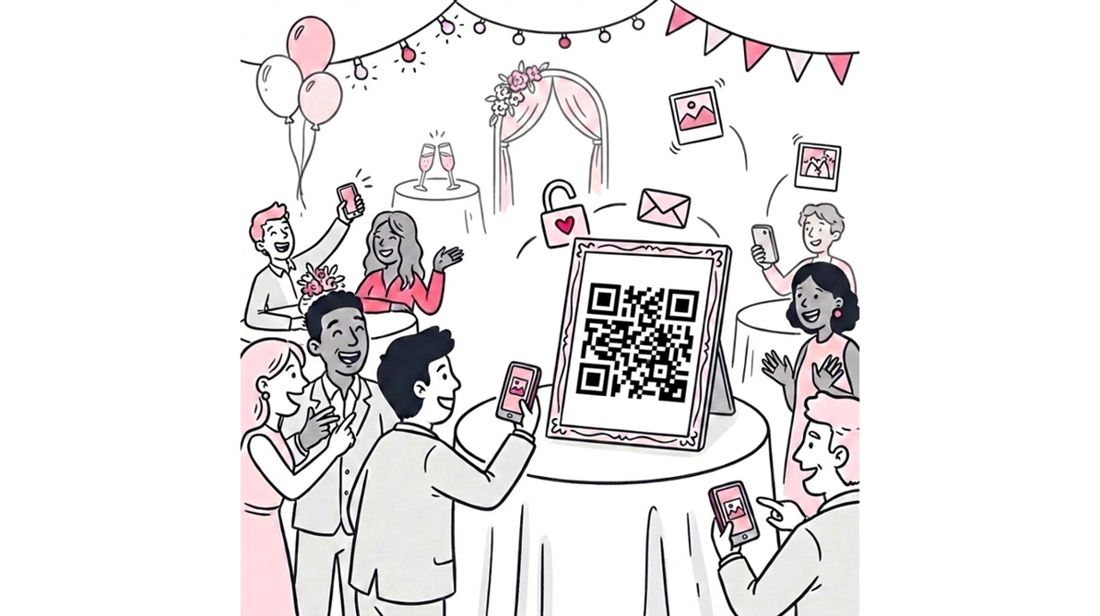
You simply print a QR code (or beam it to a screen). We have a guide on Event Photo Sharing Using QR Codes that explains the deployment. You can put this QR code on a banner at the finish line. Runners scan it, take a selfie, and find their photos before they even catch their breath.
Can I still use bibs if I want to?
You can, but you won’t need to use them for sorting. Some races still require bibs for timing chips and official scoring. That is fine. But you, as the photographer, can ignore them. You do not need to log them. You do not need to care if they are upside down. Let the timing company worry about the bibs; you worry about the faces.
Conclusion
The bib number had a good run. It served us well in the analog age. But in a digital world defined by instant gratification and AI precision, it is a relic.
Clinging to manual tagging workflows is slowing you down. It is costing you money in lost sales and outsourced labor. It is frustrating your customers who just want to see their photos now.
The future of sports photography is friction-free. It is about removing the barriers between the capture of the moment and the delivery of the memory. Facial recognition is the key that unlocks that future.
It is time to unpin the paper and let the technology do the work.
Ready to leverage the power of AI for your next race? Try SnapSeek today.