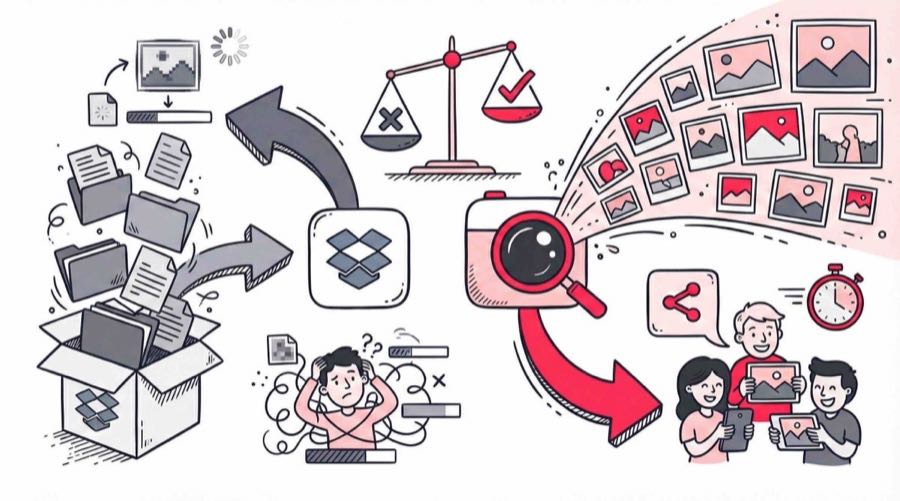
Event photography software has historically struggled with a massive delivery problem. Photographers capture thousands of high-resolution images, edit them to perfection, and then dump them into an unstructured digital photo gallery.
This traditional approach to event photo sharing is actively failing. Modern attendees refuse to scroll through massive galleries of strangers just to find a few pictures of themselves. If a guest cannot locate their specific images within thirty seconds, they abandon the page. That represents a lost brand impression and a missed opportunity for organic social media sharing.
To permanently eliminate this friction, SnapSeek uses this technology, known as Smart Face Grouping, that transitions galleries from static folders into intelligent distribution engines.
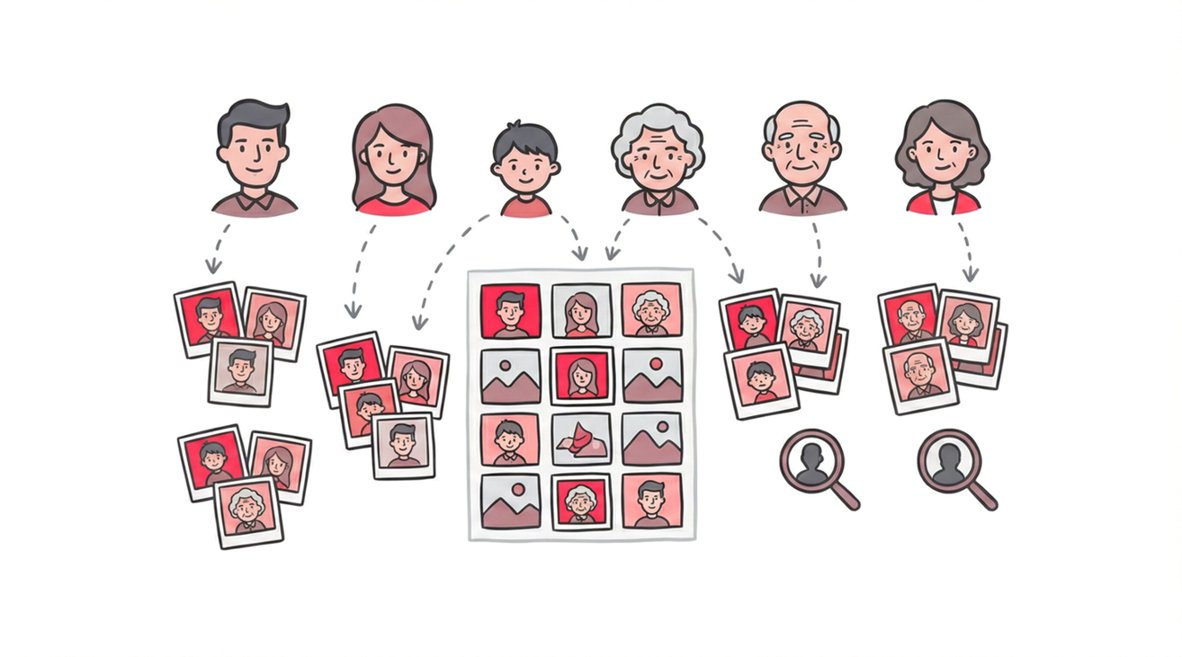
Smart Face Grouping is an AI-powered tool that automatically indexes and categorizes photos by the faces detected in them. Instead of scrolling through thousands of event photos, guests simply upload a selfie to instantly access a personalized gallery containing only their images.
How it Works:
- Automatic Indexing: When photos are uploaded, the AI automatically scans and maps every face in the background without requiring manual tagging.
- Grouping: After detection the AI clusters photos with similar faces together. When you click on a thumbnail of such a cluster, it shows you all the photos with that face.
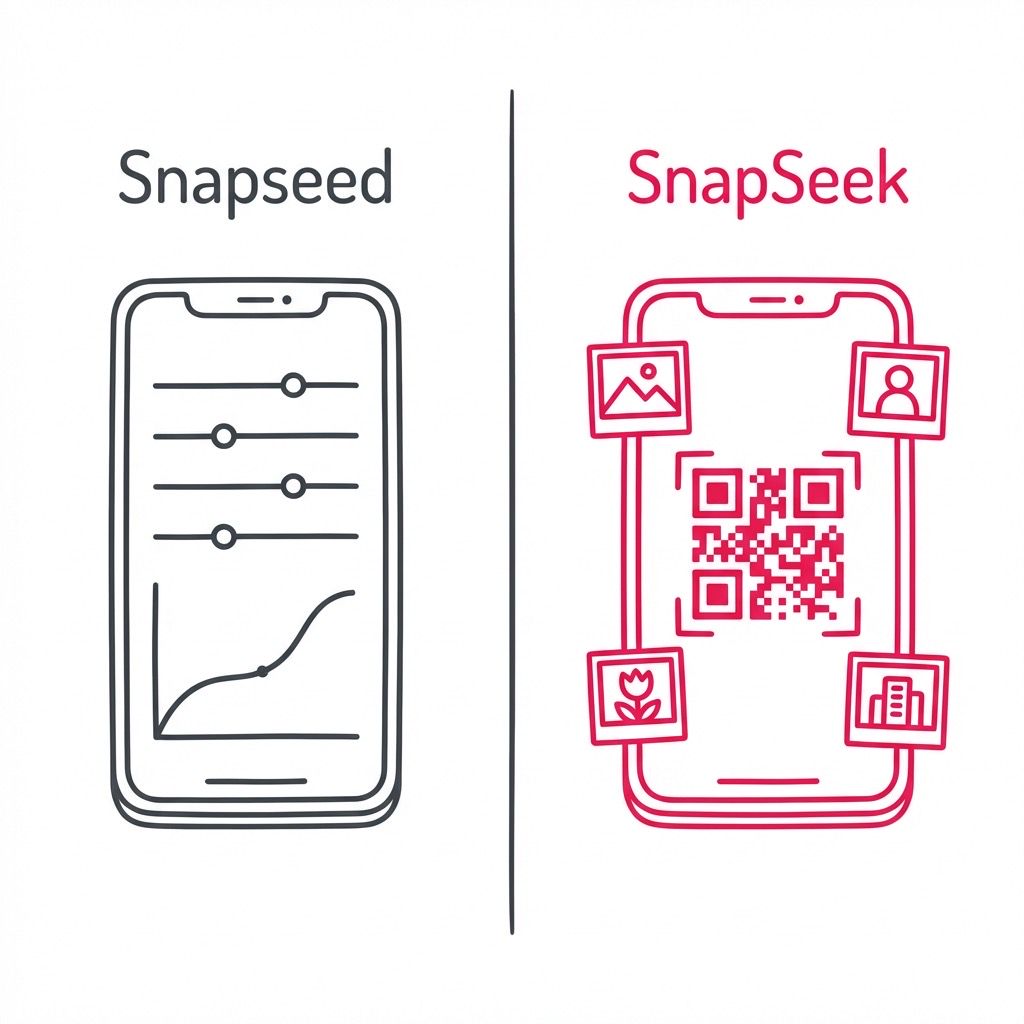
- Selfie Search: Attendees click a link or scan a QR code, snap a quick selfie, and the engine cross-references it to group all their photos in seconds.
Smart Face Grouping is not just an incremental software update. It is a fundamental operational shift in how professional event photographers and corporate organizers handle media delivery.
The Discovery Barrier (and How AI Solves It)
Imagine attending a wedding. You look great. You dance. You interact with friends. Two weeks later, the couple sends a link.
It is a gallery with 2,500 images. You start scrolling. You scroll past the ceremony details. You scroll past the family formals. You scroll past table settings.
After five minutes, your eyes glaze over. You might find one decent shot. You save it and leave. You probably missed five other great candid shots because you simply got tired of looking.
This is the “Needle in a Haystack” problem. It kills engagement. It reduces the value of your photography service because the end user never sees the product.
The Friction of Traditional Galleries
Traditional folders or time-based sorting mechanisms rely on the user doing the work. We are asking the guest to be the curator.
Modern UX design teaches us to remove friction. Every extra scroll is a friction point. Every minute spent searching is a moment of frustration.
When guests are frustrated, they disengage. They don’t download. They don’t share. They certainly don’t tag the photographer or visit your website.
Face Grouping flips this model. Instead of the guest searching for the photo, the photo finds the guest.
The Tech Behind SnapSeek’s Face Grouping
Let’s get technical for a moment. How does SnapSeek turn a chaotic folder of JPEGs into a personalized user experience?
It starts with computer vision. This is the same technology that powers biometric security. But we have optimized it specifically for the challenging lighting and angles of event photography.
From Selfies to Clusters: How the Algorithm Works
When a guest arrives at a SnapSeek gallery, they upload a single selfie. This is the “seed” image.
Our algorithm analyzes the unique geometry of the face in that selfie. It looks at the distance between eyes. It maps the jawline content. It creates a mathematical vector representation of that face.
The system then queries the entire event database. It compares that vector against every face detected in every photo in the gallery.
This happens in milliseconds.
It doesn’t matter if the guest is looking sideways in the candid shot. It doesn’t matter if the lighting is dim on the dance floor. If the facial geometry matches, the photo is pulled.
The system clusters these matches together. It presents them to the guest as a curated, personal album. “Here are YOU.”
Privacy First: Balancing Convenience with Security
We hear the concern often. Is facial recognition safe? Privacy is built into our architecture.
We do not store a permanent database of faces across different events. The facial data is contained within the context of that specific event.
The logic is “search,” not “surveillance.” The guest initiates the search. They provide the reference photo. They are in control of the experience.
This distinction is critical for compliance. It is also critical for guest trust. They trade a momentary selfie for the convenience of instant access.
Transforming the Photographer’s Workflow
For the photographer, this technology is a force multiplier.
In the past, you might have tried to manually tag VIPs. Or maybe you separated photos into sub-folders like “Cocktail Hour” or “Reception” to help guests navigate.
That is manual labor. It takes hours. It delays gallery delivery.
With SnapSeek, the sorting is automated. You upload the full set. The AI handles the distribution.
Here is how the workflow shifts:
| Feature | Traditional Workflow | SnapSeek AI Workflow |
|---|---|---|
| Sorting | Manual folders (Time/Location) | Automatic Face Clustering |
| Guest Action | Scroll, squint, search | Upload selfie, view results |
| Delivery Speed | Slow (requires organization) | Instant (upload and go) |
| Accuracy | High (if curated manually) | High (AI precision) |
| Photographer Effort | High | Near Zero |
The ROI here is time. You save hours of culling and organizing. You get the gallery out faster. Speed is a massive factor in client satisfaction.
The Engagement Flywheel: Easier Access = More Sharing
Why do we care so much about guests finding photos? Because guests are your biggest marketing channel.
When a guest shares a photo on social media, they are broadcasting your brand. They are showing their network how good your work is.
If they can’t find the photo, they can’t share it.
Deep linking and Face Grouping grease the wheels of this machine.
- Guest finds photo instantly.
- Guest is delighted by the photo (and the tech).
- Guest downloads and shares immediately.
- Friends see the photo and the credit.
This is an engagement flywheel. By removing the barrier to entry (the search), you increase the volume of output (the shares).
We have seen galleries with Face Grouping generate significantly higher download rates than standard timeline galleries. The correlation is undeniable.
Beyond Weddings: Corporate and Large Scale Events
Face Grouping is useful for weddings. It is absolutely critical for corporate events.
Imagine a conference with 5,000 attendees. A timeline gallery is useless here. No one will scroll through 10,000 photos of a keynote speech to find their hallway networking shot.
With SnapSeek, that corporate attendee finds their three photos instantly. They post them on LinkedIn while the conference is still happening.
That is value for the event organizer. They get real-time social buzz.
This applies to marathons, graduations, and festivals. Any event with high volume and high attendee counts needs this technology. It changes the product from “archive” to “asset.”
FAQ
Is the facial recognition accurate with group photos?
Yes. The algorithm detects multiple faces in a single frame. If you have a group shot of five people, that photo will appear in the personalized gallery of all five individuals, provided they each search for themselves.
Can guests see photos of others?
This depends on your settings. You can set the gallery to be public, where everyone sees everything. Or you can use privacy modes where guests only see photos they are in. Face Grouping works as a filter in public galleries and a key in private ones.
Does it work with black and white photos?
Absolutely. The algorithm analyzes facial features and geometry, not color data. It is highly effective with black and white or artistic edits common in wedding photography.
What about guests wearing sunglasses or hats?
The AI is robust, but heavy obstruction can reduce accuracy. However, lateral angles and partial obstructions usually still result in a successful match due to the analysis of multiple facial anchor points.
Does this replace my editing process?
No. You still need to edit your photos. Face Grouping handles the organization and delivery. It ensures your edited masterpieces are actually seen by the people in them.
Conclusion
We are moving away from passive galleries. We are moving toward active discovery.
Clients are beginning to expect this. They use facial recognition on their iPhones. They use it on Google Photos. They will wonder why your professional gallery feels “dumb” by comparison.
Adopting Face Grouping is not just about saving time. It is about future-proofing your business. It signals to your clients that you are modern, professional, and improved by technology.
It turns the final delivery from a chore into a magic trick. And that is what keeps clients coming back.
Read more about Face Grouping in SnapSeek and other features on SnapSeek’s blog.